Synopsis
Source : IgMp Bulletin
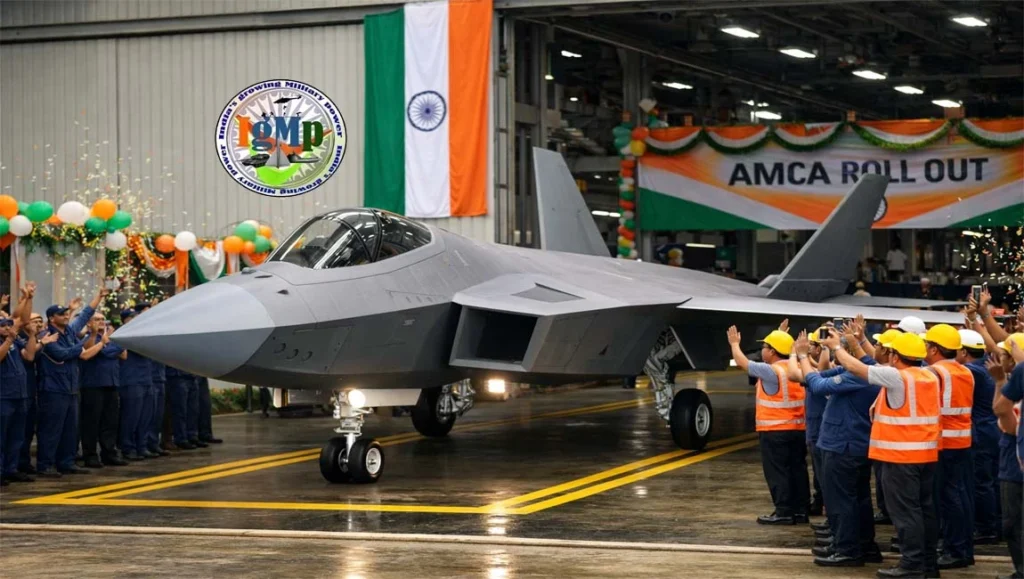
India’s aspiration to develop its fifth-generation stealth fighter has received a resounding push, as the Aeronautical Development Agency (ADA), the lead designer of the AMCA, has given a timeline for the Advanced Medium Combat Aircraft (AMCA). It has now been planned to start AMCA prototype assembly at the end of 2027, with its official rollout in 2028 and the first flight in 2029. For a nation that has consistently built its aerospace potential in the last three decades, this timetable is a matter of assurance and haste in providing a national next-generation combat airplane.
The AMCA program is the most sophisticated fighter program that the country has undertaken to date. While India has successfully designed, developed, and inducted the 4th-generation Light Combat Aircraft (LCA) Tejas in Indian Air Force service, the AMCA represents a giant leap with a twin-engine, stealth-based fifth-generation multirole fighter capable of flying in highly defended airspace. The aggressive assembly roadmap highlights the extent to which the aerospace ecosystem in the country has developed since the earlier projects.
The modules of major fuselage parts to be used in the prototype will start arriving in mid 2027, according to the current plan. These high structural modules, which are frequently also called major fuselage large sections, are not simple metal shells. There have been years of careful design, structural testing, materials development, and cooperation of suppliers. By the time, these sections reach the final assembly line, extensive inspections may already have been completed on them; checks for dimensional accuracy, composite bonding integrity, and stealth shaping precision. The decision to begin physical assembly from late 2027 indicates that structural manufacturing and tooling are already progressing in parallel now, a sign of careful long-term planning.
Target is to have a fully assembled AMCA airframe rollout ready by the end of 2028. The first prototype model will include the core structural framework, scope to integrate propulsion, internal weapons bay architecture, and basic avionics layout. As it applies in practice, this will ensure that the aircraft is structurally complete and has fundamental systems to be used in ground tests and finally flight tests. It is not yet the full-scale production standard jet, but it will be complex enough to be able to verify aerodynamic behavior, systems integration, and stealth properties.
Of great concern is the propulsion integration aspect. Being a twin-engine plane, it is highly important that the engine bays, air intakes, exhaust forms, and thermal management systems of the AMCA all conform to each other. The first few prototypes will use an interim powerplant, while India will continue developing a more powerful, high-thrust class indigenous powerplant in partnership with foreign countries. Designing the aircraft with flexible integration provisions allows engineers to conduct meaningful flight tests even before the indigenous engine becomes fully operational. This approach will reduce delays and help the entire AMCA program progress smoothly.
The internal weapons bay architecture is also of equal importance. As opposed to previous Indian fighters, which carry the majority of the munitions on the outside wings, the AMCA will carry the weapons internally in the fuselage to maintain a stealth profile. The geometry of these bays influences the Radar Cross-Section (RCS) of the aircraft and even its centre of gravity and flexibility in its operation. The preliminary design of such compartments in the prototype enables the engineers to examine door actuation mechanisms, weapon release, and structural loads during any high-speed maneuvering. These are complicated engineering issues that are to be resolved way ahead of the aircraft getting into squadron service.
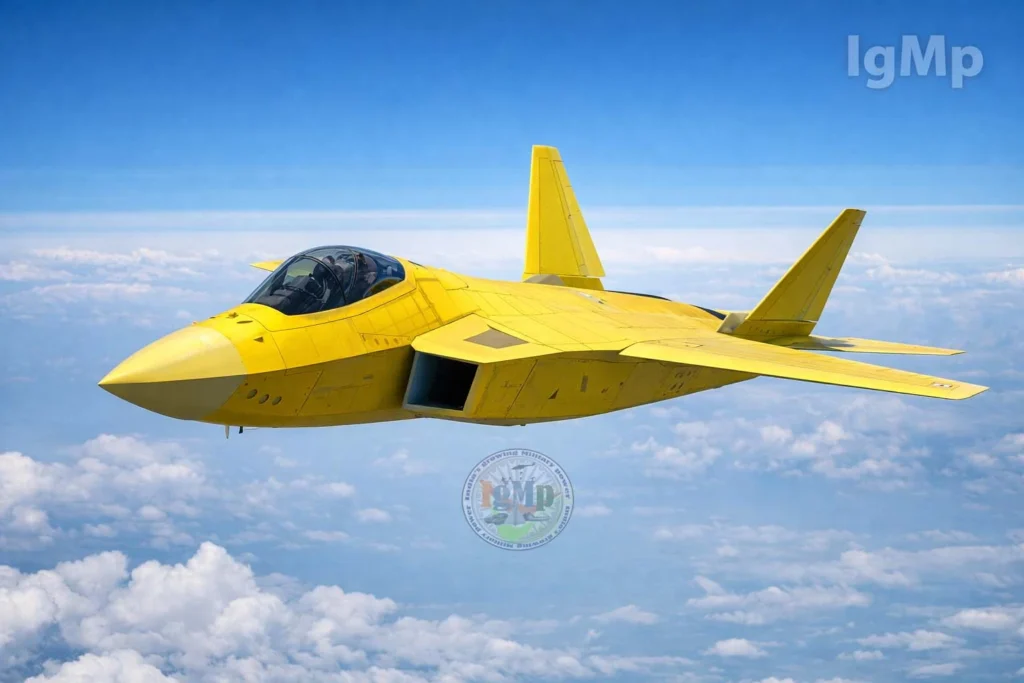
Primary trials will also be done through the avionics baseline setting that is designed to be used in the prototype. Modern fighter jets depend greatly on sensor fusion, data linkages, and high-level mission computers. Even a bare-bones avionics suite has to be strong enough to support flight control, flight navigation, flight communication, and basic tactical awareness. After incorporating a workable package at a baseline into the initial prototype, the development team can commence testing software stability, electromagnetic compatibility, and human-machine interface factors at ground-run and taxi test levels.
The choice to go on an aggressive assembly schedule by the Aeronautical Development Agency (ADA) has an outer space strategy consideration. The nature of regional security is changing at an unprecedented rate, and the air forces across the world are streamlining their air forces. India can bring its concept and operational capabilities closer by targeting a first flight in 2029. It will be followed by a long test, refinement, and certification even after the initial flight. The timely accomplishment of a prototype milestone will hasten the downstream operation.
The AMCA program inspires both the public and private entities in the context of partnership. Big aerospace companies, manufacturers of specific components, and research laboratories need to coordinate their production with the prototype schedule. Composite fuselage tooling, sophisticated machining of metallic frames, and integration rigs used in avionics preparation have to be in place long before the actual assembly. It will be seen as the visible result of years of preparation behind the scenes, with major fuselage sections coming in mid-2027.
The first obstacle will be ground testing after the airframe has been put together. The maiden flight will be preceded by structural load tests, fuel system tests, engine ground tests, and avionics integration tests. Engineers will look into all systems of the hydraulic pressure system as well as vibration patterns of high-thrust engine systems. Any defects that have been identified during this phase can be rectified prior to the plane flying in the air. Thus, the 2028 rollout is not merely a formality; it is the end of manufacturing and the beginning of total validation.
Its first flight, which is planned for 2029, will bring a whole new chapter. Early sorties are usually conservative and include handling attributes, landing gear, takeoff, and low-speed stability. With increased confidence, the flight envelope is broadened to a higher altitude, higher supersonic speeds, and complex maneuvers. Information from these early flights goes straight into refining designs and updating the software. Radar signature prediction and real-world measurements of the radar signature are both analyzed by flight testing a stealth aircraft.
Ambition versus reality is one of the most problematic issues when it comes to the AMCA timeline. The unpredictability of technical failures is the order of the day in the development of aerospace. Delays can be brought about by the material performance under extreme conditions, bugs in the software integration, or disruptive events in the supply chain. The agency provides easily understood milestones, such as the arrival of the fuselage at the end of 2027, the beginning of assembly at the end of 2027, and the finishing of the entire airframe in the end of 2028, by which the agency can use them to correct the course without disaggregating the whole program.