Synopsis
- Iran confirmed early on Sunday that Supreme Leader Ayatollah Ali Khamenei has been killed in a joint military offensive carried out by the United States and Israel, marking one of the most dramatic and consequential escalations in the Middle East in decades.
Source : IgMp Bulletin
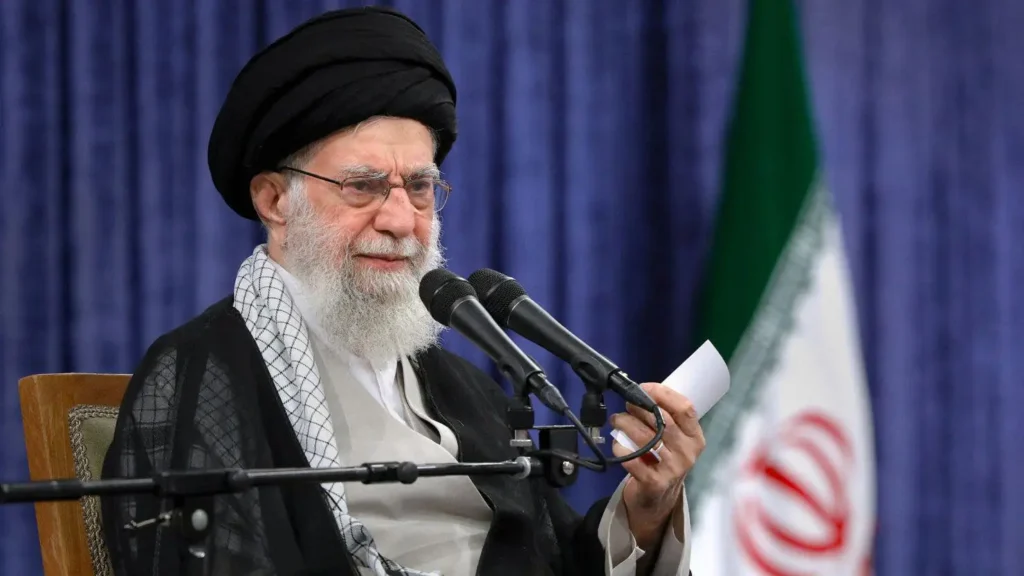
Iran confirmed early on Sunday that Supreme Leader Ayatollah Ali Khamenei has been killed in a joint military offensive carried out by the United States and Israel, marking one of the most dramatic and consequential escalations in the Middle East in decades. Iranian state media announced the death of Khamenei, 86, after coordinated strikes targeted his compound in Tehran and other key leadership and strategic sites across the country.
The scale and intensity of the operation surpassed typical military engagements in the region. Middle Eastern and Western intelligence assessments indicate that hundreds of aircraft, missiles, and precision-guided munitions were used to strike critical defense, command and control, and nuclear-related infrastructure. Early reports suggest more than 30 senior Iranian commanders and officials were killed during the initial wave of airstrikes, including members of Khamenei’s inner circle and top military leadership.
The joint offensive, described in some sources as a multi-phased campaign involving both the U.S. Air Force and the Israel Defense Forces, reportedly focused first on eliminating Iran’s strategic leadership and then on degrading its ability to wage missile, drone and nuclear-capable operations. A senior Israeli official told Reuters that Khamenei’s body was recovered after a strike on his Tehran residence.
U.S. President Donald Trump confirmed on social media that the United States worked closely with Israel in targeting Khamenei, framing the strikes as a response to longstanding threats from Tehran’s regime and its regional proxy networks. Trump reiterated claims that intelligence systems tracked Khamenei’s movements and emphasized that the strikes were intended to prevent further hostile actions, including nuclear weapons development under the guise of peaceful energy programs.
The death of Khamenei — who had ruled Iran since 1989 and shaped the country’s foreign and domestic policies with an iron grip — plunges Iran into uncertainty. State authorities in Tehran have declared a 40-day mourning period, calling his killing a martyrdom while denouncing the U.S.–Israel operation as an “unprovoked and illegal attack.” President Masoud Pezeshkian and other Iranian leaders have promised retaliation, describing it as a legitimate duty of the Islamic Republic.
The strikes appear to have triggered immediate and extensive retaliation. Iranian Revolutionary Guard Corps (IRGC) commanders stated that they had launched missiles and unmanned aerial systems against Israeli territory and at least 27 U.S. military bases across the Middle East. Reports from regional media and security sources indicate Tehran’s forces also targeted Gulf states hosting U.S. forces, including bases in Qatar, Bahrain, Kuwait, and the United Arab Emirates.
Across Iran, the situation has been chaotic, with conflicting reactions on the streets. Footage shared by multiple outlets showed large crowds in Tehran, Mashhad and other cities — some mourning Khamenei’s death, others expressing fear or outrage. Security alerts have spread across neighboring countries, including Iraq and Afghanistan, where pro-Iranian groups have issued their own responses.
The global impact was felt immediately. Oil markets surged on fears of disruption in the strategically vital Strait of Hormuz, through which a significant percentage of the world’s crude supplies transit daily. Airlines suspended flights over parts of the Middle East amid concerns over missile and drone threats. World leaders and international organizations called for restraint, warning that a broader conflict could engulf the region if escalation continues.
The international diplomatic fallout has been swift. At an emergency session of the United Nations Security Council, Russia and China condemned the joint strikes as a violation of international law, while the U.S. defended its actions as necessary to counter an imminent threat. UN Secretary-General António Guterres urged an immediate halt to hostilities to avoid catastrophic consequences for civilian populations and the regional balance of power.
Countries across the Middle East have reported missile and drone interceptions, infrastructure damage, and civilian casualties in the wake of the exchange. Israel reported injuries and building damage in Tel Aviv from Iranian barrages, while Gulf states such as the UAE reported strikes that affected airport terminals and other non-military sites.
Analysts say this conflict represents a watershed moment in U.S.–Iran–Israel relations. Khamenei, long accused by Western nations of supporting militias and destabilizing forces across the region, had resisted international pressure over Iran’s nuclear program and ballistic missile capabilities. His elimination — and the broader attack campaign — is likely to reshape strategic alliances, provoke retaliatory cycles, and rewrite long-standing diplomatic postures.
As the region grapples with this evolving crisis, the world is watching a dangerous escalation unfold, one that could redefine security, energy, and geopolitical calculations across continents.