Synopsis
- India’s air defence posture is entering a new phase as New Delhi weighs the acquisition of additional squadrons of the Russian-origin S-400 air defence system, reflecting growing confidence in the platform’s performance and its role in strengthening national security across multiple fronts.
Source : IgMp Bulletin
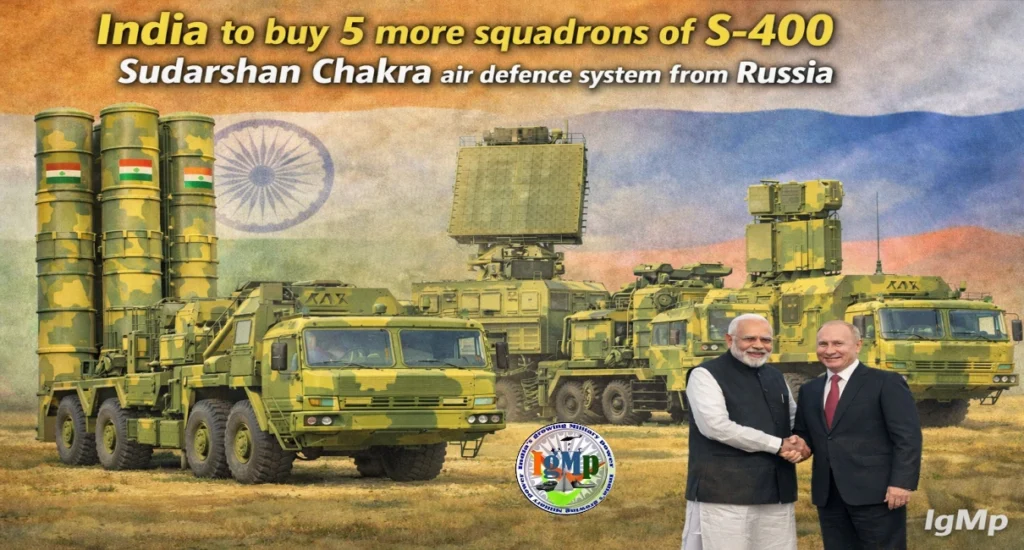
India’s air defence posture is entering a new phase as New Delhi weighs the acquisition of additional squadrons of the Russian-origin S-400 air defence system, reflecting growing confidence in the platform’s performance and its role in strengthening national security across multiple fronts. The move, still under evaluation within the defence establishment, is being seen as part of a broader effort to close critical gaps in long-range air and missile defence while the country simultaneously pushes ahead with indigenous alternatives.
The S-400, inducted into the Indian Air Force in phases following a 2018 agreement with , has become a central pillar of India’s layered air defence architecture. With three squadrons already operational and deployed to protect sensitive regions, the system has provided India with a credible long-range detection and engagement capability against aircraft, cruise missiles, and ballistic threats. Defence planners view this capability as increasingly vital given the rapid evolution of aerial threats in the region, including stand-off weapons and high-speed missiles.
India’s interest in expanding its S-400 inventory is also shaped by recent operational lessons. Military officials have consistently highlighted the importance of proven systems that can function effectively in dense and contested environments. In recent years, air defence performance has become a visible marker of deterrence credibility, especially as conflicts around the world have demonstrated both the strengths and vulnerabilities of modern missile shields. Against this backdrop, India appears inclined to double down on a system it considers mature, combat-ready, and adaptable to its unique operational requirements.
Another factor driving deliberations is geography. India faces security challenges on both its western and eastern fronts, each with distinct threat profiles. Long-range air defence systems offer flexibility by covering vast areas from fewer launch sites, allowing rapid redeployment if required. Additional squadrons would give the Indian Air Force greater depth and redundancy, ensuring sustained coverage even during high-intensity scenarios.
At the same time, New Delhi has been careful to balance foreign acquisitions with domestic capability building. The is progressing with its own long-range air defence initiative under , aimed at reducing long-term dependence on imported systems. Officials familiar with the programme describe it as a strategic investment that will eventually complement, and potentially replace, foreign systems once it matures. Until then, proven platforms like the S-400 are seen as necessary force multipliers rather than substitutes for indigenous development.
Cost, timelines, and interoperability are also part of the ongoing assessment. Integrating additional squadrons would require not just launchers and missiles, but also expanded logistics, training, and command-and-control infrastructure. However, India’s experience with the initial inductions has helped streamline these processes, making future expansions less complex than the first.
Diplomatically, the potential purchase underscores India’s continued ability to pursue an independent defence policy, engaging multiple partners based on national interest rather than alignment pressure. Despite evolving geopolitical equations, India has maintained that its defence procurement decisions are guided by operational necessity and strategic autonomy.
If cleared, the additional S-400 squadrons would significantly enhance India’s ability to deter aerial threats in the near to medium term, buying time for indigenous systems to mature. The decision, expected to be debated at the highest levels in the coming months, will likely reflect a careful balance between immediate security imperatives and long-term self-reliance goals.