Synopsis
- India is exploring participation in Europe’s ambitious Future Combat Air System (FCAS) program as part of a long-term strategy to maintain technological parity with emerging sixth-generation combat aircraft.
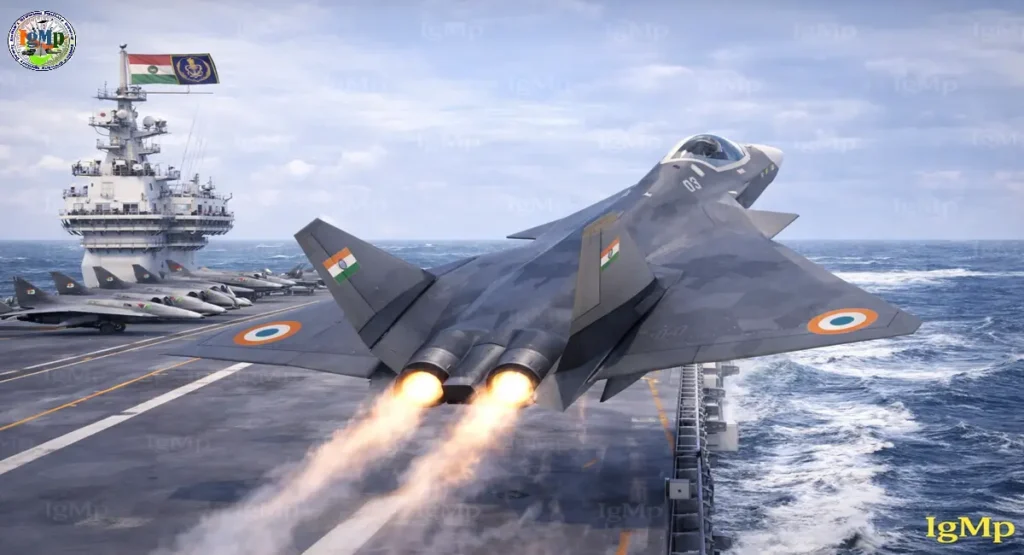
India is exploring participation in Europe’s ambitious Future Combat Air System (FCAS) program as part of a long-term strategy to maintain technological parity with emerging sixth-generation combat aircraft. The project—led by Dassault Aviation and Airbus—is designed to field a next-generation fighter ecosystem around 2035–2040, a timeline that aligns closely with India’s own long-term airpower planning.
For New Delhi, the interest is not merely about acquiring another fighter aircraft. Instead, it reflects a strategic synchronicity between India’s indigenous programs and the evolving European sixth-generation ecosystem.
India’s upcoming Advanced Medium Combat Aircraft (AMCA) is expected to enter service in the early-to-mid 2030s as the country’s fifth-generation stealth backbone. FCAS, meanwhile, could serve as a long-term technological bridge to sixth-generation warfare, filling the capability gap between 2035 and 2040.
Countering China’s 2035 Timeline: The Strategic Urgency for FCAS
China is aggressively pursuing next-generation combat aviation technologies, with multiple concepts believed to be under development beyond the current Chengdu J‑20 stealth fighter.
Analysts expect Beijing to field sixth-generation platforms by the mid-2030s, including potential successors to the J-20 as well as experimental stealth unmanned aircraft concepts.
For India, this creates a strategic imperative: achieve sixth-generation parity before the end of the decade.
The timeline therefore forms a two-stage modernization path:
- 2030–2035: Induction of the Advanced Medium Combat Aircraft as India’s primary stealth fighter.
- 2035–2040: Entry into the FCAS ecosystem, introducing sixth-generation technologies such as AI-driven combat networking and man-unmanned teaming.
This layered approach ensures India maintains technological continuity rather than capability gaps.
The “System of Systems”: Why the Navy Needs More Than Just a Fighter Jet
The defining concept behind FCAS is that it is not just a fighter aircraft, but a “system of systems.”
At its center is the Next Generation Fighter (NGF), supported by networked drones, sensor satellites, and digital battlefield networks.
For the Indian Navy, this approach aligns with future plans for its third aircraft carrier, often referred to as IAC-III, which is expected to feature electromagnetic catapult launch systems (EMALS) similar to those used by the United States Navy.
A sixth-generation naval aircraft operating from such carriers would provide:
- Long-range sensor coverage
- Drone command capability
- Networked strike coordination
In effect, the aircraft becomes a flying command node, controlling multiple unmanned platforms across a maritime battlespace.
The Indian Strategic Logic: Why FCAS Matters Now
Several strategic factors explain India’s interest in the FCAS ecosystem.
Combat Cloud Integration
The FCAS program revolves around a digital Combat Cloud, allowing aircraft, drones, ships, and satellites to share real-time data. Integration could potentially link India’s Dassault Rafale fighters, naval aviation assets, and the future Advanced Medium Combat Aircraft into a unified combat network.
Man-Unmanned Teaming (MUM-T)
Sixth-generation aircraft will act as motherships controlling loyal-wingman drones. Technologies developed under FCAS could allow platforms like the DRDO Ghatak UCAV to operate alongside manned fighters in coordinated strike packages.
German “Turbulence” Opportunity
The FCAS program has faced political friction between France and Germany. Should Berlin scale back participation, India could emerge as a major industrial partner, bringing both funding and a massive defense market to sustain the project.
Avoiding the FGFA Pitfall
India previously withdrew from the Russian Sukhoi Su‑57-based FGFA program due to concerns over technology sharing. The French approach, centered on co-development and industrial participation, may offer a more transparent collaboration model.
AMCA and FCAS: India’s Two-Tier Future Airpower Strategy
| Aspect | AMCA (Indigenous 5th Gen) | FCAS (Co-developed 6th Gen) |
|---|---|---|
| Induction Goal | 2030–2035 | 2035–2040 |
| Core Technologies | Stealth shaping, internal weapons bays, AESA radar | AI-enabled networking, Combat Cloud, directed-energy systems |
| Operational Role | Primary multi-role stealth fighter | Command-and-control “mothership” |
| Development Model | Defence Research and Development Organisation and Aeronautical Development Agency with Indian industry | Dassault Aviation and Airbus with potential Indian partnership |
Strategic Implications
India’s potential entry into the FCAS ecosystem would mark a major shift in its long-term aerospace strategy.
Rather than relying solely on domestic development or foreign imports, New Delhi appears to be building a hybrid innovation pathway:
- Indigenous fifth-generation capability through AMCA
- Collaborative sixth-generation technologies through FCAS
If realized, this strategy could allow India to sustain technological parity with emerging Chinese sixth-generation systems while strengthening strategic ties with Europe’s aerospace industry.
For the Indian Navy and Air Force alike, the FCAS program represents more than a future fighter jet—it could become the digital backbone of India’s airpower architecture for the second half of the 21st century.