Synopsis
- India’s hypersonic ambitions reached a decisive milestone in January 2026 when the Defence Research and Development Organisation successfully tested an advanced scramjet engine for more than 12 minutes, marking a dramatic leap in endurance and technological maturity.
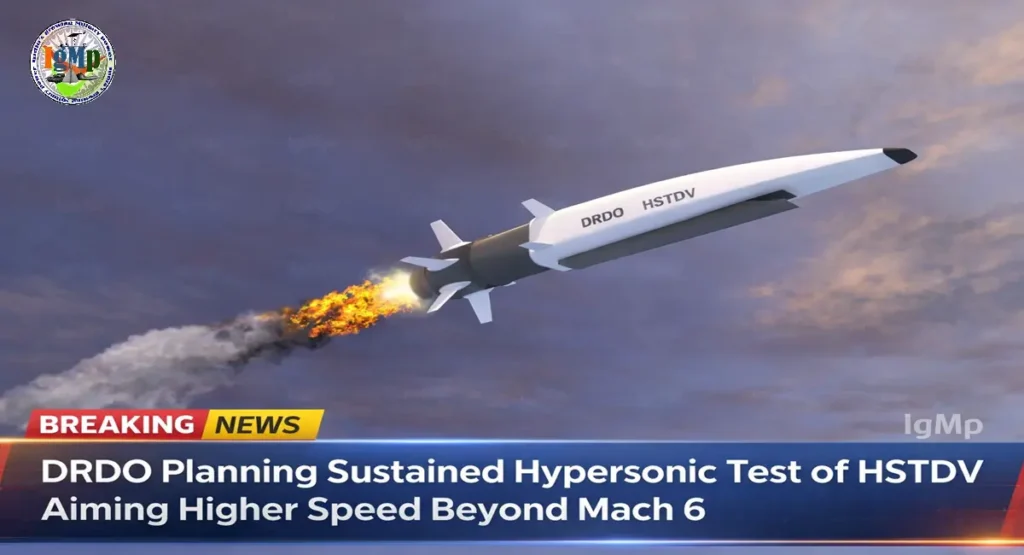
India’s hypersonic ambitions reached a decisive milestone in January 2026 when the Defence Research and Development Organisation successfully tested an advanced scramjet engine for more than 12 minutes, marking a dramatic leap in endurance and technological maturity.
The breakthrough, achieved by the Defence Research and Development Organisation at its Hyderabad-based Defence Research and Development Laboratory, signals that India’s Hypersonic Technology Demonstrator Vehicle (HSTDV) program is moving beyond experimental research toward the development of operational hypersonic weapons.
The milestone positions India among a small group of nations capable of sustaining scramjet-powered hypersonic propulsion for extended durations—an essential step toward Mach-8 class missiles.
Key Highlights
- Endurance Milestone: On January 9, 2026, DRDO validated a full-scale scramjet engine for over 12 minutes (720 seconds).
- Technology Transition: HSTDV technologies are now feeding into the Project Vishnu initiative.
- Thermal Breakthrough: Active cooling technology prevents structural damage at Mach 6+ speeds.
- Strategic Significance: India joins a select group of nations pursuing operational hypersonic cruise missile capabilities.
From Demonstrator to Weapon Platform
The Hypersonic Technology Demonstrator Vehicle program was originally conceived as a testbed to validate scramjet propulsion—a system that allows vehicles to travel at hypersonic speeds by compressing incoming air without rotating compressors.
Early tests demonstrated the basic feasibility of the technology, but endurance remained a key challenge. In 2020, India achieved a sustained scramjet burn lasting roughly 20 seconds.
The January 2026 ground endurance test, however, marked a dramatic leap forward, sustaining combustion for more than 12 minutes. This level of endurance is widely considered sufficient for operational hypersonic cruise missile flight profiles.
The achievement effectively transitions India’s hypersonic effort from a demonstration phase to a weaponizable propulsion system.
The Technical Breakthrough Behind the Test
The 2026 milestone was enabled by several critical engineering innovations developed by DRDO researchers.
Active Cooling
One of the biggest challenges in hypersonic flight is thermal management. At speeds above Mach 6, aerodynamic heating can push surface temperatures beyond 2,000°C.
To counter this, engineers implemented regenerative cooling, where fuel circulates through cooling channels around the engine before being injected into the combustor.
Advanced Materials
The engine structure relies on high-temperature materials including carbon-carbon composites and ceramic matrix composites, designed to survive extreme heat loads during hypersonic operation.
Combustion Stability
The scramjet was tested using the Scramjet Connect Pipe Test (SCPT) facility, which allows researchers to simulate high-speed airflow conditions and evaluate combustor stability during prolonged operation.
Maintaining stable combustion for several minutes represents one of the most difficult hurdles in scramjet development.
From HSTDV to Project Vishnu
With the propulsion challenge largely validated, DRDO is now moving toward weaponizing the technology.
The next step is the development of Project Vishnu, a proposed hypersonic cruise missile capable of reaching Mach 8 speeds and striking targets at ranges approaching 1,500 kilometers.
Such a system would combine extreme speed with maneuverability, making interception significantly more difficult than traditional ballistic or cruise missiles.
The shift from demonstrator to missile program reflects growing confidence in India’s indigenous hypersonic propulsion ecosystem.
Hypersonic Weapons Already Emerging
India’s hypersonic ambitions are also visible in other programs.
During the Republic Day parade on January 26, 2026, the country publicly showcased its Long Range Anti Ship Missile, a long-range anti-ship hypersonic missile concept.
While details remain limited, the system is believed to incorporate technologies derived from the HSTDV program.
Such weapons are expected to play a critical role in future naval and strategic deterrence operations.
The Endurance Gap: A Dramatic Leap
The scale of India’s progress becomes clearer when comparing the two major scramjet milestones:
- 2020 Test: Approximately 20 seconds of sustained hypersonic combustion.
- January 2026 Test: More than 12 minutes (720 seconds) of scramjet endurance.
This represents a thirty-fold improvement in sustained operation, a key metric for real-world hypersonic cruise missiles.
Why the Breakthrough Matters
Hypersonic weapons combine extreme speed, maneuverability, and low-altitude flight profiles, making them significantly harder to detect and intercept.
By validating long-duration scramjet operation, India has taken a crucial step toward developing operational hypersonic missiles that could reshape the strategic balance in the region.
If programs like Project Vishnu progress as planned, India could field indigenous hypersonic strike systems within the next decade—transforming a technology demonstrator into a new generation of strategic weaponry.