Synopsis
- Analysts tracking satellite imagery and aviation developments say the Chengdu Aircraft Corporation is testing a large tailless stealth aircraft widely referred to by observers as the J-36, believed to be designed for long-range operations with advanced sensor fusion and network-centric warfare capabilities.
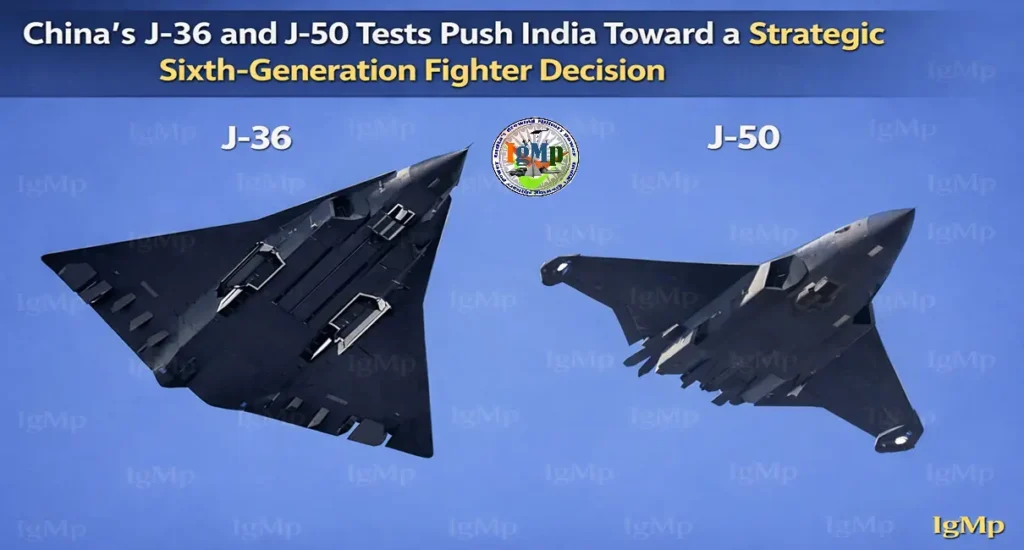
China’s rapid progress in sixth-generation fighter development is forcing a major strategic rethink in New Delhi. Developments in early March 2026 suggest that Beijing’s next-generation combat aircraft programs have moved beyond conceptual stages and into active flight testing. Defence observers believe these developments could reshape the future balance of air power in Asia, particularly as India is still working toward operationalizing its own fifth-generation stealth fighter.
Synopsis: In March 2026, flight testing of China’s experimental sixth-generation fighter prototypes—reportedly known as the J-36 and J-50—has triggered fresh debate within India’s defence establishment. The developments have intensified discussions about whether India should accelerate participation in an international sixth-generation fighter program, particularly the European Future Combat Air System (FCAS), while continuing domestic development of the Advanced Medium Combat Aircraft (AMCA).
China’s J-36 and J-50 Tests Change the Air Power Equation
China’s sixth-generation fighter efforts appear to be progressing through parallel programs led by the country’s two major aerospace hubs. Analysts tracking satellite imagery and aviation developments say the Chengdu Aircraft Corporation is testing a large tailless stealth aircraft widely referred to by observers as the J-36, believed to be designed for long-range operations with advanced sensor fusion and network-centric warfare capabilities.
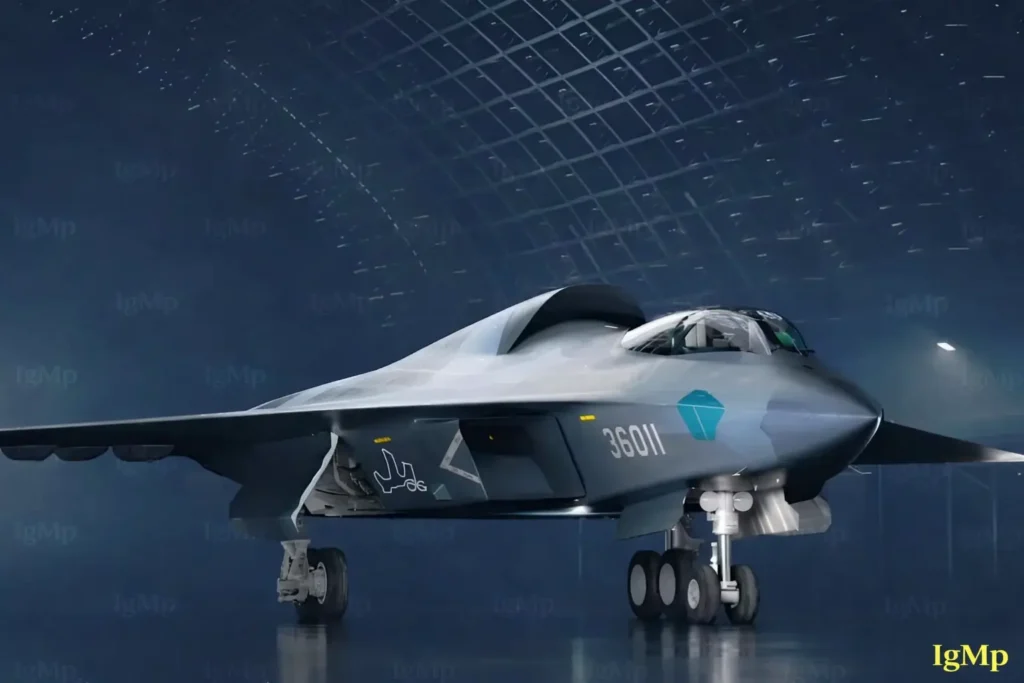
Recent flight activity reported in Chengdu during March 2026 suggests the aircraft is entering more advanced testing phases. Observers say some trials may have included Low-Probability of Intercept (LPI) data-link testing connected to overhead satellites, a capability associated with sixth-generation aircraft designed to operate in highly secure, networked combat environments.
During one of the observed test flights, the prototype was reportedly accompanied by a twin-seat variant of the Chengdu J‑20 stealth fighter acting as a chase aircraft. Analysts believe such platforms could eventually function as manned controllers for drone swarms, allowing China to begin integrating sixth-generation AI combat concepts with its existing fifth-generation fleet.
Meanwhile, the Shenyang Aircraft Corporation is reportedly developing another sixth-generation concept aircraft known informally as the J-50. The aircraft is believed to feature a cranked-arrow wing configuration emphasizing agility and high-performance manoeuvring within a broader network-centric combat architecture.
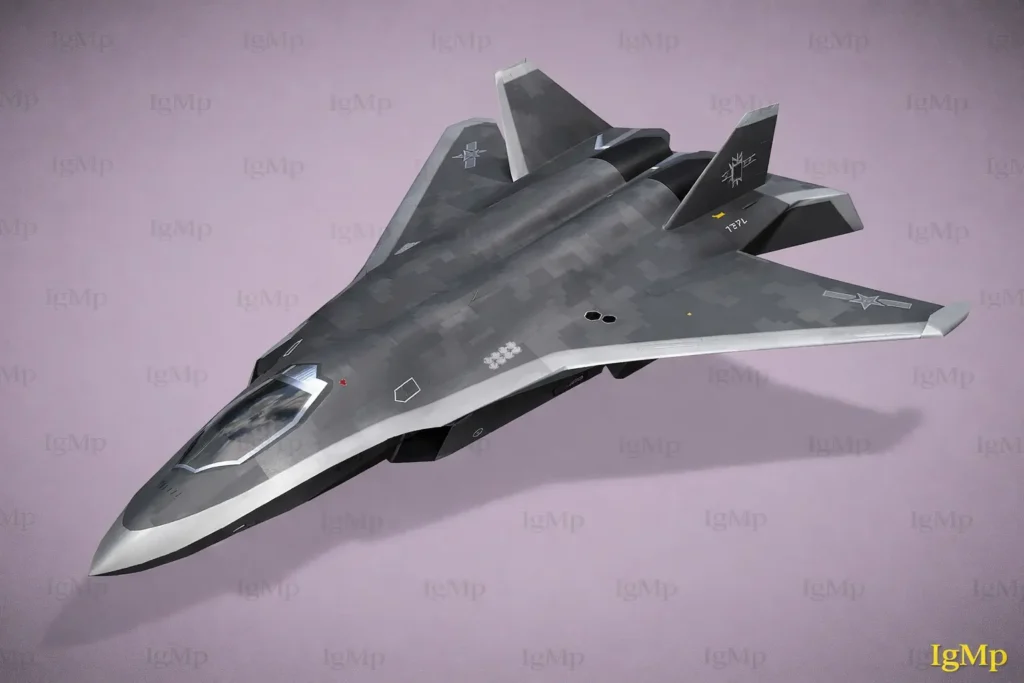
The Sixth-Generation Fighter Race at a Glance
• China: J-36 tailless stealth platform focused on long-range dominance
• China: J-50 concept emphasizing agility and distributed combat networks
• India: AMCA under development as a 5.5-generation stealth fighter
• Europe: FCAS program exploring expanded industrial partnerships
• Operational Concept: Future fighters coordinating autonomous drone swarms in combat
• Timeline: China testing prototypes in 2026 while India targets AMCA induction in the mid-2030s
Comparison: The 2026 Stealth Gap
| Capability | China J-36 / J-50 | India AMCA Mk1/Mk2 | 6th-Gen Requirement |
| Airframe Design | Tailless / Cranked-Arrow | Diamond-wing Stealth | Low-Observable / High-Agility |
| AI Integration | Active MUM-T Testing | Planned for Mk2 | Cognitive Pilot Support |
| Directed Energy | Reported Laser Hardpoints | R&D Phase | Offensive/Defensive Lasers |
| Engine Tech | WS-15 / WS-19 | GE-F414 / Safran Joint | Adaptive Cycle Engine |
These developments are increasingly shaping strategic thinking within the Indian Air Force and India’s broader defence planning establishment.
Why India is Evaluating the FCAS Partnership
India’s indigenous fighter roadmap is currently centred around the AMCA program, expected to become the country’s first domestically developed stealth fighter. However, even in advanced configurations, AMCA is widely described as a 5.5-generation aircraft, meaning it may not initially incorporate the full spectrum of technologies envisioned for sixth-generation platforms.
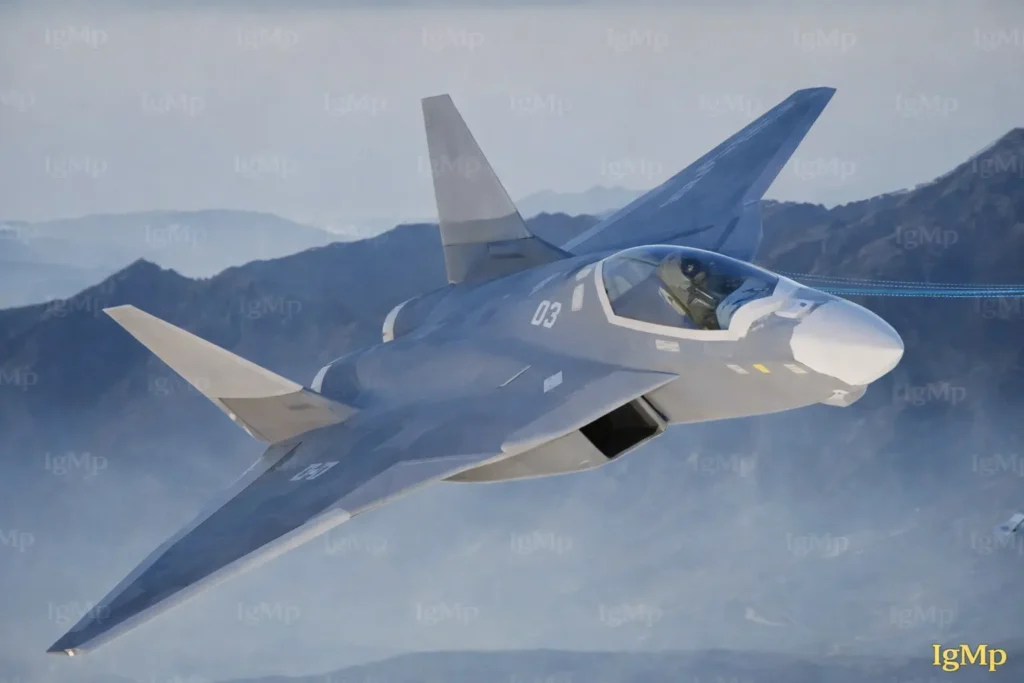
Future sixth-generation fighters are expected to feature capabilities such as:
• Manned-Unmanned Teaming (MUM-T) with loyal wingman drones
• AI-enabled combat management systems
• Directed-energy weapons such as airborne lasers
• Adaptive cycle engines for higher efficiency and range
India’s ongoing collaboration between Safran and Hindustan Aeronautics Limited to co-develop a 110 kN-class engine for the AMCA could also act as a technological bridge toward future sixth-generation propulsion systems. Shared research in turbine materials, high-temperature cores and next-generation engine architectures may make deeper collaboration with European partners more feasible if New Delhi decides to join FCAS.
The 200-Aircraft Bargaining Chip
India’s potential entry into FCAS is not simply about technology access—it could also reshape the economics of the program itself.
If India were to join as a major partner and commit to procuring 150–200 aircraft, it could become one of the largest customers for the future platform. Such a procurement scale could give New Delhi significant leverage over design specifications, industrial workshare and export strategy within the program.
France already maintains strong defence cooperation with India through the Dassault Rafale program, and deeper collaboration with Dassault Aviation could potentially extend this relationship into the next generation of combat aviation.
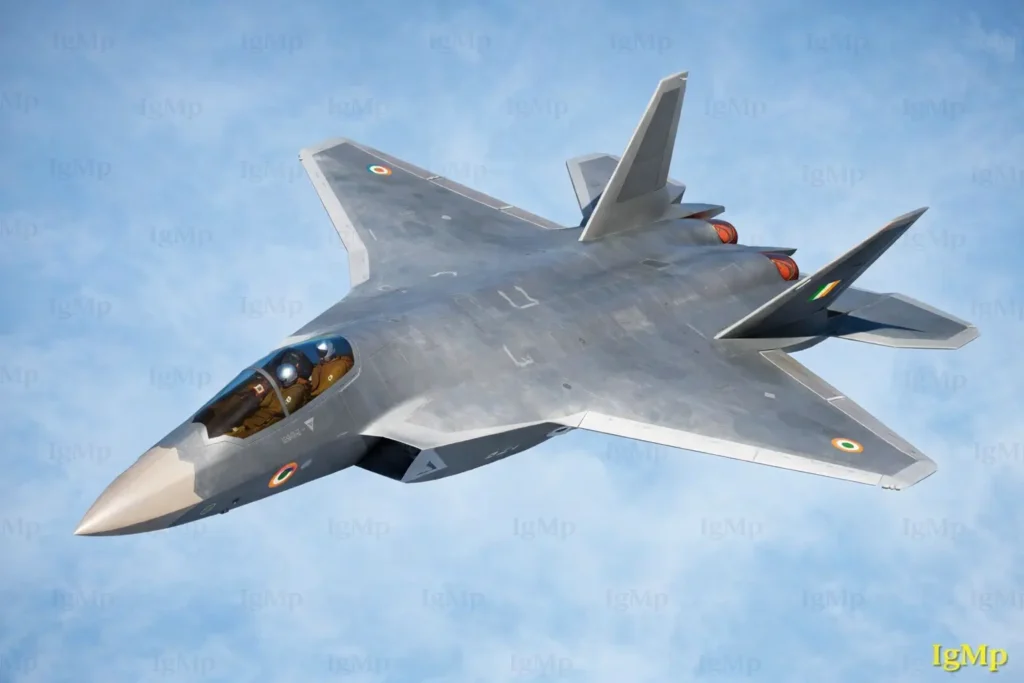
India’s Two-Track Strategy for the Future Air Combat Era
Even as India evaluates possible participation in an international sixth-generation fighter initiative, defence planners are unlikely to abandon indigenous development efforts. Instead, analysts increasingly point toward a two-track strategy.
Under such an approach, the AMCA would form the backbone of India’s domestic fighter ecosystem through the 2030s, strengthening indigenous design and manufacturing capabilities. At the same time, collaboration in a program such as FCAS could give India access to technologies that define the broader sixth-generation air combat ecosystem, including AI-enabled command networks and autonomous combat systems.
China’s progress with the J-36 and J-50 has therefore done more than demonstrate Beijing’s aerospace ambitions—it has accelerated a strategic debate in New Delhi. If China manages to operationalize sixth-generation aircraft by the late 2030s, the technological gap could widen unless India advances its own next-generation aviation roadmap.
For India, the challenge is not only about developing a new fighter aircraft but also about positioning itself within the global ecosystem of technologies that will shape air warfare in the decades ahead.