Synopsis
- India’s missile development ecosystem is entering a new phase as the Defence Research and Development Organisation moves ahead with the Long Range Air-to-Surface Supersonic Cruise Missile (LRASSCM), a program that aims to deliver a completely indigenous high-speed strike weapon for the Indian Air Force.
IgMp Bulletin
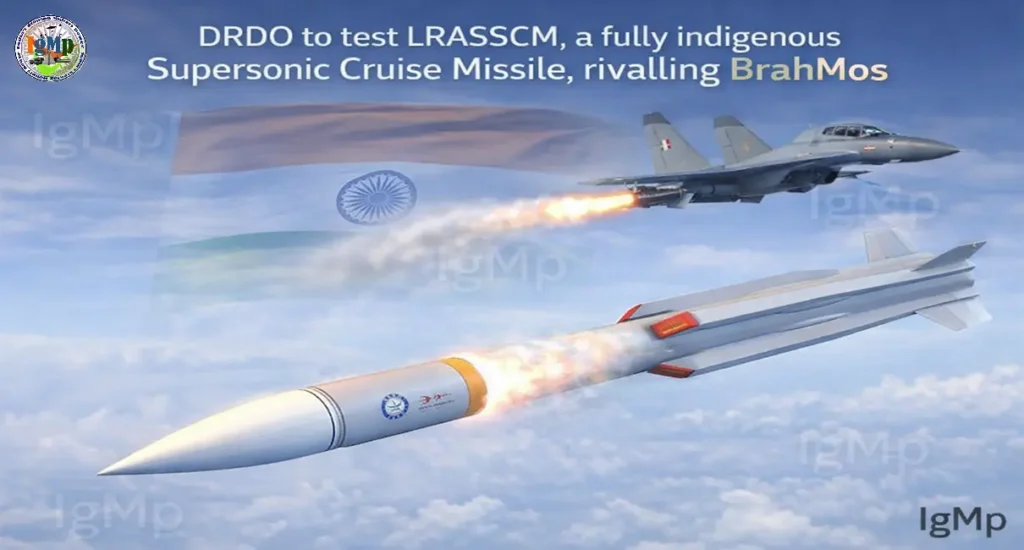
India’s missile development ecosystem is entering a new phase as the Defence Research and Development Organisation moves ahead with the Long Range Air-to-Surface Supersonic Cruise Missile (LRASSCM), a program that aims to deliver a completely indigenous high-speed strike weapon for the Indian Air Force. The project received a major boost after it was granted Acceptance of Necessity earlier in 2026, allowing formal development work and future testing to move forward.
The announcement was made by DRDO chairman Samir V. Kamat during the organisation’s foundation day celebrations, where he highlighted the surge of indigenous defence programs receiving government approval. For India’s defence planners, LRASSCM is more than just another missile project. It represents a strategic attempt to build a next-generation air-launched cruise missile entirely under Indian control, free from foreign supply chains or export restrictions.
For years, India’s primary supersonic cruise missile capability has relied on the Indo-Russian joint venture behind the BrahMos missile family. While BrahMos remains one of the most capable cruise missiles in service globally, it is still built under a shared intellectual property structure. LRASSCM is being designed to mark the next step in India’s “post-joint venture” era of missile development—an indigenous alternative that gives New Delhi full control over technology, software codes and future upgrades.
| Feature | BrahMos-A (Benchmark) | LRASSCM (Emerging Indigenous Missile) |
|---|---|---|
| Origin | India–Russia Joint Venture | 100% Indigenous DRDO Program |
| Speed | Mach 2.8 | Mach 3.0+ (Projected) |
| Weight | Around 2.5 tonnes | Optimized for Rafale & Su-30MKI |
| Propulsion | Liquid Ramjet | Advanced Ramjet Propulsion |
| Technology Control | Shared intellectual property | Full Indian source code and design |
Although detailed specifications remain classified, defence analysts believe the missile will operate at speeds above Mach 3 and deliver long-range precision strikes against ground or maritime targets. The design philosophy points toward a supersonic cruise missile powered by advanced ramjet propulsion rather than the turbofan engines typically used by subsonic cruise missiles.
More specifically, experts suggest the missile could employ Liquid Fuel Ramjet technology, a propulsion concept already demonstrated in India’s long-range missile programs. This type of engine allows a missile to sustain supersonic speeds for extended distances, potentially enabling the LRASSCM to strike targets more than 400–500 kilometres away while maintaining high maneuverability during the terminal phase. The approach is similar to propulsion technologies used in advanced air-to-air missile projects like Astra Mk3, which also rely on ramjet-based systems to extend engagement range.
At the same time, it is important to distinguish LRASSCM from another emerging category of high-speed weapons. While the LRASSCM is expected to be a supersonic cruise missile, India has also been exploring hypersonic glide systems for anti-ship roles, sometimes referred to as long-range anti-ship missiles. Those systems operate at speeds above Mach 5 and follow a different flight profile compared with ramjet-powered cruise missiles.
Integration with frontline fighter aircraft is expected to be a key feature of the new missile. Platforms such as the Sukhoi Su-30MKI—particularly under the upcoming “Super Sukhoi” upgrade roadmap—are widely viewed as the primary heavy launch platform. The Dassault Rafale fleet could also play a major role, especially after India approved a large multi-role fighter acquisition plan that includes provisions for integrating indigenous weapons without foreign approval. This level of integration authority allows Indian engineers to adapt missiles like LRASSCM directly onto combat aircraft without relying on overseas manufacturers.
The operational logic behind this capability is shaped by lessons from recent regional tensions and high-intensity conflict scenarios, including the 2025 military confrontation known as Operation Sindoor. That crisis reinforced the importance of long-range stand-off weapons that allow strike aircraft to engage targets from outside heavily defended zones. In such a doctrine, expensive high-end missiles can be supplemented by a larger inventory of cost-effective indigenous systems capable of sustained operations during extended conflicts.
With development approval now secured, the next stage will likely focus on prototype fabrication and flight testing. Early trials will examine propulsion performance, flight stability and guidance systems before moving toward integration with operational fighter aircraft. If the program advances as expected, LRASSCM could eventually become a central element of India’s future stand-off strike capability, strengthening the country’s long-term goal of building a fully indigenous ecosystem for advanced missile technologies.