Synopsis
- As tensions intensify across West Asia involving Iran, the United States, and Israel, reports suggest that India has moved the Indian Navy quickly to protect one of its most critical economic lifelines — the safe passage of oil tankers through the Strait of Hormuz.
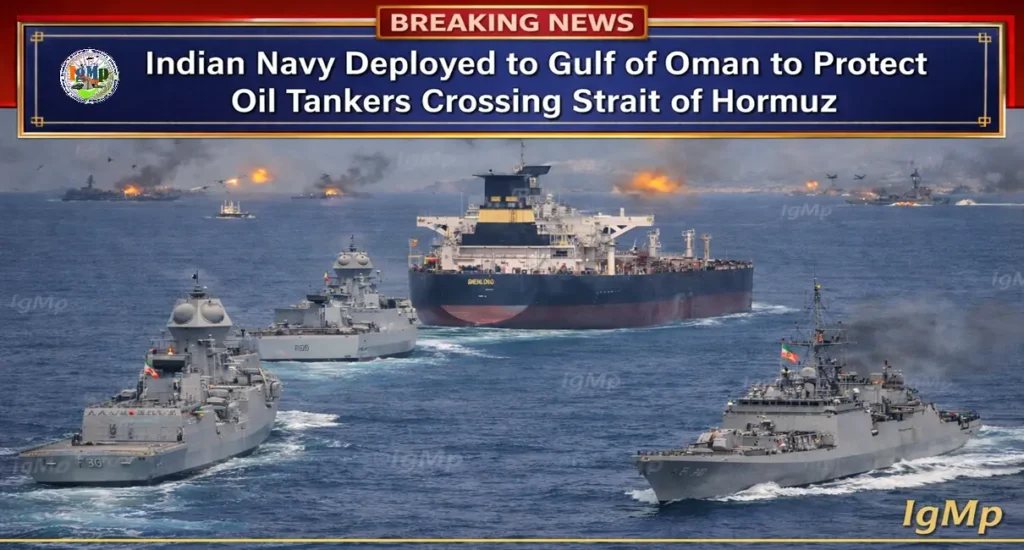
As tensions intensify across West Asia involving Iran, the United States, and Israel, reports suggest that India has moved the Indian Navy quickly to protect one of its most critical economic lifelines — the safe passage of oil tankers through the Strait of Hormuz. The narrow maritime chokepoint links the Persian Gulf to the Gulf of Oman and carries a massive share of the world’s crude oil shipments.
For India, the stakes are particularly high. A large portion of its crude oil and LPG imports travels through this corridor, making stability in the region central to the country’s energy security. With the ongoing conflict creating uncertainty for global shipping, New Delhi has activated a coordinated strategy that combines diplomacy, naval deployments, and contingency energy planning.
Key Highlights
- India has placed warships on standby in the Gulf of Oman to protect merchant vessels.
- Diplomatic engagement with Iran has helped ensure safe transit for Indian tankers.
- The Indian Navy is operating under its long-running maritime security mission.
- Authorities are monitoring dozens of Indian-linked ships and hundreds of seafarers in the Gulf region.
- Strategic petroleum reserves and alternative supply routes are being assessed to ensure energy supply chain resilience.
The Strategic Importance of the Strait of Hormuz for India
The Strait of Hormuz remains one of the world’s most critical maritime chokepoints. Roughly one-fifth of global oil trade passes through this narrow channel, making it central to global energy markets.
India is particularly exposed to disruptions here. Estimates suggest that around 60–70% of India’s oil imports move through this route before entering the wider Arabian Sea shipping lanes. Any disruption — even temporary — could affect supply chains, shipping insurance costs, and domestic fuel prices.
This strategic reality has forced policymakers in New Delhi to treat the security of the Strait of Hormuz not just as a regional issue, but as a national economic priority.
Operation Sankalp: The Indian Navy’s Role in the Gulf of Oman
To ensure freedom of navigation and safeguard Indian commercial shipping, the Indian Navy has strengthened its forward presence under Operation Sankalp.
Indian naval assets, including guided-missile destroyers and stealth frigates, are currently deployed across the Arabian Sea and the Gulf of Oman. These warships remain in a standby posture, allowing them to respond quickly if merchant ships encounter threats while approaching the Strait of Hormuz.
Indian naval planners are also evaluating the activation of escort protocols for high-risk commercial vessels. Such escorts would allow merchant ships to transit the chokepoint under naval protection if the regional security environment deteriorates further.
Another important layer of protection comes from maritime domain awareness. Indian authorities maintain real-time monitoring through the Information Fusion Centre – Indian Ocean Region (IFC-IOR), which tracks shipping traffic and shares alerts with commercial ship captains operating in sensitive waters.
Diplomatic Channels: Engaging Tehran and Global Partners
While naval readiness forms the hard-power component of India’s response, diplomacy remains the first line of defence.
External Affairs Minister Subrahmanyam Jaishankar held discussions with Iranian Foreign Minister Abbas Araghchi to ensure that Indian shipping could safely transit the Strait of Hormuz despite the escalating regional tensions.
Following these diplomatic engagements, two Indian tankers — Pushpak and Parimal — were able to cross the corridor safely. The vessels were reportedly carrying crude shipments destined for Indian refineries, underscoring the importance of keeping the route operational.
New Delhi has also maintained consultations with several global partners to support international efforts aimed at preserving the security of maritime trade routes.
Energy Security and Strategic Contingency Planning
The current crisis has also prompted policymakers to strengthen India’s broader energy security strategy.
Officials are examining alternative crude supply routes from regions such as the United States and parts of Africa in case shipping through the Strait of Hormuz faces prolonged disruption. India also maintains strategic petroleum reserves that can be used to cushion short-term supply shocks.
At the same time, shipping authorities and Indian embassies across the Gulf are maintaining close contact with merchant vessels and crews. Hundreds of Indian seafarers are currently working aboard ships in the region, making their safety an equally important priority.
India’s response to the West Asia crisis illustrates a carefully calibrated strategy that blends diplomacy, naval preparedness, and energy planning. By keeping its warships ready while simultaneously engaging regional powers, New Delhi is working to ensure that the country’s oil lifelines remain secure even as geopolitical tensions continue to ripple across one of the world’s most vital maritime corridors.