Synopsis
- In 2023, she flew in a Sukhoi-30 MKI, and in October last year she undertook a sortie in the Rafale fighter aircraft at the Ambala air base, the first station to host the French-origin jets in India.
Source : IgMp Bulletin
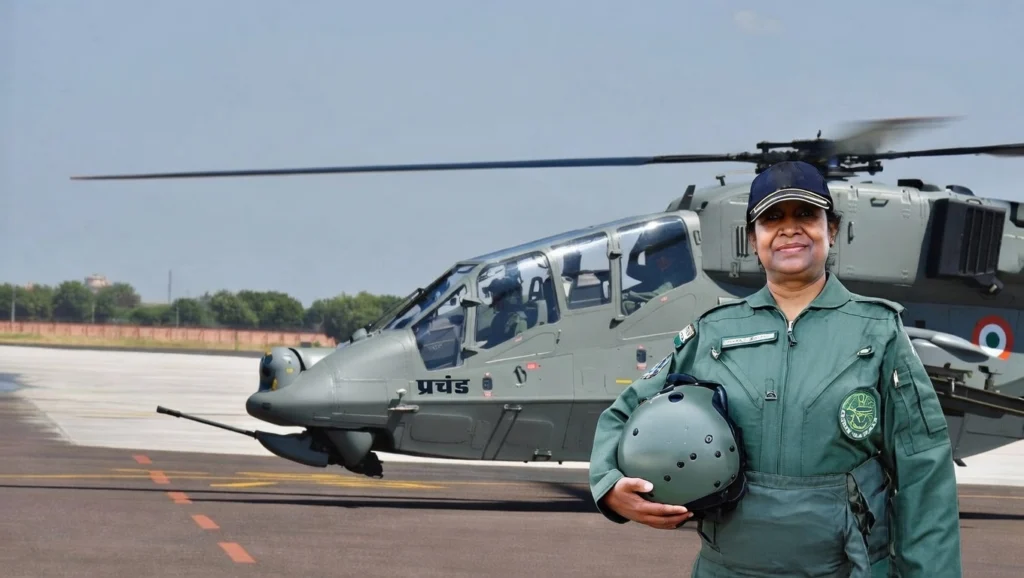
In a powerful message of confidence in India’s indigenous defence capabilities, Droupadi Murmu flew a sortie in the Light Combat Helicopter LCH Prachand near the India–Pakistan border in Rajasthan’s desert sector. The helicopter lifted off from the Indian Air Force base in Jaisalmer, an area of high strategic importance, where the President was first briefed by Air Force personnel on the platform’s combat role and mission profile.
The LCH Prachand, developed by Hindustan Aeronautics Limited, represents a major milestone in India’s push for self-reliance in military aviation. Designed specifically for high-altitude warfare and desert operations, the helicopter has already been inducted into the Indian Air Force and the Indian Army. Flying in such an operationally sensitive region underscores both the aircraft’s readiness and the leadership’s visible backing of homegrown defence technology.
The Prachand is engineered to operate in extreme conditions, including the high-altitude terrain of eastern Ladakh and the arid expanses of western Rajasthan. Armed with a 20mm turret gun, air-to-air missiles, and air-to-ground precision munitions, it fills a critical capability gap between heavier attack helicopters and lighter utility platforms. Defence analysts have long noted that the induction of the LCH reduces reliance on foreign suppliers while creating a domestic ecosystem of advanced aerospace manufacturing.
This is not the first time President Murmu has demonstrated her engagement with frontline military assets. In 2023, she flew in a Sukhoi-30 MKI, and in October last year she undertook a sortie in the Rafale fighter aircraft at the Ambala air base, the first station to host the French-origin jets in India. During that flight, she was briefed extensively on the Rafale’s advanced avionics, weapons systems, and network-centric warfare capabilities. These back-to-back sorties reflect a pattern: the Supreme Commander of the Armed Forces directly interacting with operational platforms to understand their strengths and the challenges faced by personnel.
Such engagements carry symbolic and practical value. Symbolically, they boost morale among service members deployed in demanding environments. Practically, they reinforce the government’s emphasis on indigenisation, especially at a time when India is investing heavily in domestic programmes ranging from fighter aircraft to helicopters and drones.
For observers of India’s defence modernisation, the Jaisalmer sortie sends a clear signal. The leadership is not only endorsing indigenous platforms like the LCH Prachand but also showcasing them in strategically sensitive theatres. As India continues to strengthen its air combat and battlefield support capabilities, moments like these highlight the growing maturity of its defence-industrial base and the confidence placed in it at the highest level.