Synopsis
- At the core of the Slingshot system is a modern X-band AESA radar, a technology increasingly used in AESA radar for anti-drone warfare.

VEM Technologies, a Hyderabad-based defence firm, has unveiled Slingshot, an integrated counter-drone air defence concept designed to detect, track, jam and destroy hostile unmanned aerial vehicles. The system combines an X-band AESA radar, electronic warfare jammers, electro-optical sensors and missile interceptors to counter UAV swarms at distances of up to 20 kilometres. As drone threats increase near sensitive borders and strategic installations, systems like Slingshot reflect India’s growing push to build an indigenous integrated counter-drone system capable of neutralising low-cost aerial threats before they reach their targets.
Quick Technical Overview – VEM Technologies Slingshot
- Manufacturer: VEM Technologies, Hyderabad
- System Type: Integrated counter-drone system India
- Primary Sensor: X-band AESA Radar capable of tracking 100+ aerial targets simultaneously
- Detection Range: Up to 20 km against low-RCS drones
- Tracking Sensors: Stabilised EO/IR payload with MWIR, CCD camera and laser range finder
- Signal Detection: RF direction finder to locate drone communication links up to 15 km
- Neutralisation Method: Dual-layer defence – Soft-Kill jamming + Hard-Kill interceptor missiles
- Engagement Range: Around 6 km for kinetic interception
- Target Profile: Mini, micro and swarm drones
X-Band AESA Radar & Electro-Optical Tracking
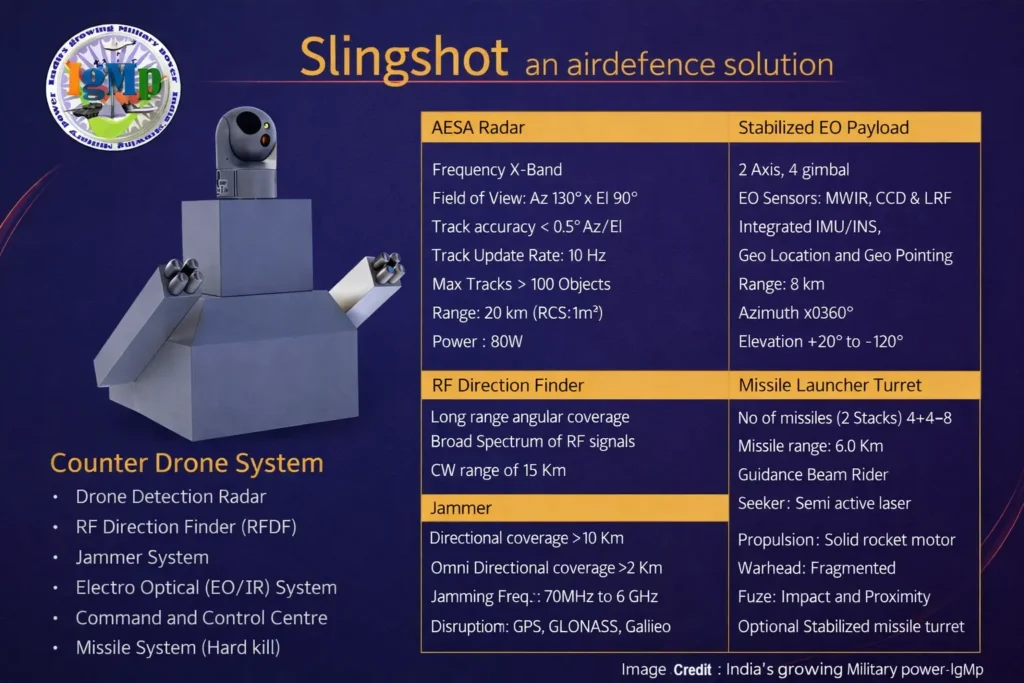
At the core of the Slingshot system is a modern X-band AESA radar, a technology increasingly used in AESA radar for anti-drone warfare. Unlike traditional rotating radars, AESA arrays electronically steer their beams, allowing rapid scanning and simultaneous tracking of numerous targets. According to the concept design, Slingshot’s radar could detect drones up to roughly 20 kilometres away while tracking more than 100 objects at once.
This capability is important because modern drone attacks often involve multiple low-radar-cross-section aircraft flying simultaneously. Detecting these small UAVs early gives operators valuable reaction time.
Once a potential target is identified, the system shifts to a stabilised electro-optical and infrared sensor suite. The payload integrates mid-wave infrared imaging, a daylight camera and a laser range finder. This sensor package allows operators to visually confirm and track drones at distances of around 8 kilometres, even in low visibility conditions.
The combination of radar detection and optical tracking creates a layered surveillance envelope designed to maintain continuous target lock from long-range detection to final interception.
Soft-Kill: RF Jamming & GNSS Disruption
The first defensive layer in Slingshot relies on Soft-Kill electronic warfare techniques. Many drones depend on satellite navigation systems such as GPS, GLONASS or Galileo for positioning and guidance. By transmitting targeted jamming signals, the system can disrupt these navigation links and prevent drones from reaching their programmed destination.
An onboard RF direction-finding module helps identify and locate the communication signals between the drone and its operator. Once detected, the system can interfere with these control links or navigation signals, potentially forcing the drone to lose orientation, return to its launch point, or crash.
Electronic disruption offers an efficient response to commercial or lightly modified drones, as it neutralises the threat without expending kinetic weapons. It also provides a quick response during swarm scenarios where dozens of drones may appear simultaneously.
Hard-Kill: Kinetic Interceptor Missiles
If electronic warfare fails or the drone operates autonomously, Slingshot introduces a Hard-Kill defensive layer using interceptor missiles. The launcher is designed to carry multiple short-range missiles capable of destroying hostile drones within roughly 6 kilometres.
These interceptors act as the system’s final shield, providing an indigenous hard-kill drone interceptor capability. Combined with radar detection and optical targeting, the missiles allow the system to physically eliminate drones that evade jamming or operate without external control links.
The layered approach—detect, disrupt, then destroy—mirrors modern counter-UAV strategies used by advanced air defence systems worldwide.
VEM Technologies itself is not new to India’s defence ecosystem. The Hyderabad-based company has previously contributed subsystems and components for major strategic programs including the Agni ballistic missile family and the Astra air-to-air missile, giving it credibility in advanced defence electronics and missile integration. Its move into integrated counter-drone platforms aligns with India’s broader push to expand domestic defence manufacturing.
The timing is significant. Reports of drone sightings near sensitive military areas and along the Line of Control have increased in recent years, raising concerns about surveillance, smuggling and potential attacks on critical infrastructure. Airports, military bases, ammunition depots and power plants are all potential targets for small UAVs, making counter-drone technologies a priority for security planners.
If developed into a deployable system, Slingshot could form part of a broader defensive network protecting strategic assets and urban centres from emerging aerial threats. For India’s defence industry, projects like this also signal a shift toward indigenous solutions designed specifically for modern warfare, where small drones and autonomous systems are becoming as disruptive as traditional missiles or aircraft.