Synopsis
- For the Indian Air Force (IAF), the interest in such a missile reflects a larger operational shift rather than a routine procurement discussion.
Source : IgMp Bulletin
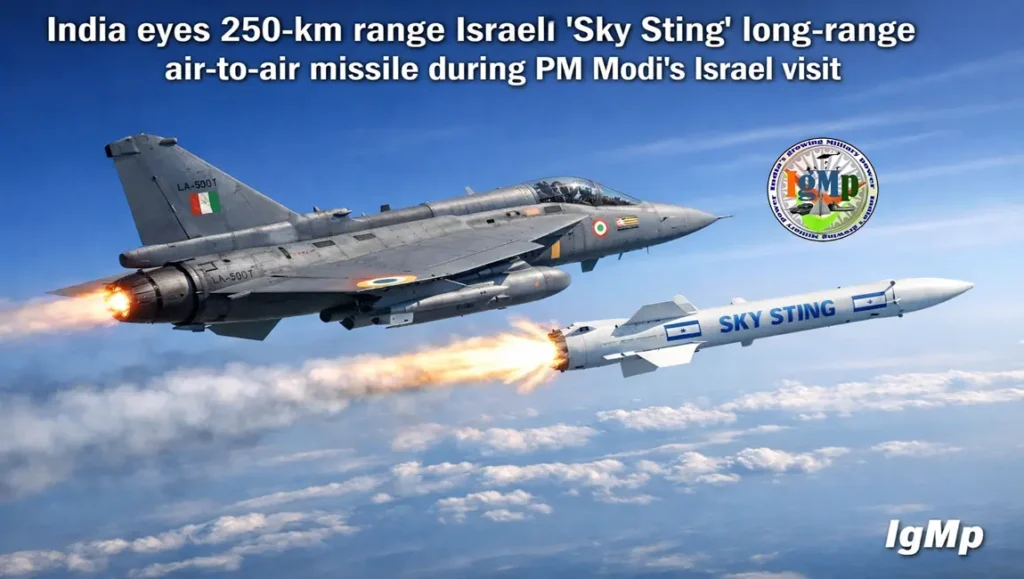
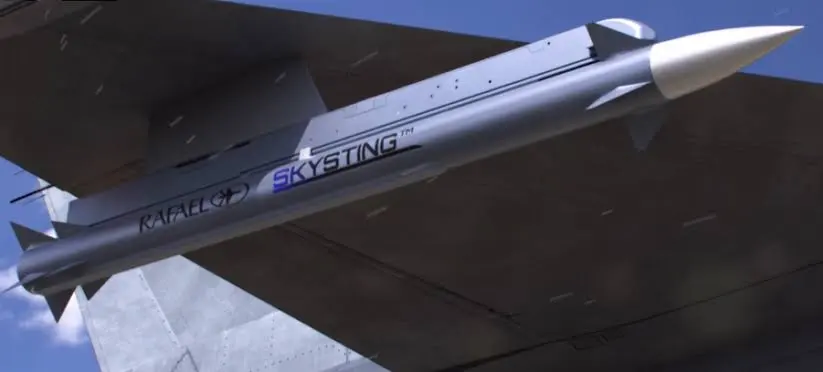
As Prime Minister Narendra Modi prepares for his visit to Israel, defence cooperation is expected to be one of the key pillars of high-level talks. Among the systems drawing attention is the Israeli-origin “Sky Sting,” a long-range beyond-visual-range air-to-air missile (BVRAAM) reportedly offering an engagement range of around 250 kilometres. For the Indian Air Force (IAF), the interest in such a missile reflects a larger operational shift rather than a routine procurement discussion.
Air warfare has evolved dramatically in recent years. Modern fighter engagements increasingly depend on radar reach, sensor fusion and missile range, often long before opposing pilots come within visual distance. In this environment, extending engagement envelopes is not simply about adding numbers to a specification sheet; it is about shaping the battlespace. A 250-km-class air-to-air missile, if fielded effectively, would allow Indian fighters to contest airspace at greater distances, potentially altering tactical calculations across the region.
Officials familiar with defence planning indicate that India may consider a phased pathway if discussions progress. An initial off-the-shelf purchase could provide near-term capability enhancement, while a subsequent stage may involve local production in collaboration with Rafael Advanced Defence Systems. Such an approach aligns with India’s long-standing effort to balance urgent operational requirements with domestic industrial growth. Recent defence projects have increasingly followed hybrid models where imported systems gradually transition into co-production or technology-sharing frameworks.
The Sky Sting is understood to be under development, having been unveiled only a few years ago. While it has reportedly achieved notable technological maturity, it has not yet been inducted into operational service. That status alone ensures that India’s evaluation will be cautious and data-driven. Beyond the headline range figure, factors such as propulsion reliability, seeker performance in contested electronic environments, mid-course guidance logic and lifecycle maintenance will weigh heavily in any decision.
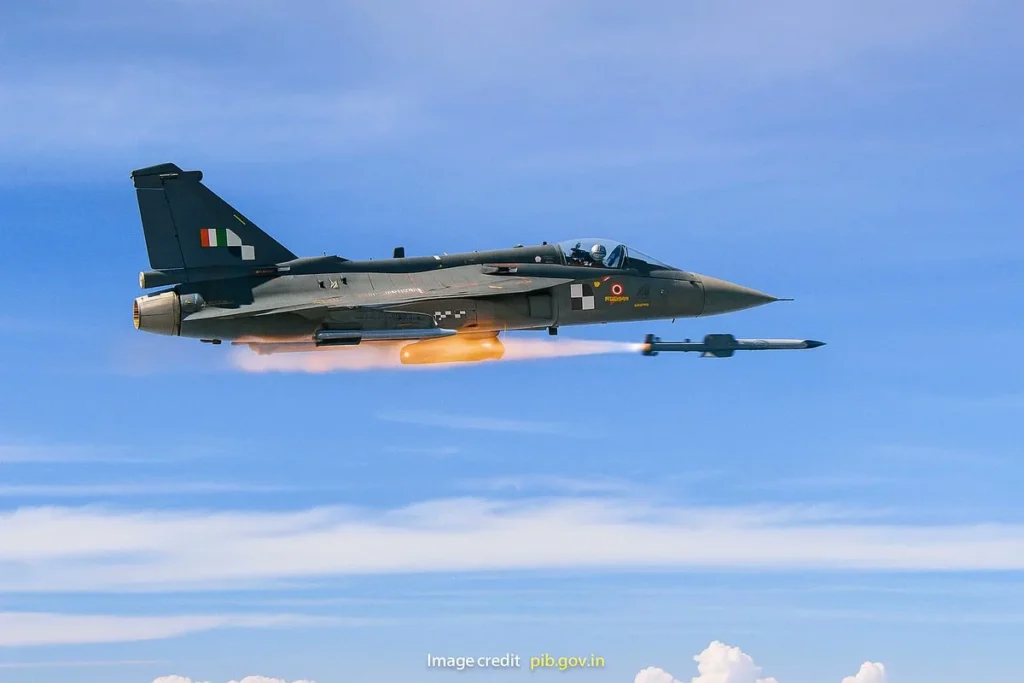
A central focus of potential integration discussions is the Tejas Mk1A, the upgraded variant of India’s indigenous Light Combat Aircraft (LCA) Tejas built by Hindustan Aeronautics Limited (HAL). With 180 aircraft on order, the Tejas Mk1A forms a core part of the IAF’s strategy to restore squadron strength. The initial batch is expected to feature the Israeli Elta ELM-2052 active electronically scanned array (AESA) radar, a system known for enhanced detection range and improved resistance to jamming.
Integrating a long-range missile onto a fighter platform is rarely straightforward. The missile’s seeker, data link and propulsion system must operate in harmony with the aircraft’s radar, mission computer and fire-control software. Even minor discrepancies in data architecture can impact performance, particularly during mid-course updates in long-range engagements. Previous integration challenges involving radar and missile combinations on the Tejas platform highlight how sensitive such processes can be. A radar and missile originating from the same technological ecosystem could offer certain compatibility advantages, but extensive trials would still be mandatory.
India’s current BVRAAM inventory already reflects a layered and diversified approach. The Astra Mk1, developed by DRDO and produced by Bharat Dynamics Limited (BDL), anchors the indigenous segment with a range of roughly 110 kilometres. More advanced variants are progressing, with Astra Mk2 aiming to push engagement ranges beyond 200 kilometres and Astra Mk3, based on solid fuel ducted ramjet technology, targeting even longer reach, around 350-400 kilometres. Alongside these domestic efforts, the IAF also operates imported BVRAAMs across its fleet. Russian-origin R-77 missiles arm the Su-30MKI, while other platforms employ advanced Western-origin missiles like MBDA Meteor, Israeli I-Derby & Python-5 etc, creating a multi-tiered engagement capability designed to address varying combat scenarios.
In that context, the Sky Sting would not replace existing systems but potentially complement them. The IAF’s objective appears to be maintaining a credible mix of indigenous and foreign technologies, ensuring operational flexibility while safeguarding long-term self-reliance. The challenge lies in balancing the rapid induction of advanced capabilities with sustained investment in homegrown programmes.
The timing of these discussions is also significant. India and Israel recently signed a memorandum of understanding aimed at expanding defence collaboration beyond straightforward procurement deals. The agreement envisions deeper industry partnerships, co-development projects and stronger supply-chain linkages. Over the years, India has inducted multiple Israeli-origin systems, including air-to-air missiles, ground-based air defence platforms and precision-strike munitions. Joint projects such as the Barak-8 air defence system demonstrate how the partnership has evolved into a long-term strategic relationship.
From a regional security perspective, India’s interest in extending its air-to-air missile range reflects broader trends. Several air forces in Asia are inducting advanced fighters equipped with long-range sensors and next-generation missiles. As engagement distances grow, so does the importance of electronic warfare resilience, secure data links and network-centric operations. Any future induction of a 250-km-class missile would therefore need to integrate seamlessly into India’s expanding networked combat architecture.
Defence procurement in India is known for its layered review processes, including technical evaluations, field trials and cost assessments. High-level diplomatic visits often provide momentum, but final decisions are shaped by operational testing and strategic alignment with long-term force planning. The coming months may offer greater clarity on whether the Sky Sting advances beyond discussions and into structured trials.
For the IAF, the broader aim remains clear: to secure reliable, long-range air combat capability while steadily strengthening indigenous aerospace competence. Whether through domestic innovation or carefully structured partnerships, the pursuit of extended engagement reach underscores India’s evolving approach to air power in a rapidly changing strategic environment.