

Synopsis
- The capability of Akash to move fast and work in a layered format enables it to be applicable in the protection of mainland and island properties.
Source : IgMp Bulletin

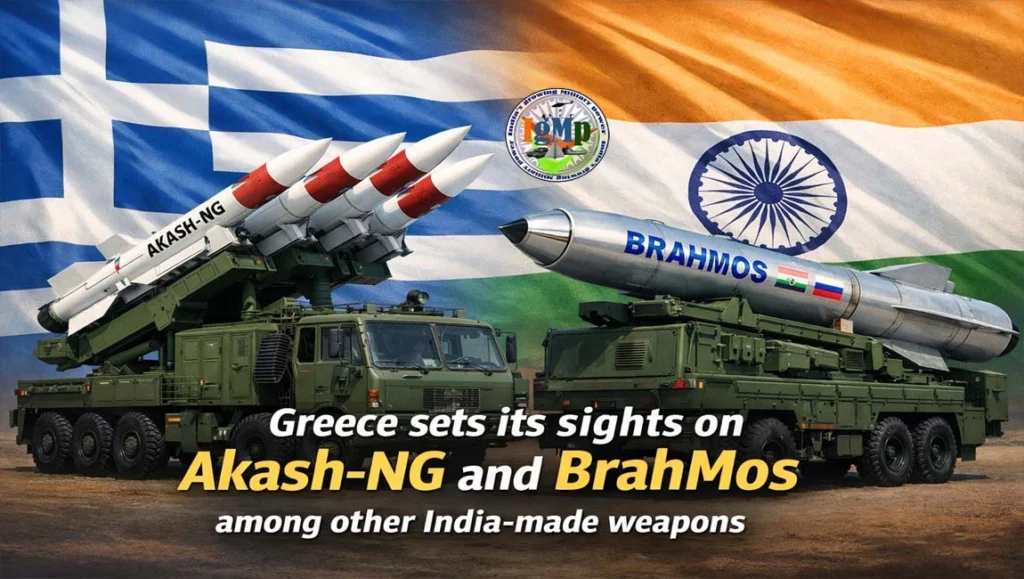
Greece is drawing its own defence map very subtly, and India is becoming a major component in this map. Athens, through its grandiose modernisation program, ‘Agenda 2030’, is seeking alternative suppliers outside of its all-time suppliers and into newer alliances which offer flexibility, affordability, and also strategic richness. The available alternatives that have been attracting attention include Indian-designed air defence systems and precision-guided armaments, which include the Akash-NG air defence system, the Barak 8 sea-based interceptor, and the most powerful Mach 2.8 speed capable BrahMos supersonic cruise missile. This change is not symbolic to a nation that is constantly troubled by the situation in the Aegean region. It is deeply practical.
The Akash missile system made by India is at the center of the interests of the Greeks. Akash missile system is built as a medium-range air-to-surface defensive equipment, which has already been proven successful in battlefield operations. It has an extensive air defence capability in case of countering fighter aircraft, cruise missiles, and other airborne threats. In case of Greece, with geography characterized by islands through which the air routes pass, and being vulnerable to aerospace, mobility is a key factor. The capability of Akash to move fast and work in a layered format enables it to be applicable in the protection of mainland and island properties.
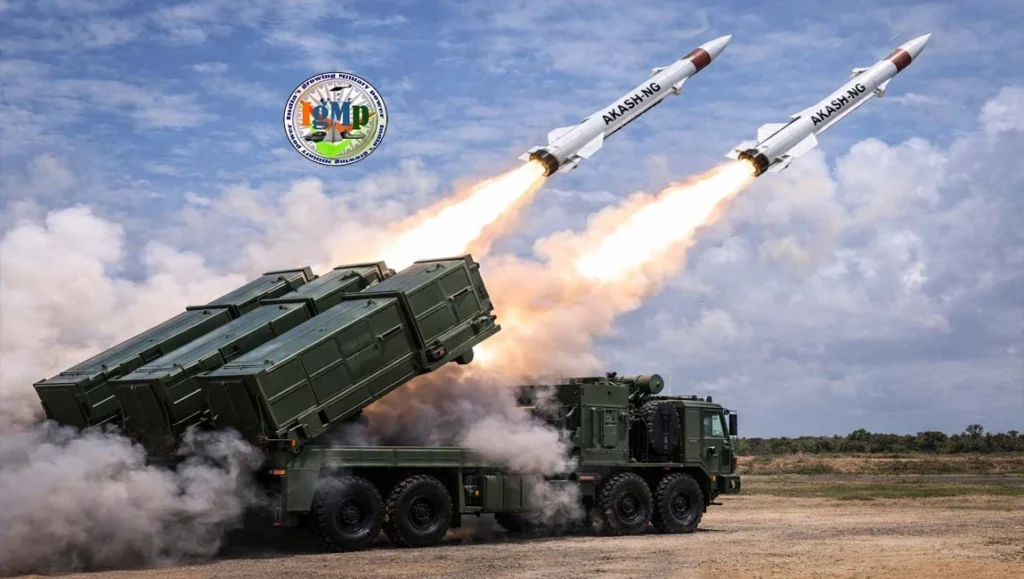
The newer generation model, which is commonly known as the Akash-NG, incorporates incremental seeker technology, enhanced reaction times, and increased range. These upgrades are important in a place where every seconds can have an impact on the result of an aerial combat. The defence planners in Greece have known that the Aegean theatre demands swift response systems that can be able to follow several targets in intricate landscapes. An Indian platform, which has grown locally and has already been tested over the years, is a feasible possibility with no political strings attached, which is often the case for any Western procurement.
It is also important to consider the naval aspect. The Aegean and Eastern Mediterranean are narrow and very competitive seas. In this case, missile systems with precision interception that are vertically launched become important. The Barak 8, a missile that was developed jointly by India and Israel, can fulfill that. Barak 8 is designed to be navigable on a naval platform but can be scaled to work on land. Barak 8 is a recognized system that is able to intercept incoming threats with great accuracy at medium ranges.
In case of Greece, with its naval power sailing over an archipelago with small channels in between, a custom-designed shield is offered by Barak 8. It especially works well in low-flying aircraft, anti-ship cruise missiles, and fast attack crafts. Quick vertical launching and operation over 360 degrees are useful in a maritime setting where a threat may be generated at any second and at low altitude.
But the most curious situation in the Greek strategic circles has been raised by the BrahMos supersonic cruise missile. BrahMos has a supersonic speed over Mach 3 and can strike targets at any location. Practically, this involves a missile with a range of hundreds of kilometres in minutes, to which the opponent has limited time to respond. Such speed changes the balance of a country, which is trying to enhance its Anti-Access and Area Denial (A2/AD) posture.
The incorporation of the BrahMos into the naval forces of the Hellenic Navy on Frigates or their use in the coastal batteries would establish a deterrence layer to protect distances. With a range in the modern versions of over 400 kilometres, the missile would enable Greece to have a strong defensive power over vital seas. In the Aegean, where manoeuvring space is limited, and geography can amplify the impact of precision strikes, this capability could reshape operational calculations.
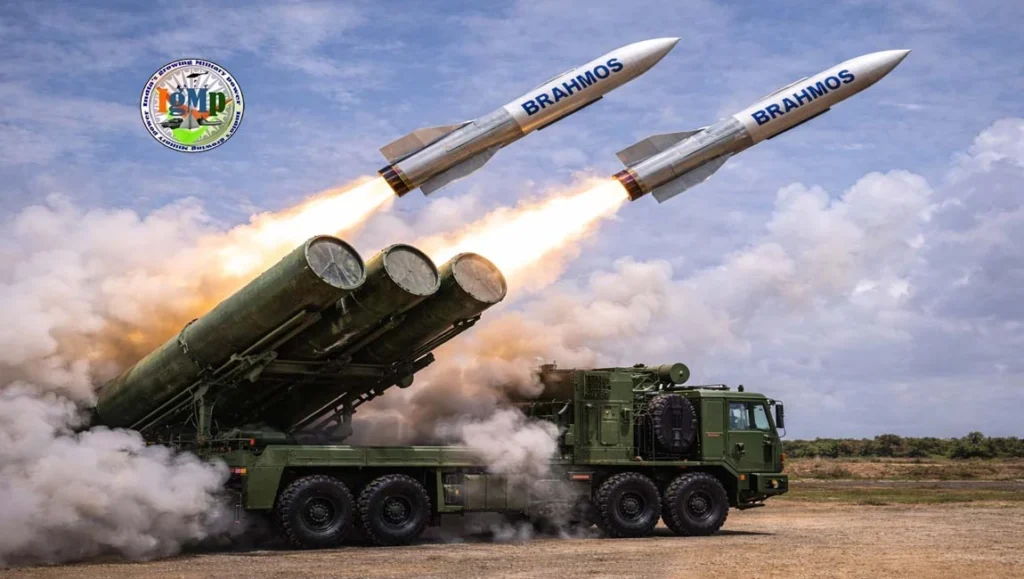
BrahMos is a versatile platform, and this is also one of the important aspects of its so much appeal. It could be deployed on land, sea, and air platforms. In case of Greece, such flexibility presents several deployment modes without any requirement of relying solely on a single supplier ecosystem. It is even discussed in the policy circles as to whether any licensed production or co-development is possible, and the move would express the wish of Athens to be more strategically free. Supplier diversification decreases the risk of sanctions, latitude, or geopolitical stressors.
This change comes when Greece is reevaluating its old procurement tradition. Decades ago, Athens depended on the US and European defence companies. Although such alliances are very healthy, the world supply chain obstacles, price swings, and political sensibilities have promoted diversification. The Indian defence sector, with long-term governmental subsidies and export strategies, gives a viable alternative.
It is not a one-sided partnership. Greece also comes to the table, especially in unmanned systems. The Sarisa armed drone system provided by SAS Technology has become a topic of interest due to its ability to switch and change its mode of operation, as well as its modular design. Another notable instance of reverse technology flow is that the platform is currently licensed to be manufactured in India under the name MV 1000 AMARAN. This deal shows that cooperation is not restricted to missile sales, but it goes down to co-production and joint innovation.
The UAS plays the future of the battlefields, and it is in India and Greece that the challenges of drones are going to change. The technology of counter-unmanned aerial vehicles is also on the agenda. The investments made by India in electronic warfare and directed-energy countermeasures go together with the requirement that Greece has in securing its borders, ports, and energy infrastructure. The development in this area would also result in systems that can counter drone swarms, which have become a threat of immense proportions in recent battles throughout the world.
The issue of these discussions was also emphasised by a recent visit of the Greek Defence Minister Nikos Dendias to the defence production facilities of India. In his meetings with New Delhi, including interaction with the executives of Bharat Dynamics Limited and Tata Advanced Systems, Dendias pointed out that Greece is interested in more than in-shelf buys. His goal, he said, is long-term partnership, mutual research, and production.
This would be in line with India’s own export strategy. In recent years, New Delhi has been increasing its sales to several countries like Armenia and the Philippines. India is presenting itself as a dependable partner to those countries looking into other suppliers other than the traditional ones, through the provision of competitive pricing, technology transfer opportunities, and flexible systems.
This is a good strategic move. Greece is in a constant conflict with Turkey in the Aegean and the Eastern Mediterranean. India also has its maritime challenges in the Indian Ocean and through the borders that are disputed. The two nations know the importance of layered air defence, credible deterrence, and resilient supply chains. Mutual interests in the maritime sphere provide a set of opportunities to enhance cooperation, such as common naval training and an exchange of military intelligence.
Agenda 2030, the larger reform plan in Greece, tries to modernise the armed forces, wherein technology and diversified coalition focus on partnerships. Individually, by talking of Indian platforms like Akash-NG, Barak 8, and BrahMos, Athens is making overtures to start thinking outside the box. This does not imply the denial of current alliances, but a strategic enlargement of opportunities.
For India, a closer relationship with Greece carry symbolic as well as economic importance. The decision to enter the European defence market improves the credibility and presents new opportunities for collaboration in the future. Co-production agreements might create jobs and growth in technology in the two countries. As the case of MV 1000 AMARAN drone shows, shared manufacturing can be beneficial to both parties.
The geopolitical environment cannot be overlooked. With the changing global power patterns, the discussion of flexible networks of cooperation is underway by middle powers such as Greece and India. Defence partnerships have ceased being transactional. They are getting more and more involved with research collaboration, integration in industry, and strategic planning on a long-term basis.
A pilot project on missile integration and counter-drone systems would be more likely to make a note in the years to come. Formal announcements may be made at the defence exhibitions and bilateral summits. One evident thing is that we are no longer dealing with exploratory talks.
The appeal of Greece toward air defence systems of India is a practical calculation, which is made under geography, budget constraints, and strategic uncertain conditions. Such systems as Akash-NG provide a stratified defense; Barak 8 gives a tougher naval defense; BrahMos is a high-speed deterrence. These factors, together with drone cooperation and the development of electronic warfare systems, form a complete framework.
With the ongoing Agenda 2030 reforms in Athens, the defence industry in India is set to become an effective contributor to the security architecture in Greece. At a time when alliances are becoming more fluid and technology-based self-reliance is all the rage, this new cooperation can be heralded as an even bigger one: countries worldwide are seeking reliable, diversified, and cooperative defence partnerships in the unpredictable age.


