Synopsis
- The interceptions are being framed by Iranian state media as part of a broader retaliatory campaign called Operation True Promise 4, a continuation of Tehran’s series of responses to Israeli military activity in the region.
IgMp Bulletin

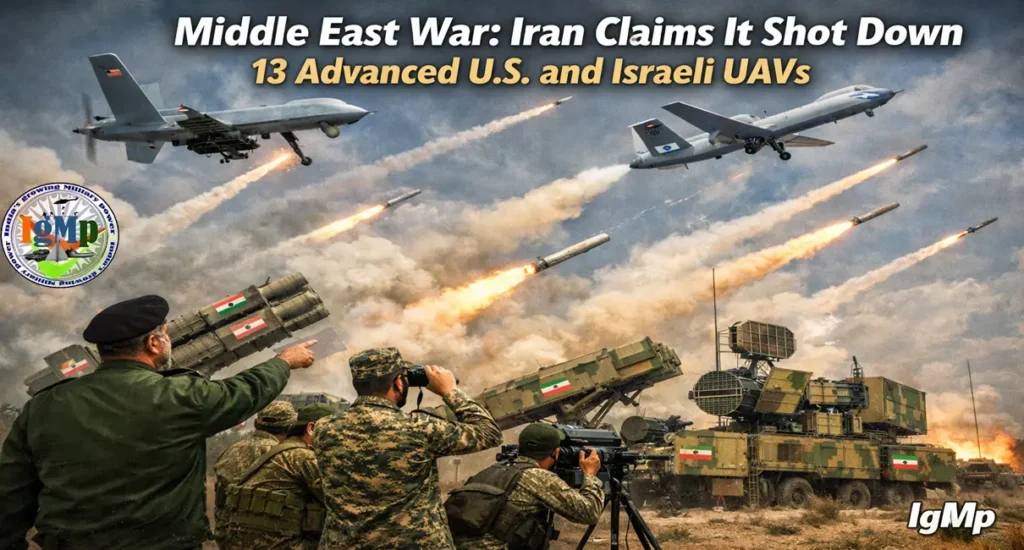
Iran says its air defence forces have intercepted and destroyed 13 additional unmanned aerial vehicles (UAV) belonging to the United States and Israel, adding a new layer of tension to the rapidly evolving aerial confrontation in the Middle East. The announcement, released by the Islamic Revolutionary Guard Corps (IRGC) through the Khatam al-Anbiya Central Headquarters, comes amid what Iranian authorities describe as a week of sustained drone incursions across sensitive parts of the country [Source: Anadolu Ajansı].
According to Iranian military spokesperson Ibrahim Zolfaghari, the latest interceptions occurred in northwestern, western and southern regions, as well as near key strategic centres including Isfahan, Kerman and the capital Tehran. Iranian officials say these areas were targeted because of their proximity to major military infrastructure and missile facilities. Zolfaghari stated that the total number of drones intercepted since the escalation began last Saturday has now exceeded 75.
The interceptions are being framed by Iranian state media as part of a broader retaliatory campaign called Operation True Promise 4, a continuation of Tehran’s series of responses to Israeli military activity in the region. The operation follows reported strikes carried out by Israel under what analysts refer to as Operation Epic Fury, which allegedly targeted sites in western Iran earlier in the week, particularly near the border province of Kermanshah.
Iranian authorities claim that the drones shot down include several advanced reconnaissance platforms used by Western and Israeli forces. The list includes the MQ-9 Reaper, the Israeli-made Hermes 450 and Hermes 900 surveillance drones, along with smaller systems such as the Orbiter UAV. These platforms are typically used for intelligence gathering, battlefield monitoring and precision strike coordination during high-risk operations.
Defense Scorecard
| Drone Type | Origin | Role | Reported Status |
|---|---|---|---|
| MQ-9 Reaper | USA | Armed reconnaissance | Intercepted (Iranian claim) |
| Hermes 450 / 900 | Israel | Tactical surveillance | Multiple units downed (IRGC claim) |
| Orbiter UAV | Israel | Light reconnaissance | Targeted near Isfahan |
| Air Defence Used | Iran | Missile + Electronic Warfare | Bavar-373, 3rd Khordad |
Iran says its air defence network used a combination of missile systems and electronic warfare to neutralize the drones. Among the systems cited were the domestically developed Bavar-373 air defense system and the 3rd Khordad missile system, both designed to counter high-altitude reconnaissance aircraft and stealth targets.
In addition to traditional missile intercepts, Iranian officials claim that several drones were disabled through electronic warfare measures rather than being destroyed outright. According to the IRGC statement, some UAVs were reportedly “hijacked” or forced to land after their control links were disrupted, a tactic known as a “soft kill” in modern air defence operations. Such capabilities are of growing interest to military planners worldwide, as electronic warfare can neutralize drones without revealing the position of air defence batteries.
The locations mentioned in the Iranian report underline the strategic sensitivity of the interceptions. Isfahan hosts a number of key defence-industrial and nuclear facilities, while the western corridor near Kermanshah has long been viewed as a critical gateway between Iran and the broader Middle East theatre. Surveillance activity over these areas often indicates attempts to monitor missile deployments or underground infrastructure.
However, the claims remain strongly disputed by Western officials. Both United States Central Command and the Israel Defense Forces have denied losing the drones cited in the Iranian report, describing the announcements as part of a broader psychological warfare campaign designed to project defensive strength.
The competing narratives highlight the increasingly opaque nature of modern aerial conflict, where electronic warfare, cyber operations and unmanned systems blur the line between confirmed combat losses and information warfare. Military analysts say that without independent verification, it is often difficult to determine the exact scale of drone losses during such confrontations.
The airspace tensions are unfolding alongside a broader maritime dimension to the crisis. Iranian media has also reported attempted drone strikes against the USS Abraham Lincoln carrier strike group operating in the Sea of Oman earlier this week, although details surrounding those incidents remain disputed.
Together, the aerial interceptions and maritime encounters illustrate how unmanned systems have become central to modern regional competition. From intelligence gathering to electronic warfare, drones are increasingly at the heart of the strategic chessboard shaping Middle Eastern security.