

Synopsis
- India’s maritime prowess was on display on March 14, 2026, when the Indian Navy ensured the safe passage of critical LPG energy cargo through the Strait of Hormuz, one of the world’s most sensitive maritime chokepoints.

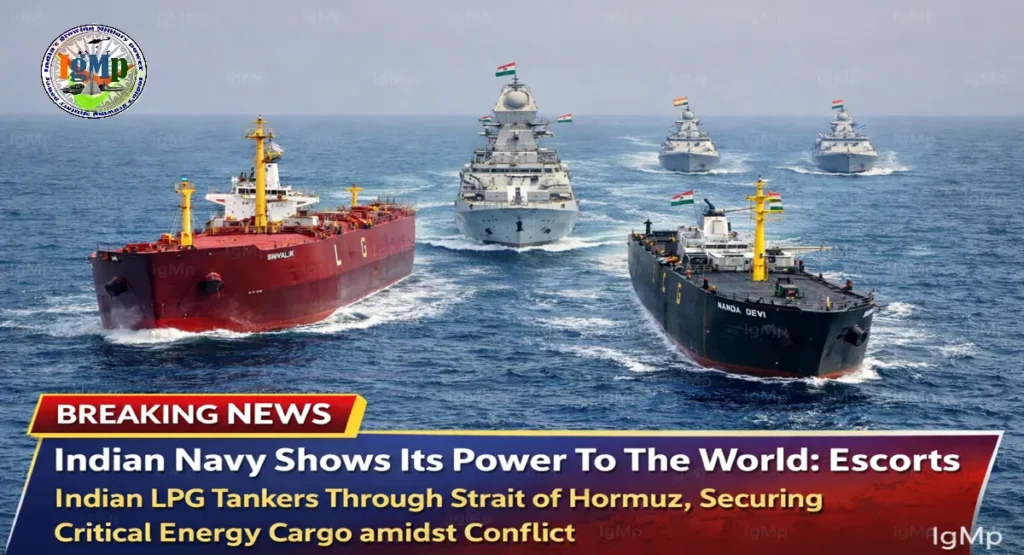
India’s maritime prowess was on display on March 14, 2026, when the Indian Navy ensured the safe passage of critical LPG energy cargo through the Strait of Hormuz, one of the world’s most sensitive maritime chokepoints. Two India-flagged LPG carriers—Nanda Devi and Shivalik—successfully crossed the narrow corridor under naval protection, carrying vital fuel supplies back to India despite heightened geopolitical tensions in the Gulf region.
The operation safeguarded 92,712 metric tonnes of liquefied petroleum gas (LPG) destined for Indian ports. The cargo is essential for domestic fuel consumption and industrial demand. The tankers are expected to dock at Kandla Port and Mundra Port, respectively, strengthening India’s energy supply chain at a time when shipping routes across West Asia remain volatile.
Key Highlights: Indian Navy Escort Operation
- Vessels Involved: LPG carriers Nanda Devi and Shivalik
- Cargo Type: Liquefied Petroleum Gas (LPG) for Indian domestic supply
- Total Cargo Weight: 92,712 metric tonnes combined
- Transit Date: March 14, 2026
- Ports of Arrival: Kandla Port (Nanda Devi) and Mundra Port (Shivalik)
- Ownership: Both vessels operated by Shipping Corporation of India (SCI)
- Security Provider: Escort and surveillance by the Indian Navy
- Geopolitical Context: Rising Gulf tensions following escalations on February 28, 2026
Indian Navy Operation in the Strait of Hormuz
The Strait of Hormuz sits between Iran and Oman and connects the Persian Gulf with the Gulf of Oman. Nearly one-fifth of the world’s oil and gas trade flows through this narrow maritime route each day.
With tensions rising across West Asia, commercial vessels navigating this corridor face increased security risks. In response, the Indian Navy deployed warships equipped with advanced air defence systems, maritime radars, and surveillance capabilities to escort India-bound tankers safely through the passage.
Naval command centres monitored the movement of the vessels using satellite feeds, maritime patrol aircraft, and drones. The operation ensured uninterrupted movement of the LPG carriers as they exited the strait and entered open waters in the Arabian Sea.
This escort mission also reflects the Navy’s broader mandate under Operation Sankalp, launched in 2019 to protect Indian merchant shipping across the Gulf region and nearby sea lanes.
Strategic Escort of Nanda Devi and Shivalik LPG Carriers
The tanker Shivalik was the first of the two vessels to cross the strait safely before heading toward Mundra Port in Gujarat. Shortly afterward, Nanda Devi completed its escorted passage and proceeded toward Kandla Port carrying more than 46,000 metric tonnes of LPG.
Both ships are operated by the Shipping Corporation of India (SCI), India’s state-owned shipping enterprise responsible for transporting strategic cargo across international waters.
The successful transit of the two carriers is notable because they represent the first India-bound LPG shipments to cross the Strait of Hormuz in nearly two weeks, following disruptions caused by regional instability.
India–Iran Maritime Diplomacy and Strategic Coordination
Diplomatic engagement played an important role in enabling the secure transit of these vessels. India maintained active communication with regional stakeholders during the crisis.
Prime Minister Narendra Modi held discussions with Iranian President Masoud Pezeshkian, emphasizing India’s priority to maintain safe shipping lanes and protect energy trade. At the same time, External Affairs Minister S. Jaishankar engaged with Iranian Foreign Minister Seyed Abbas Araghchi to coordinate maritime stability and prevent disruptions to commercial shipping.
Such diplomatic coordination complements India’s naval presence in the region and reflects a broader strategy combining security operations with international engagement.
Why the Strait of Hormuz Matters for India’s Energy Security
India is among the world’s largest importers of LPG and relies heavily on supplies from Gulf producers. Disruptions in the Strait of Hormuz can therefore have immediate effects on fuel availability and prices within the country.
The Indian government has significantly expanded LPG usage through programs such as the Pradhan Mantri Ujjwala Yojana (PMUY), which provides clean cooking fuel to millions of households. As a result, securing reliable maritime supply routes has become a critical element of India’s energy strategy.
Naval escorts and real-time maritime monitoring now play an increasingly important role in protecting these shipments.
Why It Matters for Indian Consumers
India consumes around 33 million tonnes of LPG annually, and a large share arrives through imports from the Gulf region. Safe maritime transit ensures that fuel reaches Indian ports without delays.
For millions of households that rely on LPG cylinders for daily cooking, uninterrupted supply means stable prices, reliable distribution, and energy security even during global crises.
The successful escort of Nanda Devi and Shivalik highlights how India’s maritime security framework is evolving to protect vital trade routes. With naval deployments, diplomatic outreach, and strategic monitoring working together, the country is increasingly capable of safeguarding its energy lifelines even in periods of regional instability.


