

Synopsis
- Access to full or part of the source code would, in principle, give the Indian engineers the ability to change mission systems, add domestic weapons, and retain control of upgrades without relying on foreign acceptance.
Source : IgMp Bulletin

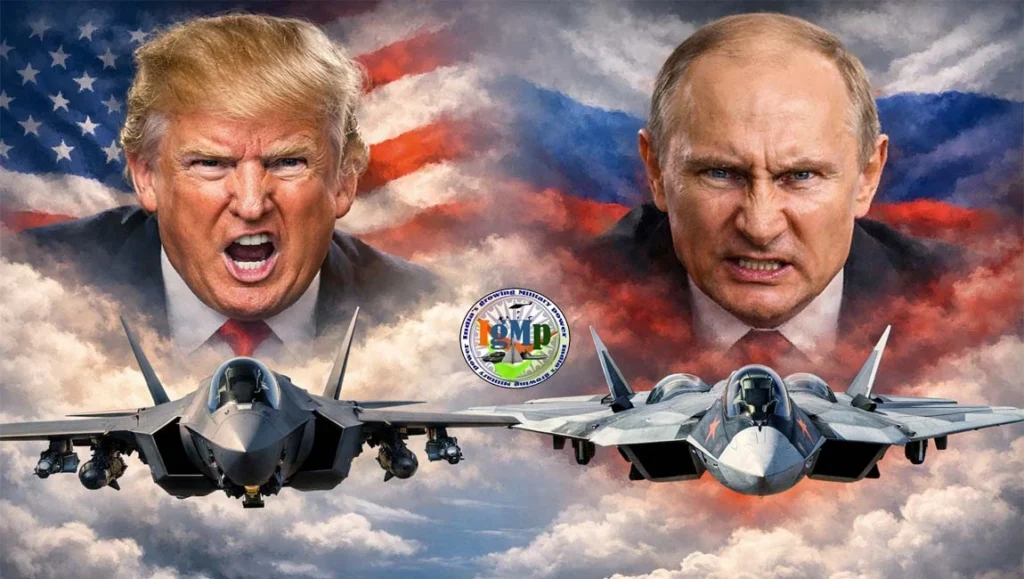
An interesting contest is going on behind closed doors in New Delhi. With India strengthening the future of air combat capabilities through new aircraft acquisitions, American strategic thinkers believe that Washington is making strides to carve Lockheed Martin F-35A Lightning II as a genuine alternative to the Russian pitch of Sukhoi Su-57E. Only the fighter jet contract is not at stake. The decision has the potential to determine India for decades to come through strategic alliances, technology trajectory, and operational freedom.
Russia has actively been pitching the Su-57E to India, positioning it as a fifth-generation platform that can be modified to suit the needs of India. The offer includes local production, major technology transfer, and even access to the aircraft source code. These factors have massive implications for New Delhi, which has always preferred complete freedom and autonomy in terms of operating foreign-made defense items. Its experience with licensed production programs and joint ventures in India has created an obvious preference that, when it pours billions of dollars into a next-generation fighter system, it would like to have control over upgrades, integration, and lifecycle management.
The F-35A is by far the most popular fifth-generation fighter in the world on the American side. The jet, designed by Lockheed Martin, is characterized by its stealth features, sensor fusion, and network-centric warfare. It has turned into a US and allied airpower pillar. The F-35 is, however, also among those that are tightly controlled in terms of technological upgrades. The United States does not traditionally give full source code access or technology transfer without having restrictions on the aircraft, including to its close allies.


There is a massive dilemma for India here. Russian authorities have packaged the proposal of Su-57E as a joint venture instead of a buy. The agreement to build the aircraft manufacturing plant in India, with possible help of available industrial infrastructure, goes hand in hand with the long-term campaign of self-reliance by New Delhi towards domestic production and construction. Access to full or part of the source code would, in principle, give the Indian engineers the ability to change mission systems, add domestic weapons, and retain control of upgrades without relying on foreign acceptance.
By comparison, institutional and strategic restraints drive Washington toward renewed talks on the F-35A. The software architecture and stealth surfaces of the aircraft are two highly classified technologies in the US defense arsenal. It would be precedent to make access to the entire source code of every non-treaty ally available. The realist analysis by American analysts additionally admits that the best way forward would be a similar arrangement made for the F-35I Adir given to Israel. In this model, there is an opportunity to integrate only selected domestic systems and weapons, but preserve the main software and mission systems in the possession of the US.
In the case of India, it might be operational flexibility that is not entirely autonomous in terms of the form of the model. An Israeli-style package could allow integrating indigenous air-to-air missiles, electronic warfare pods, and communications. Nevertheless, the final control over more radical changes would probably be in the hands of Americans. That is an important consideration for a nation that has traditionally been firm not to become over-reliant on a single supplier.
The strategic context, in general, makes the equation difficult. The dependency relations that India had with Russia in terms of defense solutions go back decades, starting with fighter jets, then moving to submarines and air-defense equipment. A significant fraction of the Indian military inventory remains Russian-origin. The offer of Su-57E may be regarded as the effort of Moscow to secure its position in the changing structure of Indian forces as New Delhi tries to diversify its suppliers.
In the meantime, the United States has increasingly expanded security relations with India throughout the last 15 years. Basic accords, exercising togetherness, and advancing interoperability have changed the bilateral relationship. This trajectory would be in which the F-35A pitch is calculated, and it would indicate that Washington is not only seeing India as a buyer but a strategic partner in the Indo-Pacific region. Nevertheless, collaborating does not necessarily mean having free access to technologies.
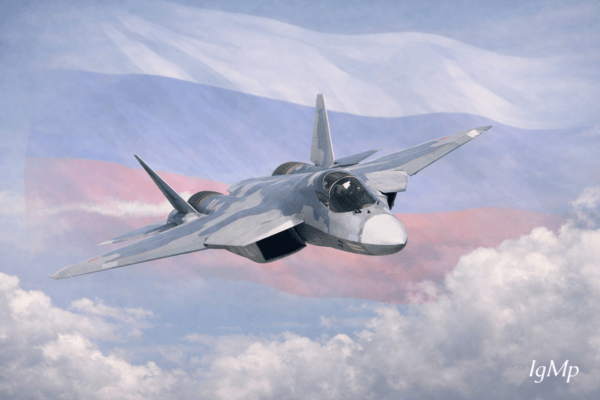
Both planes operationally allude to 5th generation proficiencies, including low observability and sophisticated sensors. The advantage of the F-35A is a proven system in combat, a mature production line, and a place in a huge global network of suppliers. It enjoys the advantage of constant upgrades through a high number of users. Su-57E, in turn, is more recent as an export (table), and it is being promoted as a highly maneuverable aircraft with stealth capabilities. One of the major points of distinction in its sales pitch is the eagerness of Russia to negotiate more technology transfer.
Other factors in the calculus for India are cost, sustainment, and political risk. The F-35 project has had criticism on maintenance costs and reliance on its supply chain, but it does have some degree of economy due to its magnitude. The life cycle cost of the Su-57E is not transparent, and the sanctions imposed on Russia have created uncertainties regarding financing and long-term logistics. India needs to earnestly use decades of operational assistance in addition to the initial cost.
Probably the most decisive question is that of autonomy. India has always desired the capability to develop its own weapons and modernize platforms within the timelines chalked out by itself. This is a priority based on past experiences where external political pressure influenced spares and support. The promise of complete source code access to a fifth-generation aircraft, in this sense of the term, would provide India with considerable power over its airpower, such as it never had before. However, there are technical and political complications involved in such promises. Access has to be translated into meaningful independence by relying on comprehensive domestic understanding and long-term investments.
For its part, the United States has to balance the risks of relaxing control over its flagship fighter. It would take delicate negotiations and trust to even offer a customization package in an Israeli style to India. It would indicate a new era of trust in bilateral affairs. But it would not go to the extent of being a complete sovereignty over the platform.
The choice will now depend on the leadership of India. Selecting the F-35A would also keep New Delhi in a US-dominated technological environment, which is likely to increase interoperability with other Western partners. It may be possible to maintain strategic flexibility by choosing the Su-57E and sticking with India’s wish to absorb more technology. All routes represent the barter compromises in capacity, dominance, and geopolitics.
As the debate becomes more intense, it represents a more general issue as to whether India conceived of its defense future as access to a global system with boundaries for adaptation, or as one with the highest autonomy available by seeking greater autonomy in terms of technological transfer, despite containing its own set of uncertainties. Not only will the result of this affect the future fleet of the Indian Air Force, but it will also indicate how New Delhi will balance its partnership with independence in the ever-growing, polarised world.


