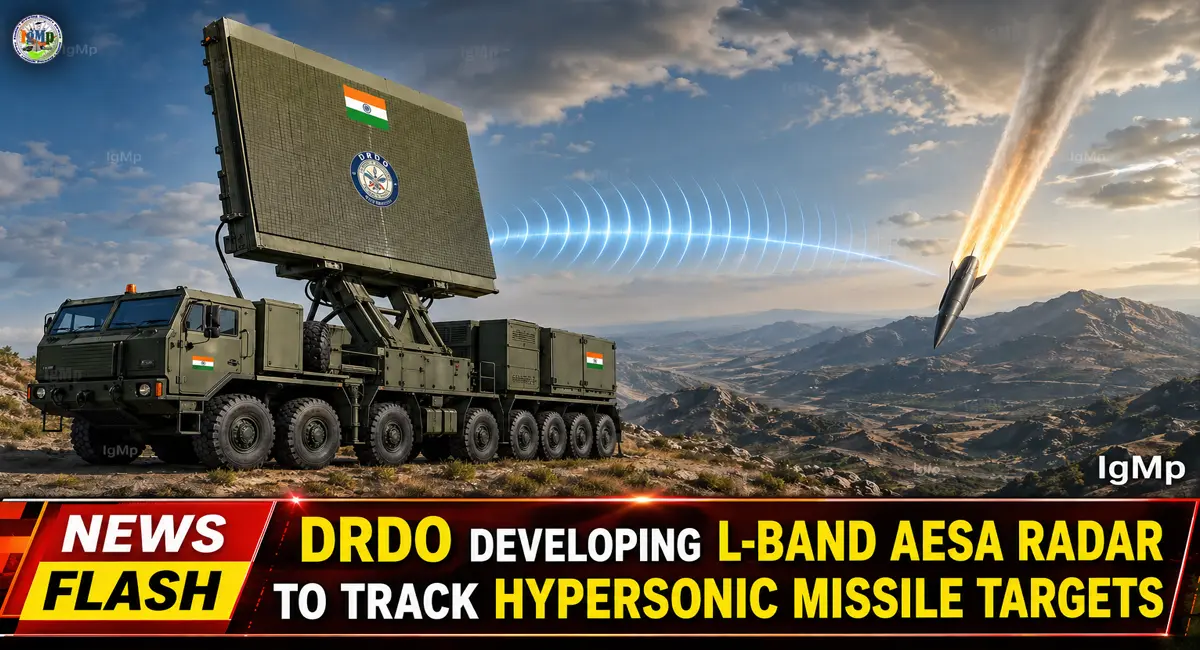
India is pushing hard to build stronger protection against hypersonic missiles. These weapons travel faster than Mach 5 and leave very little reaction time for air defence systems. Their speed and flight profile make interception far more difficult than traditional ballistic or cruise missiles.
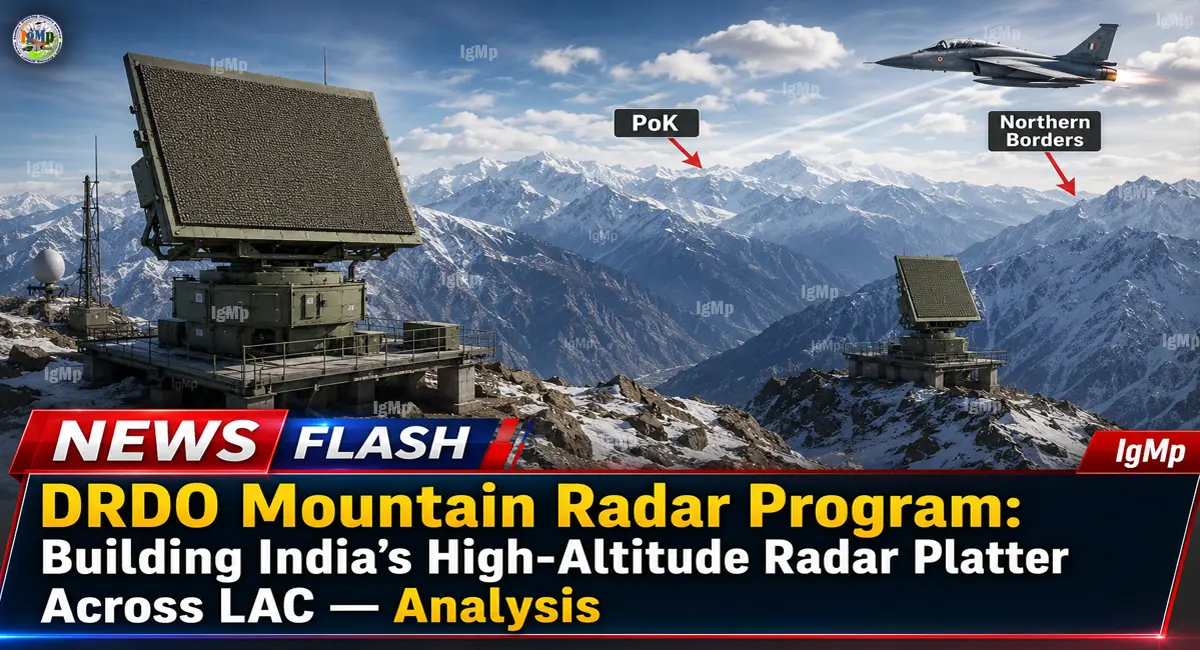
To solve this problem, the Electronics and Radar Development Establishment (LRDE) a branch of DRDO is developing an advanced L-Band AESA radar. This radar is designed to detect and track hypersonic threats that normal fire-control radars often struggle to follow.
The biggest reason behind this challenge is something called the Plasma Sheath. This effect creates a natural shield around a hypersonic missile and makes radar tracking much harder. India’s new radar aims to overcome that shield and improve the country’s future missile defence network.
This project also connects closely with Project Kusha, India’s long-range air defence programme, and the Indian Air Force’s automated command and control network, AkashTeer. Together, they form the backbone of India’s next-generation air defence strategy.
Why Hypersonic Missiles Become Difficult to Detect
Understanding the Plasma Sheath
When a missile flies at hypersonic speed, the surrounding air faces extreme pressure. This pressure creates very high temperatures around the missile body. As the temperature rises, air molecules break apart and turn into charged particles.
This process creates a cloud called the Plasma Sheath. Many experts also call it plasma blackout. This layer surrounds the missile and interferes with radar signals trying to track it.
Most traditional radars use X-Band frequencies for accurate targeting and missile guidance. These shorter wavelengths work very well against normal aerial targets. However, plasma absorbs or distorts these signals during hypersonic flight.
This is why systems struggle to track weapons like China’s DF-17 or Russia’s 3M22 Zircon. Their speed does not just reduce response time. It also creates a protective layer that weakens radar visibility.
Why L-Band Works Better Than X-Band
The Advantage of Longer Wavelengths
The strength of L-Band radar comes from basic physics. It operates in the 1–2 GHz frequency range, which gives it much longer wavelengths than X-Band systems.
These longer waves face less disruption from ionized plasma. They can move through the plasma sheath more effectively and keep track of the target even during extreme-speed flight.
This gives L-Band a major advantage in early warning and long-range tracking. It helps defence systems detect the missile earlier and increases the available interception window.
X-Band still remains important for terminal fire control because it offers high precision. However, it often loses effectiveness during the earlier tracking phase of hypersonic engagement. L-Band fills that gap and creates a stronger detection chain.
This is why LRDE’s new L-Band AESA radar represents a major step beyond the current Swordfish Radar, which already supports India’s ballistic missile defence network.
How GaN Technology Makes the Radar Stronger
From Gallium Arsenide to Gallium Nitride
Another major improvement comes from the use of Gallium Nitride (GaN) technology. Older radar systems depended heavily on Gallium Arsenide (GaAs) modules. While effective, those systems had limits in power output and heat management.
GaN changes that equation completely. It allows radar modules to transmit stronger signals while handling much higher temperatures. This improves detection range and increases overall reliability during combat operations.
A stronger signal matters greatly in hypersonic tracking. The radar must push enough power through heavy plasma distortion and still maintain target lock. GaN helps provide that strength.
It also improves resistance against electronic warfare and jamming attempts. In modern combat, survivability matters as much as raw detection range. A radar that survives electronic attack gives commanders more confidence during real conflict.
This technology gives India the “brute force” needed to build a credible anti-hypersonic shield rather than just a surveillance system.
How AI and AkashTeer Complete the Kill Chain
From Detection to Interception
Detection alone does not stop a missile. The system must quickly process data, remove false signals, and guide the right interceptor toward the threat.
Hypersonic missiles create heavy clutter and false radar returns. Their speed and plasma layer make signal interpretation difficult. To solve this problem, LRDE is working on Cognitive Radar functions supported by Space-Time Adaptive Processing (STAP) algorithms.
These systems use advanced computing to study the environment in real time. They filter unwanted clutter and focus on genuine threats. This improves tracking quality and reduces mistakes during high-pressure engagements.

The radar then feeds this information into AkashTeer, the Indian Air Force’s automated air defence network. AkashTeer acts as the command and decision engine of the system. It connects sensors, interceptors, and command centres into one network.
In simple terms, the radar finds the target, while AkashTeer decides how to destroy it. This complete sensor-to-shooter chain gives India a much stronger defensive posture against future hypersonic threats.
Strategic Impact of this New Radar against Chinese and Russian Hypersonic Technology
China’s DF-17 and Russia’s Zircon represent a major challenge for modern air defence systems. Both rely on speed and reduced radar visibility to shorten enemy reaction time and increase strike success.
India’s move toward L-Band tracking changes that balance. It reduces the advantage created by plasma-based stealth and gives defenders more time to respond.
This matters greatly for Project Kusha, which aims to provide long-range strategic air defence against advanced aerial threats. A stronger tracking radar improves the effectiveness of the entire interception system.
The long-term potential is even bigger. If India adapts this radar for the Navy’s Visakhapatnam-class destroyers, it could create sea-based hypersonic defence coverage across the Indian Ocean Region. That would add a powerful naval layer to India’s deterrence posture.
The real value of this radar is not only detection. It is strategic denial. It tells adversaries that speed alone will no longer guarantee survival.
In future warfare, the nation that sees first will strike first. India’s L-Band AESA radar could become the technology that makes that possible.