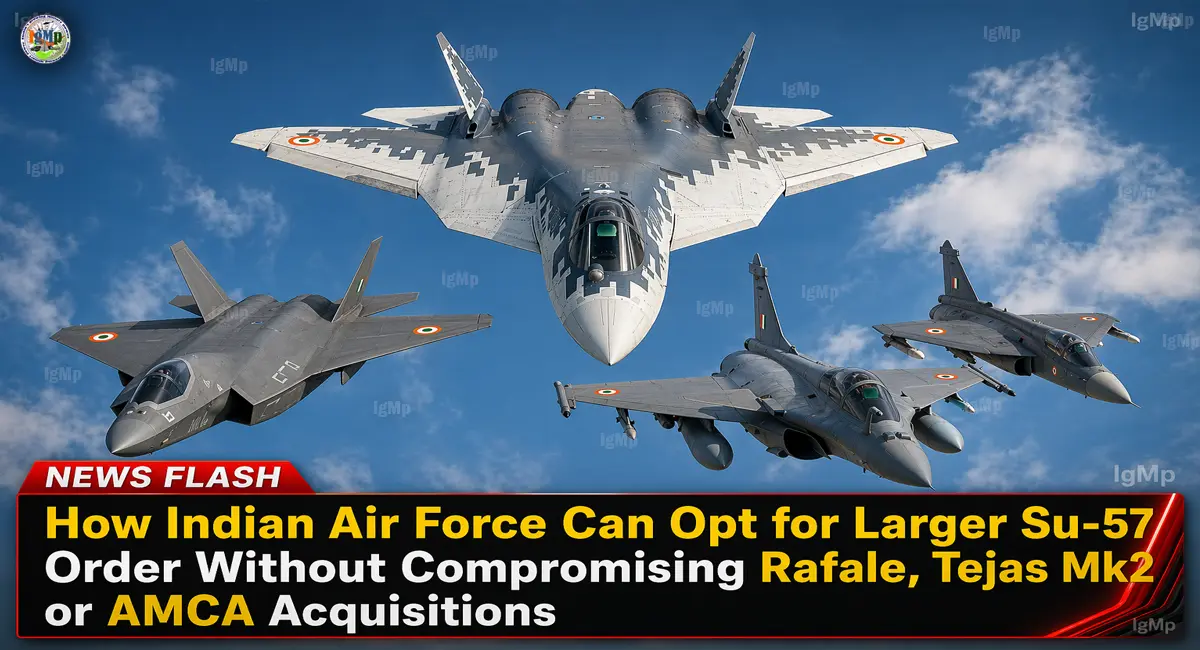
Russia is pushing the Su-57M1 as a fast solution for India’s fifth-generation fighter gap. At the same time, India continues to develop the indigenous AMCA program for long-term air dominance. This creates one central question for Indian planners: should the Air Force wait for AMCA, or use the Su-57M1 as a bridge platform before 2028?
The urgency is real. China has expanded deployments of the J-20A near the Line of Actual Control, and Pakistan continues to deepen its fighter modernization plans. India cannot afford a long capability vacuum in stealth air combat.
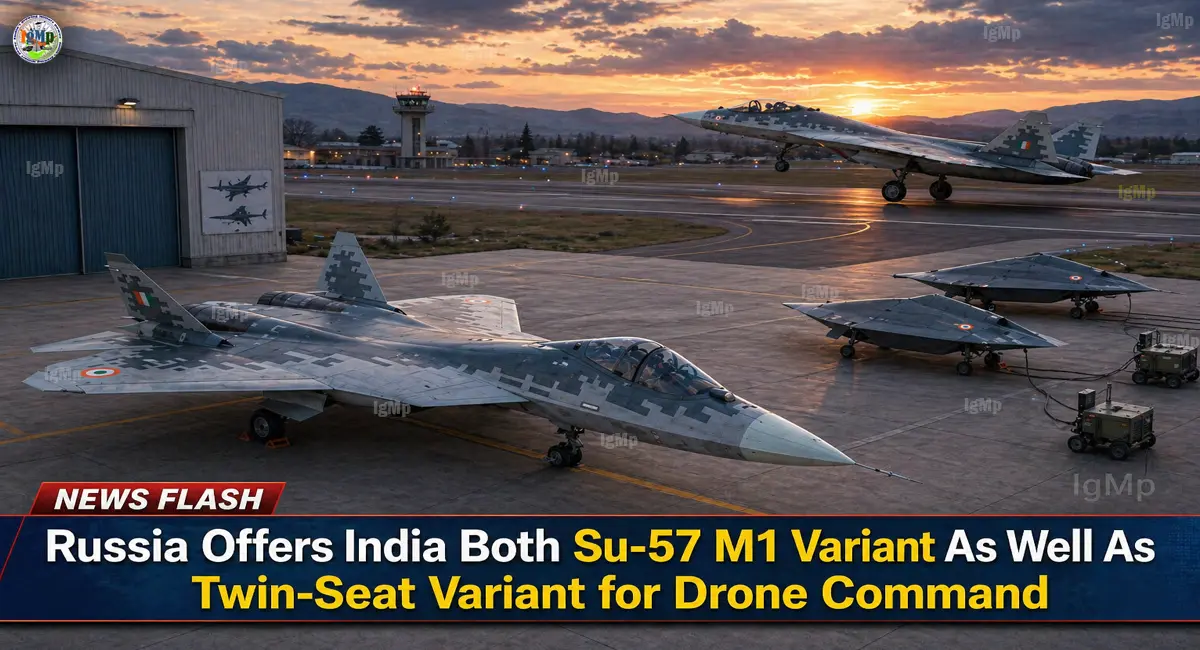
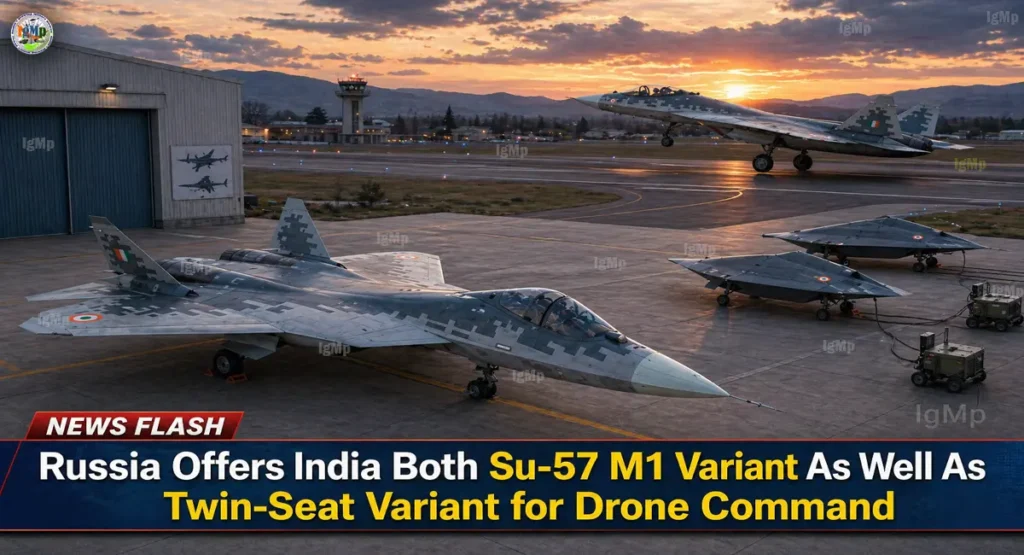
The latest Russian offer goes beyond a simple fighter sale. Moscow is offering the upgraded Su-57M1, access to source code, and even the future twin-seat MUM-T variant designed for drone command missions. This changes the discussion from procurement to strategic sovereignty.
For India, the biggest question is no longer whether the Su-57 can fly. It is whether the aircraft can become an Indian-controlled fifth-generation combat system.
What Makes the Su-57M1 Different From the Older Su-57?
AL-51F-1 Engine and the M1 Airframe Upgrade
The biggest leap in the Su-57M1 comes from the new AL-51F-1 (Izdeliye 30) engine. This powerplant delivers nearly 11 tons of dry thrust and around 17.5 tons with afterburner, giving the aircraft stronger supercruise performance and better fuel efficiency than the earlier engine.
This engine upgrade improves acceleration, range, and high-altitude combat performance. It also supports better thermal management, which matters greatly for stealth aircraft facing infrared tracking threats.
The M1 airframe also shows visible design changes. Russian design updates point to a flatter fuselage, clipped wing sections, and improved shaping around the engine area. These refinements help reduce radar signature and improve aerodynamic efficiency.
This is not just a refreshed Su-57. It is Russia’s attempt to turn the Felon into a more mature fifth-generation platform that can compete against the Chinese J-20 and future Western stealth fighters.
For India, this matters because the M1 arrives now, while AMCA still needs years before squadron service.
Russia Offers India Twin-Seat Su-57 ‘Drone Commander’ Fighter for Next-Gen Warfare 🇮🇳🇷🇺🔥
Russia has pitched a twin-seat Su-57 stealth fighter to India, designed specifically for Manned-Unmanned Teaming (MUMT)… a step toward 6th-gen network-centric combat.
> Unique dual-seat… pic.twitter.com/ebEYRV1vci— The Tathya (@_TheTathya) April 23, 2026
Can India Make the Su-57 Truly Sovereign?
Virupaksha AESA and Astra Mk2 Integration
The strongest part of Russia’s offer is not the engine. It is the reported willingness to provide access to mission systems and source code. That removes the “black box” problem that often limits foreign fighter platforms.
Without source code access, India cannot freely integrate indigenous weapons and sensors. With it, the Su-57 becomes a platform that India can reshape around its own doctrine.
This creates the possibility of integrating the indigenous Virupaksha AESA radar, a GaN-based system with nearly 2,400 TR modules, instead of relying fully on Russian avionics. That could make the Indian version of the aircraft more powerful than the standard Russian configuration.
The same logic applies to the Astra Mk2 beyond-visual-range missile. Native integration would improve kill-chain control and reduce dependence on imported missile ecosystems.
This is where the Su-57 becomes strategically important. It shifts from being a Russian fighter to a sovereign Indian combat platform with domestic mission control.
That idea fits perfectly with India’s long-term focus on software sovereignty and independent air combat architecture.
Su-57M1 vs MUM-T: Why the Twin-Seat Variant Matters
From Fighter Jet to Airborne Command Node
Russia is also promoting a twin-seat version of the Su-57 for Manned-Unmanned Teaming (MUM-T) operations. This aircraft is not simply a trainer variant. It is designed as an Airborne Command Node for controlling loyal wingman drones.
The second crew member acts as a mission commander, managing combat drones like the S-70 Okhotnik-B or the future Grom UCAV during deep strike and suppression missions.
This transforms the aircraft into a mini-AWACS platform for stealth warfare. Instead of one pilot handling every task, the aircraft splits combat flying and drone command between two specialists.
| Feature | Su-57M1 (Single Seat) | Su-57 MUM-T (Twin Seat) |
|---|---|---|
| Primary Role | Air Superiority | Drone Swarm Command |
| Engine | AL-51F-1 | AL-51F-1 |
| Crew | 1 Pilot | 1 Pilot + 1 Mission Commander |
| Drone Control | 1–2 Loyal Wingmen | 4–8 Heavy UCAVs |
| Indian Tech Scope | Virupaksha + Astra Mk2 | Indigenous Swarm Software |
The single-seat M1 is operationally ready. The twin-seat version still remains a prototype at KnAAZ, and that honesty matters for realistic planning.
Can the Su-57 Bridge the AMCA Gap by 2028?
India’s AMCA remains the true long-term answer for fifth-generation air power. It offers full design control and complete domestic ownership. However, timelines matter in strategic planning.
If AMCA enters service later in the decade, the Air Force still faces a capability gap today. The Su-57M1 can fill that gap faster while preserving operational pressure against regional rivals.
There is also a strong industrial reason to consider it. Nearly 50 percent of the HAL Nashik infrastructure built for the Su-30MKI program can support Su-57-related production and assembly. That reduces cost and speeds up industrial adaptation.
The best path may not be Su-57 versus AMCA. It may be Su-57 for immediate deterrence and AMCA for long-term sovereignty.
The real decision is strategic timing. If India can combine Russian stealth airframes with Indian radar, missiles, and software control, the Su-57M1 could become more than a stopgap fighter.
It could become the bridge that protects India until AMCA fully arrives.