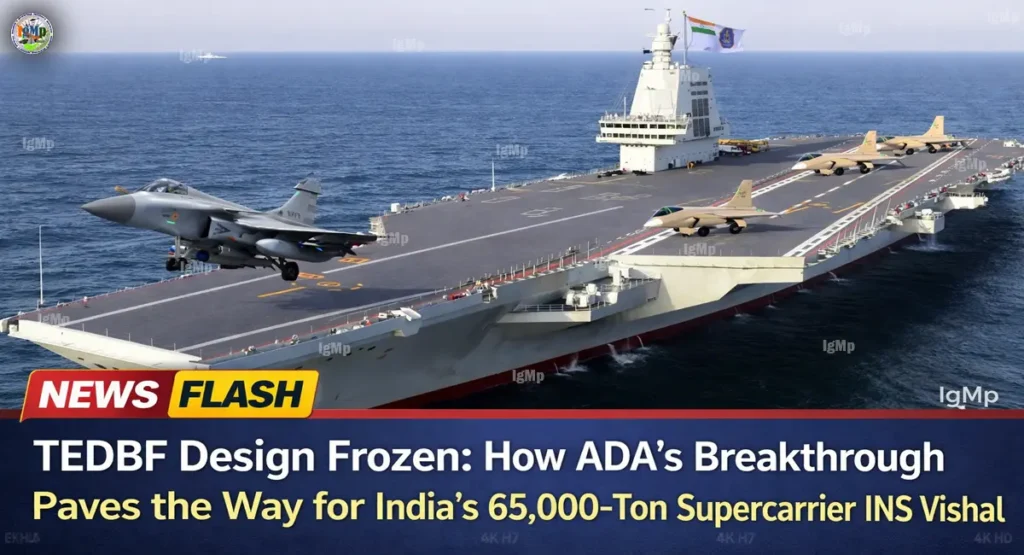
India’s next-generation aircraft carrier programme is moving ahead with quiet momentum. The Indian Navy and Defence Research and Development Organisation (DRDO) continue to shape the concept of the Indigenous Aircraft Carrier-III, widely known as INS Vishal. At the same time, the Navy still waits for approval to build a second INS Vikrant-class carrier to maintain force levels.
What stands out is the parallel push in technology. Work by DRDO and the Aeronautical Development Agency (ADA) has started to define the architecture of this future carrier. Scaled demonstrators and design breakthroughs now guide real decisions on size, layout, and capability.
The biggest trigger comes from the design freeze of the Twin Engine Deck Based Fighter (TEDBF). This is the keystone moment. By locking the aircraft’s specifications, engineers now have a clear blueprint to design the carrier around it. You cannot build the garage until you know the size of the car, and that clarity has finally arrived.
INS Vikrant vs INS Vishal: The Capability Leap
| Feature | INS Vikrant (IAC-I) | INS Vishal (IAC-III) |
|---|---|---|
| Displacement | ~45,000 Tons | ~65,000 Tons |
| Launch System | Ski-Jump (STOBAR) | Catapult (CATOBAR/EMALS) |
| Primary Fighter | MiG-29K / Rafale-M | TEDBF (Design Frozen) |
| Future Tech | Conventional Aviation | MUM-T & Stealth UCAVs |
Design Freeze to Deck Design: Why TEDBF Unlocks INS Vishal
The design freeze gives naval architects fixed parameters. They can now finalize hangar height, aircraft spacing, and elevator load capacity with confidence. Every design choice depends on the aircraft’s size and operational profile.
The effect extends to the flight deck. Engineers can determine the exact length needed for catapult systems and the strength required for arrestor gear. These details shape how fast the carrier can launch and recover aircraft during combat.
This clarity allows planners to move toward the “metal cutting” phase. That marks the transition from concept to construction. Without a finalized fighter, the carrier design would remain uncertain. With TEDBF locked in, INS Vishal now moves closer to reality.
From STOBAR to CATOBAR: The Big Technological Shift
India’s current carriers rely on STOBAR operations, where aircraft use a ski-jump for takeoff. This method limits payload and range. INS Vikrant operates within these constraints.
INS Vishal aims to shift toward CATOBAR operations with advanced catapult systems. The Navy is studying electromagnetic launch technology, which offers smoother and more powerful launches. This shift allows heavier aircraft to operate with full payloads.
The change directly benefits TEDBF. With catapult launch, the fighter can carry more fuel and weapons. That increases combat range and mission flexibility. It also opens the door for specialized aircraft like airborne early warning platforms.
At around 65,000 tons, INS Vishal reaches a strategic sweet spot. It supports sustained deployments and higher sortie rates. This size also enables a more diverse and capable air wing, which strengthens India’s global reach.
MUM-T and the Future Air Wing: Loyal Wingman Era
The future air wing will not rely on fighters alone. TEDBF will operate alongside unmanned systems under the Manned-Unmanned Teaming concept. This approach expands combat capability without increasing pilot risk.
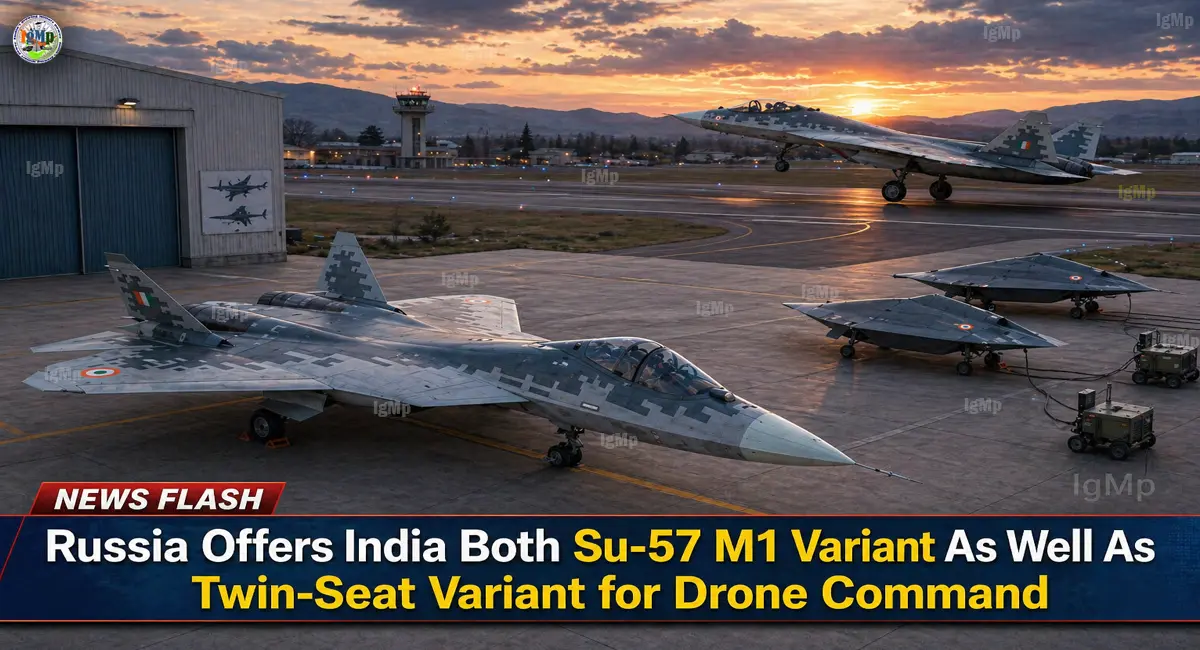
India has already developed key platforms like the DRDO Ghatak UCAV and DRDO SWiFT. These systems can act as Loyal Wingmen for the TEDBF. They can handle surveillance, electronic warfare, and strike roles.
This combination changes naval air combat. A single pilot can coordinate multiple unmanned assets during a mission. That improves situational awareness and allows deeper strikes into contested areas. INS Vishal will likely serve as the hub for this integrated air ecosystem.
The comparison highlights a clear shift in ambition. INS Vikrant supports regional operations, while INS Vishal targets global power projection. The change in launch systems and air wing design reflects this evolution.
Why This Matters for India’s Global Ambitions
India aims to strengthen its position as a blue-water navy. INS Vishal, backed by TEDBF, moves that goal forward. A larger carrier can operate farther from home and sustain longer missions.
This capability improves deterrence and ensures a stronger presence in key maritime zones. It also supports rapid response during crises and enhances cooperation with friendly navies.
The design freeze of TEDBF may look like a technical step. In reality, it marks a turning point. It connects aircraft innovation with carrier design and sets the stage for India’s next leap in naval power.