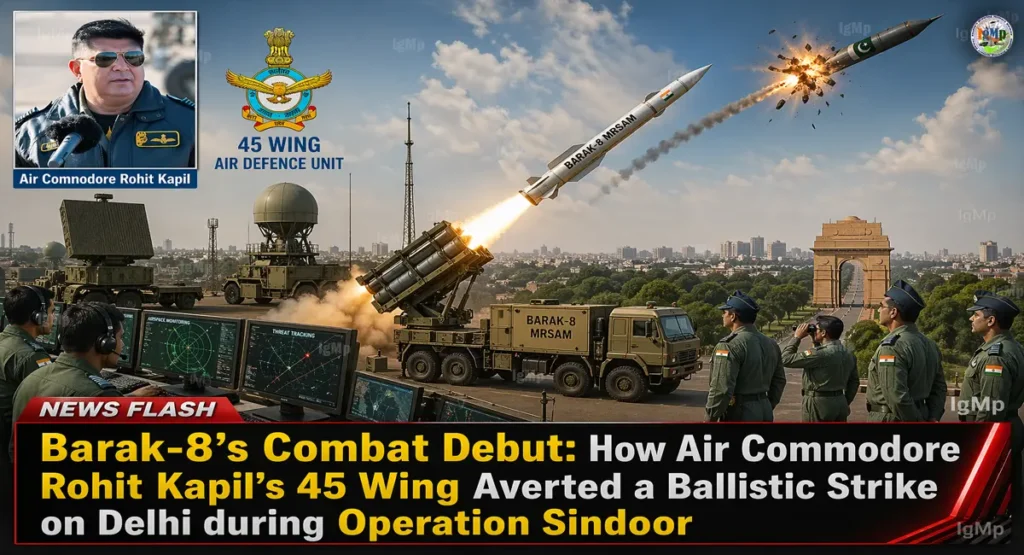
On the night of 10 May 2025, while most of India slept, Pakistan reportedly made one of its most dangerous escalation attempts during Operation Sindoor. After repeated failures to push drones, rockets, and short-range missiles through India’s layered air defence network during the day, the threat reportedly shifted toward a far more serious option—a ballistic missile strike aimed toward the National Capital Region.
At that critical moment, India’s air defence crews under 45 Wing IAF, led by Air Commodore Rohit Kapil, responded with speed and precision. Under his leadership, the incoming missile was intercepted over Sirsa, Haryana, before it could threaten the Delhi corridor. Defence analysts believe the target was likely moving toward New Delhi, making the interception one of the most strategically important air defence actions of the operation.
The interception over Sirsa was not a routine air defence event. It marked the first major combat validation of the Barak-8 in a ballistic missile defence role for the Indian Air Force. The successful intercept protected the Delhi corridor and strengthened India’s multi-layered missile shield during Operation Sindoor.
The decision to award the Yudh Seva Medal to Air Commodore Rohit Kapil highlights the scale of that achievement. His leadership during Operation Sindoor played a direct role in stopping what was likely a high-speed ballistic missile threat aimed toward northern India.
This was not a standard fighter interception. A ballistic target moves at far higher speed, follows a steep trajectory, and gives defenders very little reaction time. That makes the Sirsa event one of the most technically important air defence moments of 2026.
Why was the Sirsa interception strategically important?
Sirsa Air Force Station sits in one of the most sensitive defence corridors in northern India.
It acts as a forward shield for the National Capital Region and protects the wider Delhi air defence network. Any hostile missile entering this zone forces an immediate response because delay reduces interception chances sharply.
An intercept over Sirsa suggests the incoming target had already entered its terminal or late-midcourse phase. In simple terms, the missile had moved deep enough into Indian airspace to become a direct strategic threat.
This is why defence planners see Sirsa as the gatekeeper of the Delhi corridor. A successful intercept there protects far more than one military station. It protects command networks, airbases, and national leadership infrastructure.
How did the Barak-8 intercept a ballistic missile?
The Barak-8 (MRSAM) was originally designed for naval point defence against aircraft, anti-ship missiles, and fast aerial threats. Its combat use against a ballistic target makes this event highly significant.
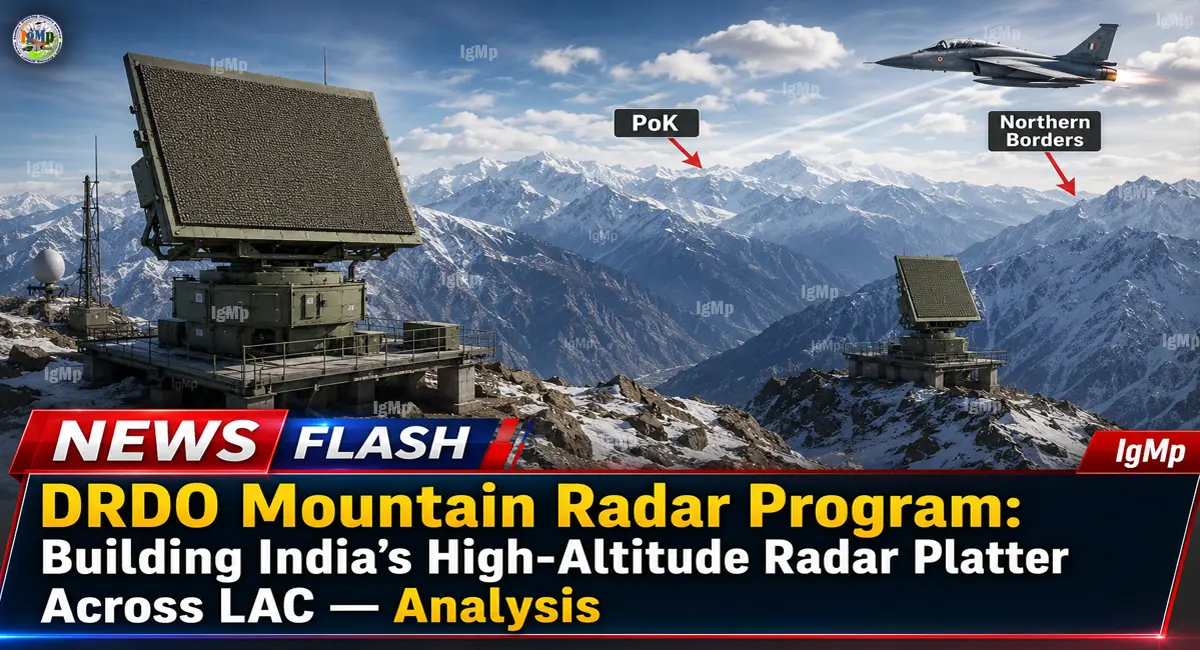
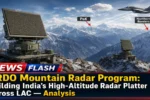
The key advantage came from the EL/M-2248 MF-STAR radar, which supports high-elevation tracking and rapid target updates. This radar can detect and follow steep ballistic trajectories rather than only low-altitude cruise threats.
That allowed 45 Wing to perform a terminal phase intercept, where the interceptor engages the incoming missile during its final descent. This demands extreme precision because the target moves at very high speed and the engagement window remains very short.
If the threat was indeed a Shaheen-II, as many analysts suspect, the challenge becomes even greater. A Shaheen-II re-entry phase can involve speeds between Mach 3 to Mach 6, far more demanding than intercepting a conventional aircraft.
Some early reports also mentioned the Fatah system, but a Shaheen-II interception would represent a much more serious strategic success because of its higher velocity and longer-range threat profile.
What do the debris videos and radar evidence suggest?
Videos of missile debris circulated widely online after the operation, especially from areas near Haryana.
Many social media claims lacked verification, but the debris pattern matched what one would expect from a high-altitude fragmentation intercept rather than a surface impact. Smaller distributed fragments often indicate successful interception in the upper engagement envelope.
This aligns with the tracking capabilities of the Israeli-origin ELTA radar family used with Barak-8 systems. The radar does not rely on visual confirmation alone. It tracks the target, predicts the kill geometry, and confirms breakup signatures through radar returns.

From an analyst’s perspective, the debris evidence supports the operational claim more than it weakens it.
Why does this matter for Project Kusha and India’s future BMD shield?
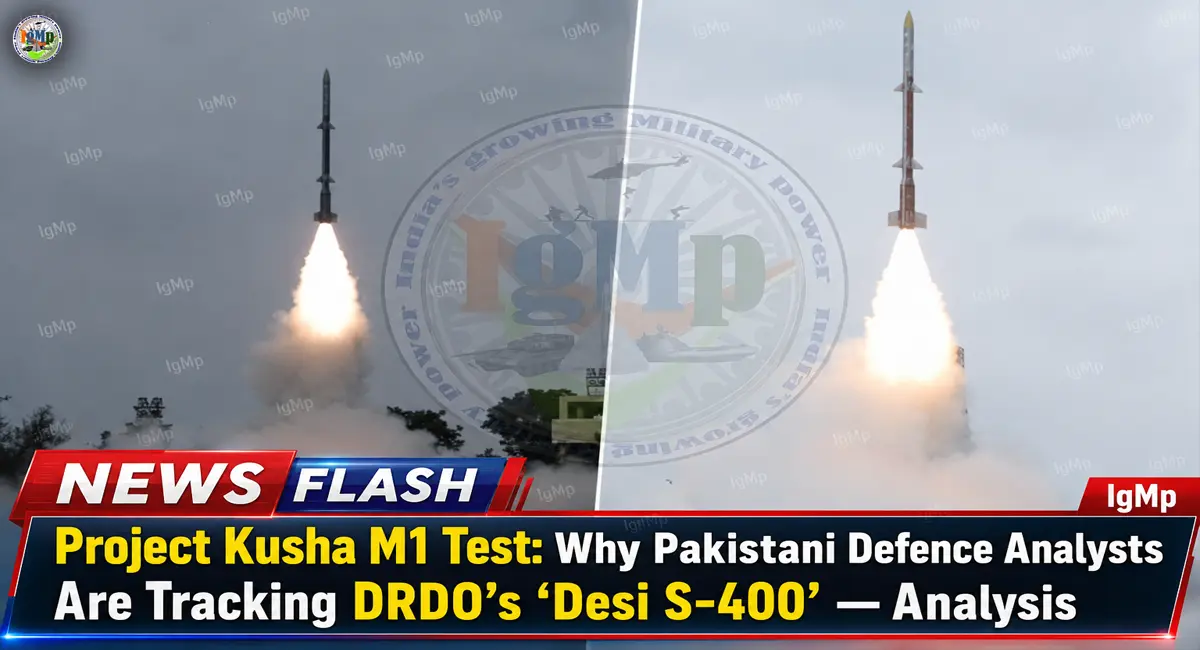
The Sirsa interception serves as a combat lesson for Project Kusha, India’s upcoming indigenous Long-Range Surface-to-Air Missile (LRSAM) program.
Project Kusha aims to create a stronger multi-layered shield against aircraft, cruise missiles, and ballistic threats. Until now, much of that discussion remained developmental. Sirsa changed that by offering real combat validation of layered missile defence concepts.
The Barak-8 success proves that India’s Integrated Air Command and Control System (IACCS) can coordinate radar, tracking, and interceptor response under live operational pressure.
As a Lead Defence Analyst, I see this as more than one successful intercept. It marks the transition from imported missile defence dependence toward a future where India builds and controls its own long-range air shield.
Recognition of Air Commodore Rohit Kapil matters because it reflects that shift. The medal honors one officer, but the larger story is the arrival of India’s modern ballistic missile defence era.