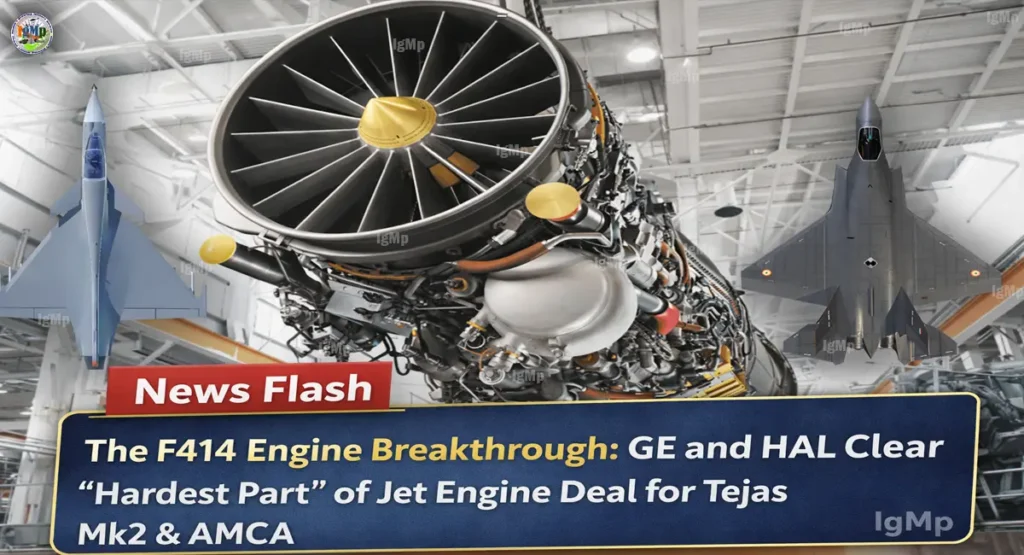
India and the United States have quietly moved closer to sealing one of their most critical defense-industrial partnerships. A recent report in The Economic Times indicates that GE Aerospace and Hindustan Aeronautics Limited have successfully wrapped up the most technically demanding phase of negotiations for the F414 fighter jet engine program. This breakthrough does more than clear a procedural hurdle—it brings the deal firmly into the final stretch, with contract closure expected later this year. At a time when the Indian Air Force faces mounting pressure from shrinking squadron numbers, this progress directly impacts its future combat readiness by accelerating the engine pipeline for next-generation fighters.
This is not just another procurement milestone. It represents a structural shift in how India builds, absorbs, and eventually masters high-performance jet engine technology.
For years, India’s fighter programs have faced a recurring bottleneck: engines. Airframes evolved, avionics matured, but propulsion remained dependent on foreign suppliers. That dependency has shaped timelines, delayed programs, and limited operational flexibility. The F414 deal changes that equation by bringing India closer to the core of jet engine manufacturing rather than keeping it at the periphery.
What was the “hardest part” of the F414 deal?
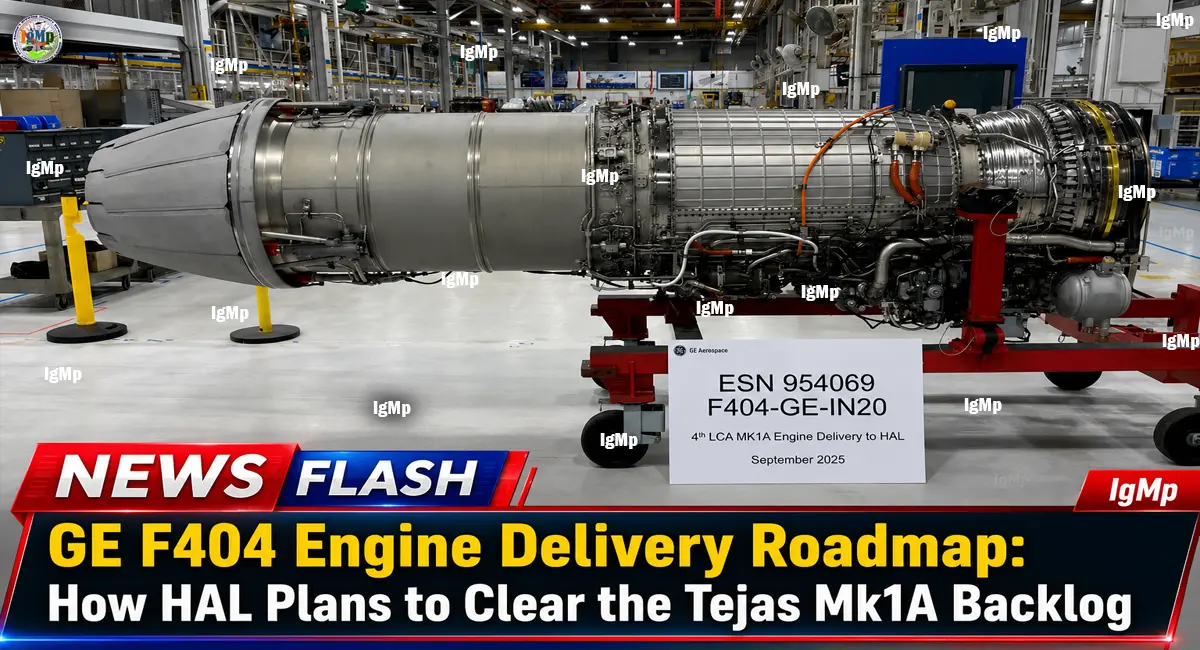
When Rita Flaherty stated that the “hardest part” of the negotiations is over, she pointed to a challenge far deeper than pricing or delivery schedules. The real difficulty lay in negotiating access to the most tightly controlled segment of jet engine technology—the hot section.
This portion of the engine operates under extreme thermal and mechanical stress, where temperatures exceed the melting point of conventional metals. To survive these conditions, engineers rely on highly specialized solutions such as single-crystal turbine blades, advanced ceramic-based thermal coatings, and ultra-precise manufacturing techniques. These technologies represent decades of accumulated expertise and remain among the most closely guarded secrets in aerospace engineering.
When GE signals that this barrier has been crossed, it implies something unprecedented. The United States has agreed to share elements of what many consider its “crown jewel” technologies. This is not a routine transfer—it is a rare opening into a domain that even close allies have struggled to access.
80% ToT: From Assembly Line to Industrial Capability
The scale of technology transfer in this deal is what truly sets it apart. At roughly 80%, the ToT component moves far beyond the traditional model of licensed production. Earlier agreements typically allowed India to assemble imported kits with limited insight into core manufacturing processes. That approach built capacity, but not deep capability.
This agreement rewrites that framework.

With such a high level of transfer, Indian engineers gain exposure to a significant portion of the production ecosystem. This includes metallurgy, precision machining, subsystem integration, and quality control at levels required for modern fighter engines. While certain ultra-sensitive elements may still remain restricted, the overall structure reflects genuine co-production.
The distinction matters. India does not just assemble engines under this deal—it learns how to build them, refine them, and eventually innovate on top of that knowledge base. That is the foundation for long-term self-reliance in aerospace propulsion.
Project Impact: Tejas Mk2 and AMCA Timelines
| Feature | F414-INS6 Deal Details | Strategic Impact |
|---|---|---|
| Primary Platform | Tejas Mk2 (120+ units) | Backbone of IAF medium fleet |
| Secondary Platform | AMCA Mk1 (First 2 squadrons) | Interim engine for 5th-gen fighter |
| ToT Level | ~80% | Domestic “hot-core” capability boost |
| Timeline | Expected closure in 2026 | Engines from 2027–28 |
The implications for India’s fighter programs are immediate and far-reaching. The HAL Tejas Mk2 relies entirely on the F414-INS6 engine to move from prototype to full-scale production. With the technical framework now settled, the aircraft’s development pathway becomes far more stable and predictable.
The Advanced Medium Combat Aircraft also benefits directly. While India continues to pursue a more advanced indigenous engine for future variants, the F414 provides a reliable and proven powerplant for the initial squadrons. This ensures that the AMCA program does not stall while waiting for next-generation propulsion solutions.
In practical terms, this deal synchronizes India’s aircraft development timelines with engine availability—something that has historically been a major challenge.
Beyond a Buyer-Seller Relationship
This agreement reflects a deeper shift in India–US defense ties. Instead of a simple transactional exchange, the partnership now operates at an industrial level where both sides contribute to production and capability development.
At the same time, the commercial phase introduces a new layer of complexity. Global inflation has driven up the cost of key raw materials such as titanium and cobalt, both critical for high-performance engines. These cost pressures now shape the financial negotiations, turning pricing into the final battleground even after technical consensus has been achieved.
The outcome of this phase will determine not just affordability, but also scalability. A well-structured agreement will allow India to produce engines at the rate required for its expanding fighter fleet. A misalignment, however, could slow down momentum despite the technological breakthrough.
What is the status of the F414 deal in 2026?
The situation is now clearly defined. Technical negotiations have reached closure, and the framework for technology transfer stands largely finalized. The focus has shifted to commercial terms, with both sides working toward a final contract expected later in 2026.
This transition marks the point where engineering alignment meets financial reality. Once signed, the deal will move rapidly into implementation, with engine production expected to begin within the next two to three years.
With the hardest technological barriers now behind them, the next question becomes unavoidable:
Can Hindustan Aeronautics Limited scale production fast enough to meet the Indian Air Force’s 2029 timeline for the Tejas Mk2? Let us know your thoughts in the comments.