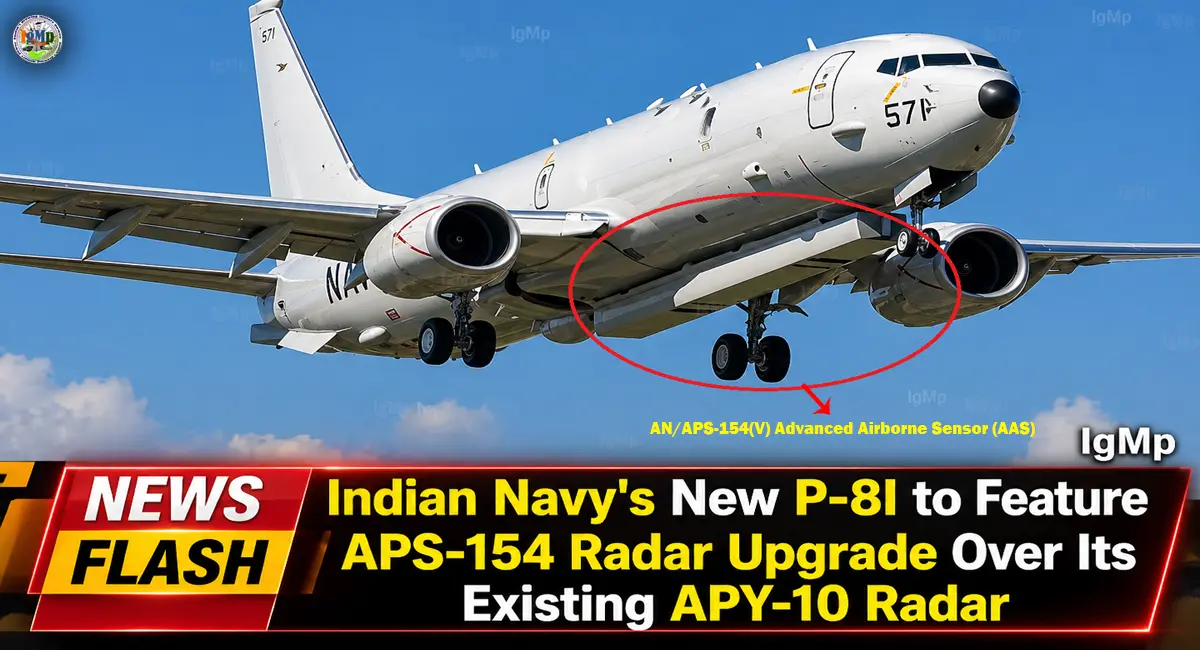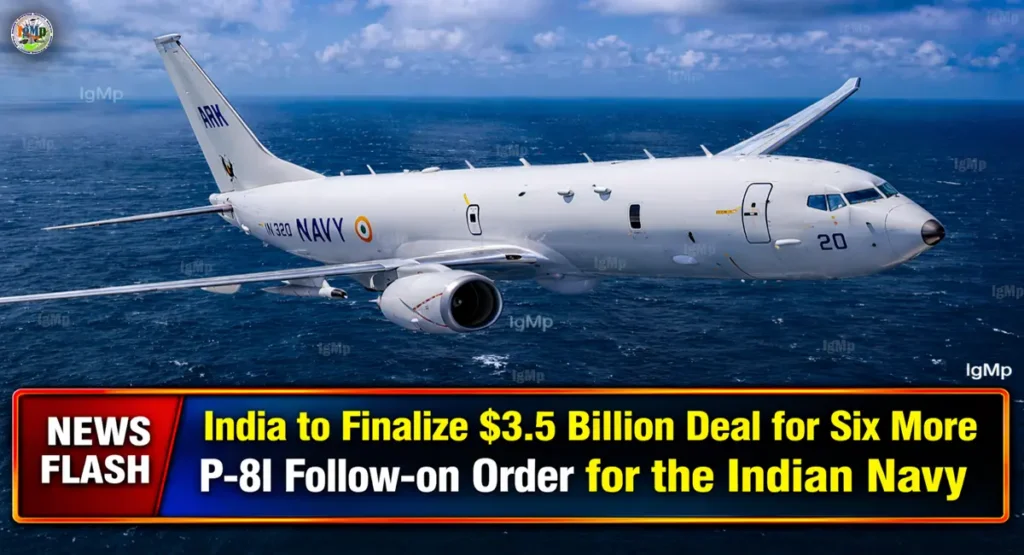
As per media reports, the Indian Navy’s move to finalize a $3.5 billion deal for six additional Boeing P-8I Poseidon aircraft marks a calculated expansion of its long-range maritime surveillance and anti-submarine warfare (ASW) capability. While attention has focused on the rising cost, the real driver behind this decision is operational necessity—the need to maintain persistent dominance across the increasingly contested Indian Ocean Region.
With China expanding its submarine footprint and maritime presence, India is strengthening its undersea detection and tracking network. The P-8I sits at the center of this strategy, acting as a force multiplier that integrates surveillance, strike coordination, and real-time data sharing across naval assets.
Why the P-8I Is Not Just Another Poseidon: The “I” Factor
A common misconception is that the P-8I is identical to the US Navy’s P-8A Poseidon. In reality, India’s variant includes key modifications tailored for regional conditions.
The most critical difference is the Magnetic Anomaly Detector (MAD)—a tail-mounted sensor designed to detect minute disturbances in Earth’s magnetic field caused by submarines.
- The US Navy removed the MAD from the P-8A to reduce weight and rely on networked detection systems.
- The Indian Navy retained it, recognizing its importance in the complex acoustic and magnetic environment of the Indian Ocean.
This gives the P-8I a distinct edge in close-range submarine detection, particularly in littoral waters where layered detection is essential.
Why the Price Has Increased: A Technical Breakdown
| Acquisition Phase | Year | No. of Aircraft | Estimated Cost | Key Context |
|---|---|---|---|---|
| Initial Order | 2009 | 8 | $2.1 Billion | First global P-8 customer |
| Follow-on | 2016 | 4 | $1.1 Billion | Option clause exercised |
| Current Deal | 2026 | 6 | $3.5 Billion | Supply chain pressures & upgrades |
The cost increase is significant but driven by multiple factors:
- Global aerospace supply chain disruptions
- Higher input and manufacturing costs
- Advanced mission systems and upgrades
In essence, the Navy is investing in enhanced capability and long-term operational readiness, not just additional airframes.
India to proceed with the purchase of
𝟲 𝗣𝟴𝗜𝘀 despite a significant increase in price
➡️The 𝟲 𝗣𝟴𝗜𝘀 will now be priced at $𝟯.𝟱𝗯 or higher pic.twitter.com/4YreaSHp3b— Dot Com (@dotcom_1106) April 15, 2026
The High-Low Maritime Strategy: Why Only Six Aircraft?
The Indian Navy is adopting a layered surveillance architecture rather than relying on a single platform.
High-End Tier: P-8I
- Long-range maritime patrol
- Anti-submarine warfare (ASW)
- Network-centric operations
Mid-Tier: Airbus C-295 MRMR
- Coastal and EEZ surveillance
- Medium-range reconnaissance
- Lower operational cost
This High-Low mix ensures that:
- P-8Is focus on deep-sea, high-threat missions
- C-295 aircraft handle routine monitoring and patrols
Our analysis suggests this balanced approach explains the limited order size of six aircraft, optimizing both cost and capability.
The “Indigenous Brain”: Atmanirbhar Layering on an American Platform
While the P-8I’s core platform is American, its operational ecosystem is becoming increasingly Indian.
One key development is the integration of indigenous systems like the ADC-150 (Air Droppable Container), developed by DRDO and the Indian Navy. This allows the aircraft to:
- Deliver emergency supplies to ships at sea
- Support long-duration maritime missions
- Enhance humanitarian and logistics operations
Additionally, India’s growing maintenance, repair, and overhaul (MRO) capabilities—supported by Boeing partnerships—are shifting lifecycle control domestically.
This reflects a clear trend:
India is embedding indigenous capability into imported platforms to achieve long-term autonomy.
Strategic Context: Countering Undersea Threats
The expansion of the P-8I fleet is closely tied to China’s increasing submarine deployments in the Indian Ocean.
The aircraft plays a central role in:
- Tracking adversary submarines
- Monitoring key chokepoints such as the Malacca Strait
- Supporting carrier battle groups and naval task forces
With vast maritime areas to cover, fleet expansion ensures continuous surveillance and rapid response capability.
The Bigger Picture: Capability Over Cost
This deal is not just about numbers—it is about maintaining a technological and operational edge in maritime warfare.
India is:
- Expanding a proven ASW platform
- Customizing it for regional requirements
- Integrating indigenous systems for flexibility and independence
The result is a clear strategic posture:
A navy prepared for sustained, network-centric operations across the Indian Ocean.
In the evolving maritime battlespace, the P-8I is not just an aircraft—
it is the backbone of India’s undersea dominance strategy.