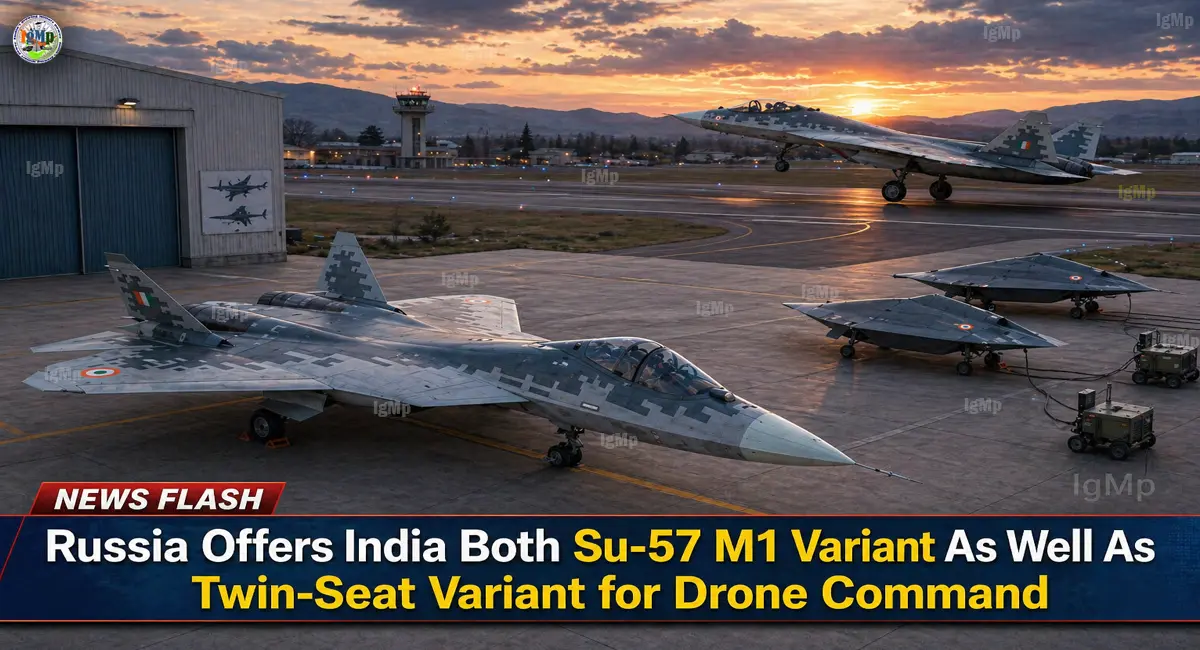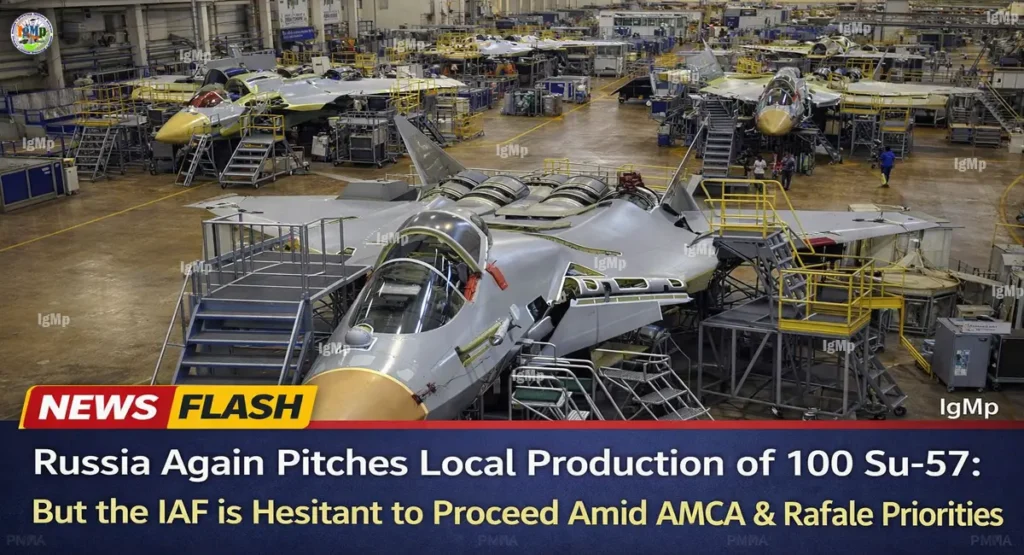
Russia has renewed its push to co-produce up to 100 Sukhoi Su-57 jets in India, with a strong focus on local manufacturing through Hindustan Aeronautics Limited (HAL). The proposal aims to revive a structure similar to the earlier FGFA program, but with updated terms and deeper technology transfer promises.
The Indian Air Force (IAF) remains cautious. It needs stealth fighters quickly due to rising regional threats, yet it must protect funding for indigenous programs like Advanced Medium Combat Aircraft (AMCA) and the Tejas Mk2. This creates a strategic dilemma that shapes every decision around the Su-57 offer.
The Nashik Dilemma: Assembly Line or White Elephant?
HAL’s Nashik facility faces a looming slowdown. The Su-30MKI production line nears completion, and new large-scale orders remain limited. This creates what many insiders call a “work-famine.”
Russia sees an opportunity here. By proposing local production of the Su-57, it offers a lifeline to keep the Nashik line active. This is not just about selling aircraft. It is about anchoring India into a long-term industrial ecosystem built around Russian platforms.
For India, the decision is more complex. Restarting a large production line requires sustained orders, stable funding, and long-term commitment. Without that, the facility risks turning into an underutilized asset rather than a strategic advantage.
Why 100 Jets Make Sense for Russia—but Not for India
The number “100” is not random. It represents the break-even point for localizing a fifth-generation fighter ecosystem. Building stealth aircraft involves tooling, materials, avionics integration, and specialized supply chains. These investments only make sense at scale.
For Russia, a 100-jet order justifies transferring production technology and setting up infrastructure in India. It spreads costs and ensures long-term returns.
For the IAF, this scale raises concerns. A large Su-57 order would consume a major share of the capital budget. That could directly impact funding for AMCA and the Tejas Mk2 program.
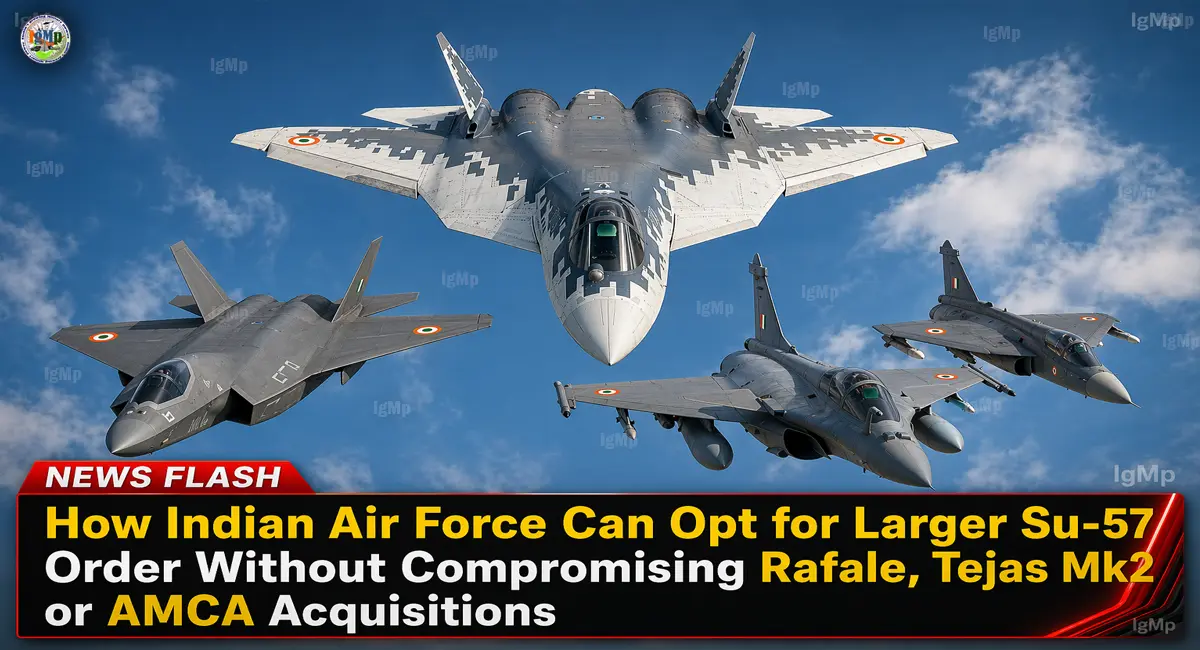
A smaller fleet of 40–60 jets looks more practical for India. It can address immediate operational needs without locking the country into a massive long-term financial commitment.
The Stealth Gap: Urgency vs. Long-Term Vision
The regional balance has shifted. China continues to expand its Chengdu J-20 fleet, which puts pressure on the IAF to respond. India needs a credible stealth capability in the near term.
AMCA promises that capability, but it will take time. Current timelines suggest operational readiness in the early 2030s. This leaves a gap that the IAF must fill.
The Su-57 offers a faster solution, especially through an off-the-shelf purchase. However, committing to large-scale production could delay or dilute India’s indigenous fighter programs. This creates a classic trade-off between urgency and self-reliance.
Decision Matrix: Su-57 vs AMCA vs Rafale Path
| Option | Su-57 (Russian Offer) | AMCA (Indigenous) | Rafale F4/F5 (MRFA) |
|---|---|---|---|
| Status | 100 Jets + ToT Proposed | Design & Prototype Phase | Ongoing Negotiations |
| Timeline | 3–5 Years | 2030+ Expected | 4–6 Years |
| Stealth | High (5th Gen) | High (5th Gen) | Limited (4.5 Gen+) |
| Risk | High (Sanctions/Integration) | High (Development Delay) | Low (Proven Platform) |
This comparison highlights the core dilemma. The Su-57 offers speed, AMCA offers independence, and Rafale offers reliability. The IAF must balance all three factors.
Technical Realities: Engines, Variants, and FGFA Lessons
The Su-57’s full potential depends on the new AL-51 (Izdeliye 30) engine. This engine promises better thrust and efficiency compared to earlier versions. Any local production deal will depend on the availability of this definitive powerplant.
The twin-seater variant, once a major feature of the FGFA program, no longer excites the IAF. It added cost and complexity in the past without delivering proportional benefits. The IAF now prefers a simpler, combat-focused configuration.
These lessons from the FGFA experience shape current thinking. India wants clarity on technology, timelines, and cost before committing to any large-scale production plan.
Verdict: Industrial Opportunity vs Strategic Risk
The Russian offer of 100 Su-57 jets stands as an industrially attractive package. It can revive HAL’s Nashik line and deliver advanced technology into India’s aerospace sector.
However, it also creates a budgetary challenge. A deal of this scale could crowd out funding for AMCA and Tejas Mk2, which form the backbone of India’s long-term air power strategy.
A middle path looks more realistic. A limited government-to-government purchase of 40–60 ready jets can fill the immediate stealth gap. This approach protects India’s future programs while addressing current operational needs.
For the IAF, the decision is not just about buying a fighter. It is about choosing the balance between speed, sovereignty, and sustainability in air combat power.