India has accelerated its push to strengthen a multi-layered air defence shield, as the Defence Procurement Board (DPB) clears the fast-tracked induction of two Medium Range Surface-to-Air Missile (MRSAM) regiments. This move goes beyond routine acquisition cycles and reflects an urgent shift in India’s threat perception, shaped by recent conflicts where drones and precision missiles have dominated the battlefield. The high-level clearance indicates that these systems are no longer part of long-term planning, but a near-term operational necessity driven by evolving risks along India’s borders.
This decision is not about routine procurement. It reflects urgency. The Army wants a denser and more responsive air defense grid that can handle modern battlefield realities.
Recent conflicts have changed the equation. The Ukraine-Russia war and drone-heavy engagements in the Middle East exposed a critical weakness. Even advanced air forces struggled against waves of low-cost drones and cruise missiles.
India is taking note. The focus now lies on building a layered shield that can absorb and neutralize saturation attacks.
Why the Army Is Pushing for These Regiments Now
The real game-changer here is the threat of “saturation warfare.” Adversaries no longer rely on a few high-value assets. They launch dozens of drones and missiles at once to overwhelm defenses.
Traditional systems often fail under such pressure. They track limited targets and engage in sequence. That gap creates vulnerabilities.
The MRSAM system changes this dynamic. It can track and engage multiple targets simultaneously. This capability makes it a critical asset for protecting high-value zones like airbases, logistics hubs, and forward formations.
Mobility also plays a key role. The Army variant operates on high-mobility vehicles. Units can redeploy quickly across sectors, including difficult terrain near borders.
This flexibility ensures that coverage remains dynamic, not static.

The Indo-Israeli Tech Edge Behind MRSAM
The MRSAM system combines Indian and Israeli expertise. The Defence Research and Development Organisation and Israel Aerospace Industries developed it together.
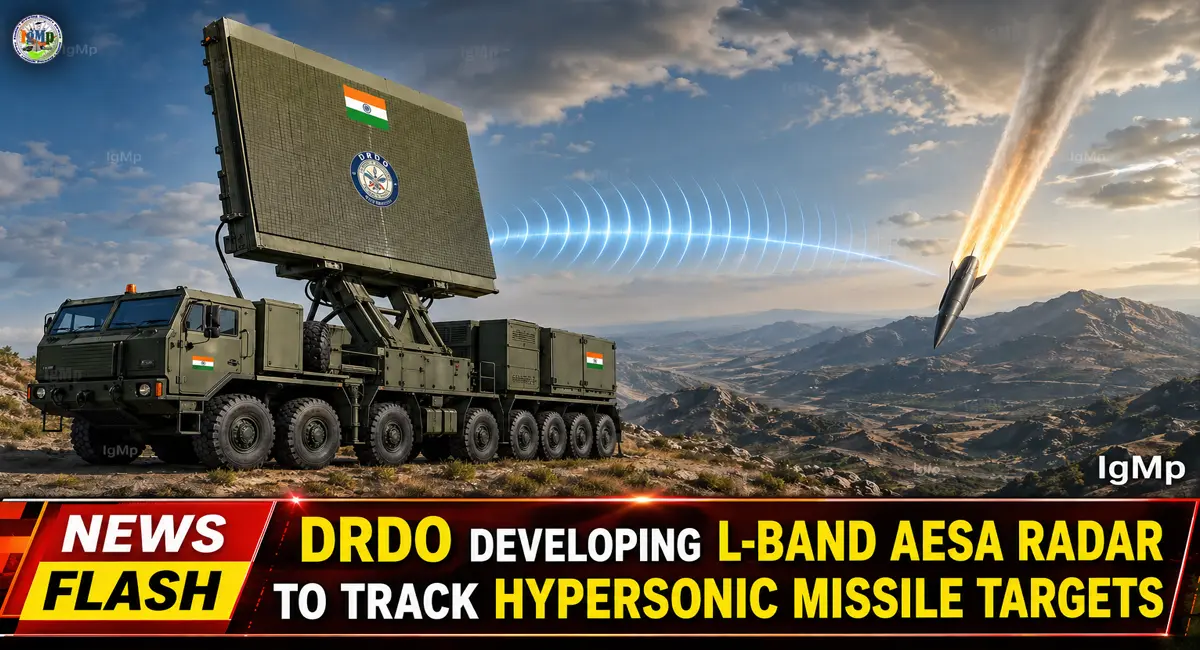
The core strength lies in its radar: the EL/M-2248 MF-STAR AESA system. This radar acts as the brain of the entire setup.
It can detect, track, and guide multiple interceptors in real time. It also maintains high accuracy under electronic warfare conditions.
The interceptor itself travels at supersonic speed. It can neutralize fast-moving aerial threats before they reach critical targets.
Another advantage lies in production. Bharat Dynamics Limited already runs an active manufacturing line. This allows faster delivery compared to new foreign acquisitions.
The fast-track route means the Army could deploy these regiments much sooner than expected.
MRSAM (Abhay) System: Key Specifications
| Parameter | Details |
|---|---|
| Developer | DRDO (India) & IAI (Israel) |
| Engagement Range | 70 km to 100 km (ER variant) |
| Speed | Mach 2.0 |
| Radar | EL/M-2248 MF-STAR (AESA) |
| Target Types | Fighters, Cruise Missiles, Drones, Helicopters |
| Manufacturer | Bharat Dynamics Limited |
From Procurement to Operational Urgency
The Defence Procurement Board’s clearance ensures a faster path to induction. It removes delays that usually slow down large defense deals.
But the bigger story lies in intent.

India is not waiting for long-term modernization cycles anymore. The current threat environment demands immediate capability upgrades.
Drone swarms, loitering munitions, and low-flying cruise missiles have changed air defense forever. These threats exploit gaps in traditional systems and force militaries to rethink strategy.
The MRSAM regiments will strengthen India’s layered defense network. They will sit between short-range systems and long-range interceptors, creating a tighter shield.
This layered approach reduces the chances of leakage. Even if one layer misses a target, another stands ready.
The Army’s push reflects a simple reality. Future conflicts will not give warning time. They will begin with saturation strikes aimed at crippling defenses.
India’s response is clear. Build density. Improve reaction time. And ensure that no incoming threat goes unanswered.