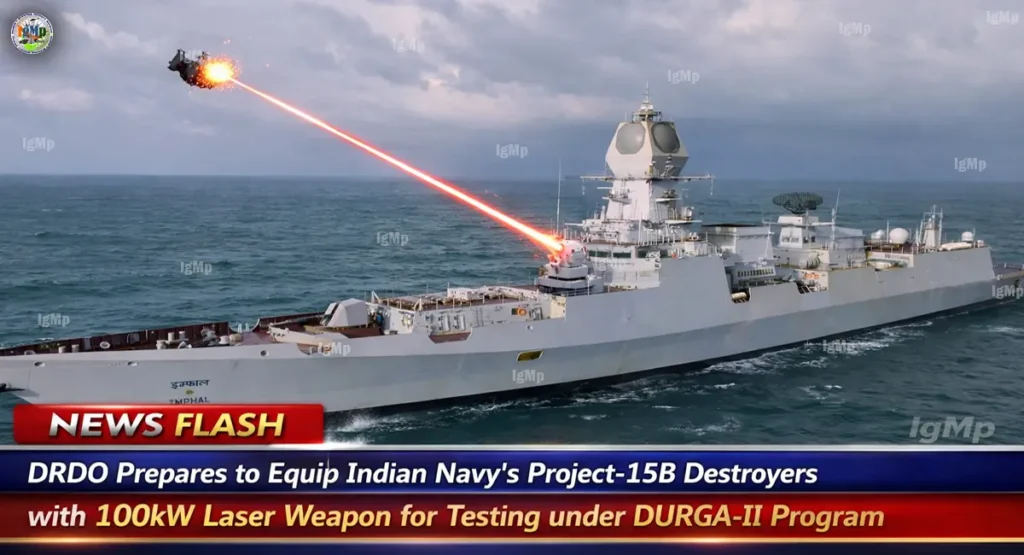
India is preparing to test a 100-kilowatt Directed Energy Weapon (DEW) under the DURGA-II program on frontline naval destroyers. The program builds on earlier trials of a 30kW laser prototype tested in April 2025 at Kurnool. Engineers now aim to scale the technology for naval combat platforms.
The Defence Research and Development Organisation (DRDO) leads the project through the Laser Science and Technology Centre (LASTEC). The new weapon uses solid-state fiber laser technology designed to neutralize drones, sensors, and incoming missile seekers.
The Indian Navy plans to evaluate the system on Project-15B (Visakhapatnam-class) destroyers, which already operate advanced radar and air-defence systems. If successful, DURGA-II could give Indian warships a near-instant defensive weapon with extremely low cost per shot. This capability could reshape naval air defence by adding a speed-of-light interception layer against drone swarms and precision-guided threats.
Technical Evolution: From 30kW Prototype to 100kW Naval Laser
The DURGA program has evolved rapidly over the past few years. DRDO demonstrated a 30kW ground-based laser system during trials in April 2025. The prototype targeted small unmanned aerial vehicles and electro-optical sensors. Engineers now aim to develop a 100kW-class laser weapon capable of engaging more durable aerial targets.
Higher power output allows the beam to deliver greater thermal energy to a target. The laser heats critical components such as sensors, airframes, or missile seekers within seconds. The weapon relies on solid-state fiber laser modules, which combine multiple laser beams into a single high-energy output.
The approach improves efficiency and reduces system size. It also allows modular upgrades as laser technology advances. The table below highlights the key differences between the earlier prototype and the planned naval system.
| Feature | DURGA Mk-II (A) | DURGA-II (Naval) |
|---|---|---|
| Power Output | 30 kW | 100 kW |
| Primary Target | Small UAVs / Dazzling | Airframes / Cruise Missile Seekers |
| Platform | Truck-mounted (Land) | Visakhapatnam-class Destroyers |
| Status | Tested April 2025 | Undergoing Marinization (2026) |
The shift from land testing to naval deployment marks a major milestone for India’s Directed Energy Weapon roadmap.
DURGA-II: India Prepares 100kW Laser Weapon for Navy Destroyers 🇮🇳⚡
DRDO is set to test a 100 kW high-power laser weapon for ship deployment, marking a major leap in India’s directed energy capabilities.
> 100 kW laser capable of burning drones mid-air
> Can disable missile… pic.twitter.com/kcbia7ShS3— The Tathya (@_TheTathya) April 19, 2026
How Does the 100kW DURGA-II Laser Neutralize Cruise Missiles?
A high-energy laser defeats targets through intense heat. When the beam strikes a target, it rapidly raises the temperature at the impact point. This process damages structural material, sensors, or guidance electronics.
Cruise missiles rely on electro-optical seekers and radar sensors to maintain accuracy. A focused laser beam can burn these components within seconds. The laser can also weaken control surfaces or airframes. Even minor structural damage can destabilize a missile traveling at high speed.
Unlike traditional interceptors, the laser travels at the speed of light. The system does not require physical ammunition. This gives the weapon two key advantages: instant engagement and a nearly unlimited magazine as long as power remains available.
However, engineers must manage atmospheric challenges such as thermal blooming, where heat in the air distorts the laser beam. Advanced targeting software and adaptive optics help maintain beam accuracy under real-world conditions.
Why Is Marinization Critical for Indian Navy Destroyers?
Laser systems face harsh conditions at sea. Engineers must adapt the DURGA-II system for saltwater corrosion, vibration, and humidity. This process is known as marinization. Naval ships also experience constant movement. Stabilization systems must keep the laser precisely aimed during rough seas.
Another challenge involves thermal management. High-power lasers generate significant heat during operation. Warships must dissipate this heat through advanced cooling systems.
The Visakhapatnam-class (Project-15B) destroyers provide the electrical power and onboard space needed for such equipment. These ships already operate advanced sensors and combat management systems. This architecture allows the laser weapon to integrate into the ship’s existing defensive network.

Analyst’s View: Why Laser Weapons Matter for Future Naval Warfare
Laser weapons offer a major economic advantage in modern naval combat. A single interceptor missile such as Barak-8 can cost close to $2 million. A laser shot, by contrast, only consumes electrical power. This cost difference becomes critical when defending against drone swarms or saturation attacks.
In our analysis of Indian naval doctrine, the DURGA-II program represents an important shift toward layered energy-based defence systems. Missiles will remain the primary interception layer. Laser weapons can handle close-range drones, sensors, and soft targets.
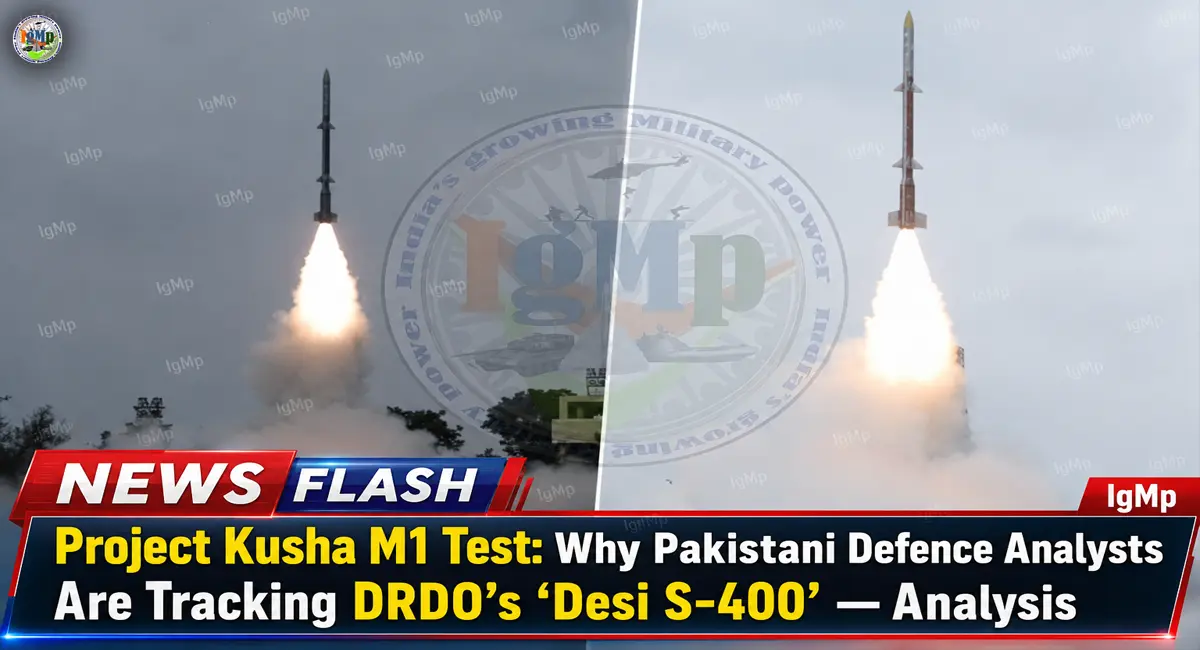
Future improvements in thermal management could also support other advanced systems. Technologies developed for DURGA-II may benefit aircraft programs such as the HAL Advanced Medium Combat Aircraft (AMCA) or complement long-range air defence systems under Project Kusha.
Together, these programs reflect India’s broader push toward high-energy directed weapons and network-centric warfare.
If testing succeeds aboard Project-15B destroyers, the DURGA-II laser could become one of the Indian Navy’s most innovative defensive technologies in the coming decade.