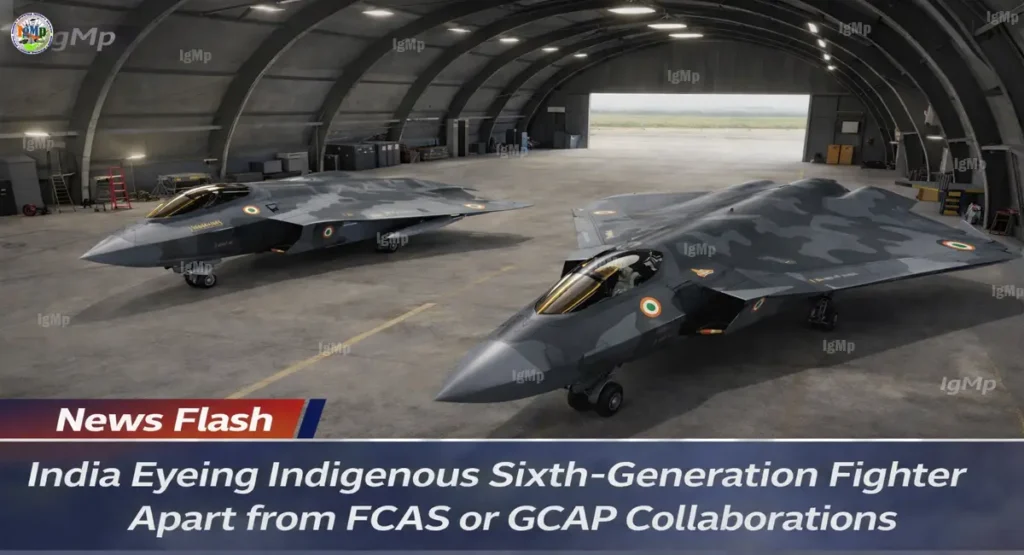
As per highly reliable defence sources, India is positioning itself to pursue an indigenous Sixth-Generation Fighter program even while exploring partnerships with international projects such as Future Combat Air System and Global Combat Air Programme.
Rather than becoming only a junior partner in foreign initiatives, New Delhi appears to be considering a dual-track strategy—collaborating internationally for technology exposure while simultaneously developing a sovereign sixth-generation combat aircraft ecosystem.
The approach mirrors lessons learned from earlier collaborations and reflects India’s broader push for strategic autonomy in aerospace technologies.
Technical Comparison
| Feature | AMCA Mk2 | Possible Sovereign 6th-Gen | FCAS / GCAP |
|---|---|---|---|
| Weight Class | 25–27 tons | ~20 tons (light concept) | 30–35 tons |
| Core Technology | Advanced stealth | Cognitive AI, MUM-T | System-of-systems |
| Engine | 110–130 kN class | Single 130 kN+ derivative | Twin high-thrust engines |
| Primary Role | Frontline dominance | Affordable 6th-gen complement | Long-range strike |
Weight Class Strategy: Where India’s 6th-Gen Fighter Could Fit
A major factor shaping India’s sixth-generation fighter planning is aircraft weight class, which directly affects performance, cost, and operational role.
India’s stealth program, the HAL Advanced Medium Combat Aircraft, is expected to have a maximum take-off weight of around 25–27 tons. However, the sixth-generation fighters currently being designed in Europe under the Future Combat Air System and the Global Combat Air Programme are projected to be significantly heavier.
Estimates suggest these aircraft could reach 30–35 tons MTOW, placing them closer in size to the Sukhoi Su-30MKI, which sits in the 38–39 ton class.
This difference in size is important because it indicates that European sixth-generation fighters are being designed primarily as heavy, long-range combat platforms capable of carrying large sensor suites, extended fuel loads, and advanced networking systems.
Indian planners, however, are examining whether an indigenous sixth-generation platform should occupy a different niche within the fighter ecosystem.
One possibility under discussion is a lighter aircraft in the 20-ton category, potentially powered by a single high-thrust engine derived from the propulsion systems currently being developed for the AMCA program.
A lighter aircraft would bring several operational advantages:
- Improved agility due to lower wing loading
- Lower acquisition and lifecycle costs
- Greater fleet numbers for sustained operations
Such a design could allow India to field a high-performance yet more affordable sixth-generation fighter, rather than relying solely on large and expensive heavy platforms.
From Fighter to “Mothership”: The Rise of Manned-Unmanned Teaming
Another defining characteristic of sixth-generation combat aircraft is their ability to function as command nodes within a networked battlespace.
Instead of operating alone, the pilot effectively becomes the mission commander of a distributed combat system, coordinating drones, sensors, and electronic warfare platforms.
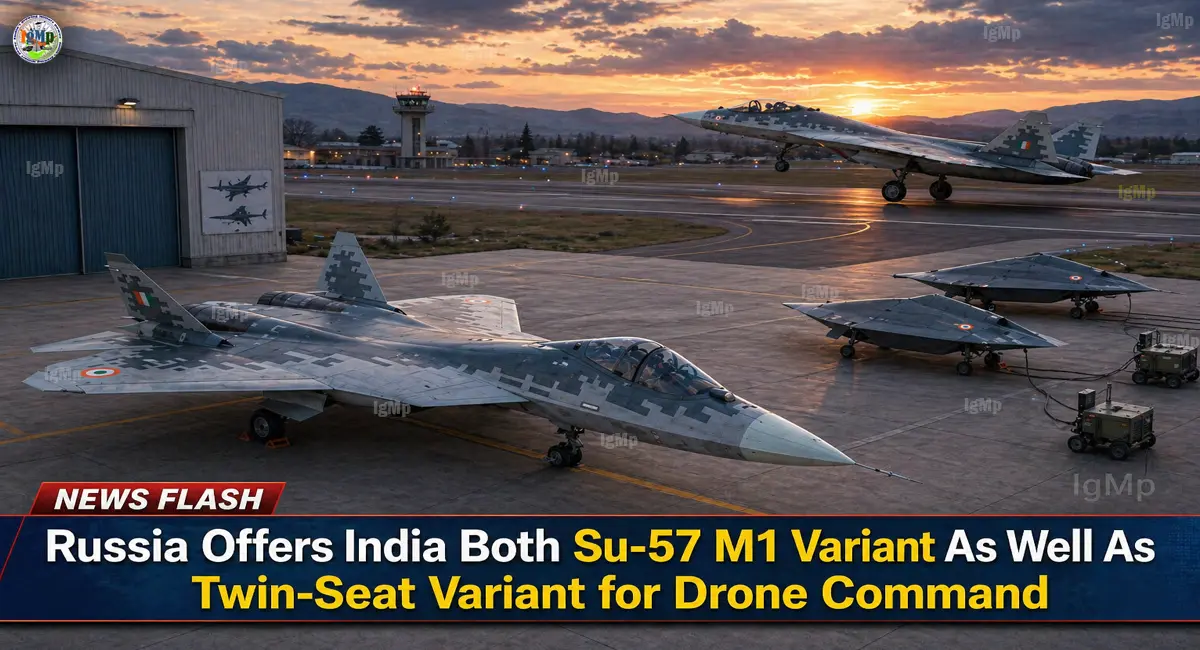
India has already begun experimenting with this concept through the Combat Air Teaming System, which focuses on autonomous drones capable of performing reconnaissance, electronic warfare, and strike missions alongside manned fighters.
In a future sixth-generation cockpit, the aircraft could act as a “mothership”, directing multiple unmanned systems simultaneously.
These could include:
- Loyal-wingman combat drones
- Electronic attack platforms
- Decoy or suppression drones
- Long-range strike UAVs
This architecture dramatically expands the reach of a single fighter aircraft. Instead of engaging threats directly, the pilot could deploy and manage a network of unmanned assets, reducing risk while increasing operational flexibility.
Technology Spillovers Could Enable India’s Own 6th-Gen Program
Even if India participates in international sixth-generation initiatives such as FCAS or GCAP, defence planners view those collaborations primarily as technology accelerators.
Key technologies developed under both the AMCA program and potential international partnerships could eventually feed into a fully indigenous sixth-generation fighter effort.
These technological building blocks include:
- Advanced Radar Absorbent Material (RAM) for stealth
- Reliable internal weapons bay mechanisms
- Integrated sensor fusion and electronic warfare systems
- Next-generation propulsion systems
As these technologies mature, India’s aerospace industry would gain the expertise needed to design a more advanced aircraft independently.
Industry observers believe this technology base could enable India to pursue a light sixth-generation fighter concept, complementing heavier platforms acquired through collaboration.
Such a structure would support a “high-low mix” within the Indian Air Force fleet—where heavier aircraft deliver long-range strike capability, while lighter sixth-generation fighters provide agile air-dominance and network-centric battlefield control.
In the long term, this strategy would allow India to combine global technology exposure with domestic aerospace sovereignty, ensuring that future fighter programs remain both technologically competitive and strategically independent.
The Heavy Strike Fighter Possibility
While a lighter sixth-generation platform may emerge as the primary concept, analysts also suggest the possibility of a larger deep-strike aircraft in the future.
Such a platform—potentially 40–50 tons in weight—could eventually replace the Sukhoi Su-30MKI fleet in the 2040s.
A heavy stealth aircraft of this class would offer:
- Long-range deep penetration capability
- Massive internal payload capacity
- Extended endurance for strategic strike missions
This “high-low mix” mirrors global trends, similar to how the United States is exploring both heavy next-generation air dominance platforms and lighter complementary aircraft.
Directed Energy Weapons and Future Power Needs
Sixth-generation aircraft will also need massive onboard power generation to support directed energy weapons.
India has already begun research in this area through Project Durga, which focuses on high-energy laser systems.
Integrating such weapons on fighter aircraft would require advanced power management systems and next-generation thermal control technologies—another area where India is actively investing.
Strategic Outlook
India’s evolving fighter strategy suggests that the country is no longer content with being merely a participant in global aerospace projects.
Instead, the emerging plan appears to combine international collaboration with indigenous innovation, ensuring both technology access and strategic sovereignty.
If successful, this dual-track approach could position India among the few nations capable of designing and producing sixth-generation combat aircraft independently.