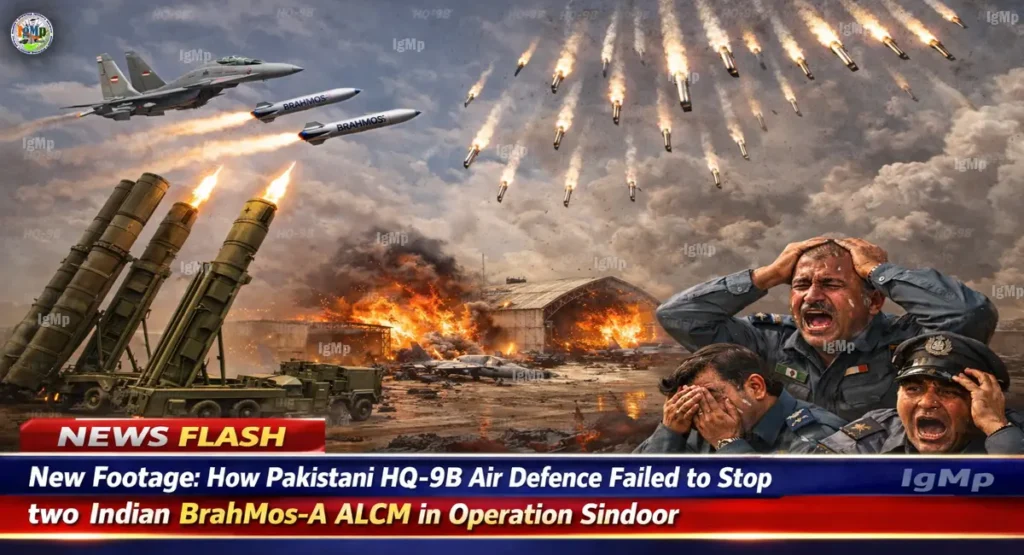
A newly surfaced video from the final phase of Operation Sindoor has reignited debate over modern air combat effectiveness. The footage captures a decisive moment on May 10, 2025, when the Indian Air Force deployed Su-30MKI fighters to launch two BrahMos-A missiles at Nur Khan Airbase in Rawalpindi. Pakistan responded with force, firing at least 18 interceptors from its HQ-9B network in an attempt to stop the incoming strike. Despite this heavy defensive barrage, both missiles penetrated the air defense shield and struck their targets, exposing critical weaknesses in one of Pakistan’s most advanced systems.
Why did 18 HQ-9B interceptors fail to stop two BrahMos missiles?
The answer lies in a collapsing engagement window. A BrahMos-A travels at nearly Mach 2.8. At that speed, it covers roughly one kilometer every second. Even if the HQ-9B detects the missile at 40 kilometers, the total response time stays under a minute.
That timeline shrinks fast in real combat. Detection delays, radar confirmation, and launch authorization consume valuable seconds. By the time interceptors launch, the target already enters its terminal phase. This leaves operators with a narrow and unforgiving reaction window.
The system also depends heavily on the HT-233 radar for continuous tracking. Any disruption in that tracking loop reduces interception probability. Supersonic targets amplify this weakness because they leave no margin for error. A single lapse can break the engagement chain.
How BrahMos-A’s speed and flight profile overwhelmed defenses
Speed alone does not explain the outcome. The BrahMos-A combines velocity with a terrain-hugging flight path and terminal maneuvers. These features reduce radar visibility and compress decision time for defenders.
The missile’s guidance system adds another layer of complexity. It uses active radar homing in the final phase, which allows it to adjust its path and avoid interception. This capability forces defensive systems to react dynamically rather than follow predictable engagement patterns.

The design philosophy behind the HQ-9B may also contribute to its limitations. Analysts often describe it as a hybrid platform influenced by systems like the S-300 and the Patriot missile system. While this approach offers flexibility, it can introduce integration challenges. Differences in tracking logic, guidance cycles, and response timing may create latency under high-pressure scenarios.
Against a fast and maneuvering target, even small delays can prove decisive. The engagement becomes a race measured in seconds, not minutes.
Did electronic warfare and tactics play a decisive role?
Technical limitations alone do not explain the reported failure. Tactical execution likely played an equally critical role. The Indian Air Force has steadily improved its electronic warfare capabilities, and this operation may have showcased that progress.
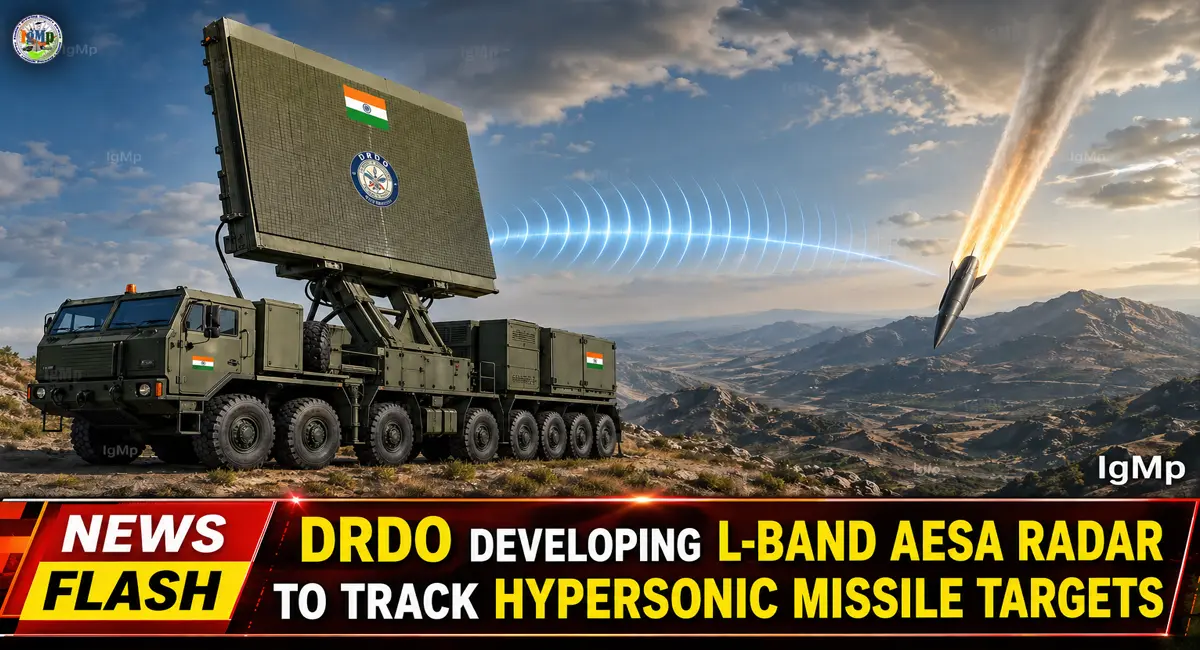
Electronic jamming can disrupt radar signals and create intermittent tracking gaps. If the HT-233 radar experienced such “blinking” effects, it would struggle to maintain a stable lock on incoming targets. Even brief interruptions can force interceptors to rely on outdated data.
Coordinated strike tactics can amplify this disruption. Reports suggest the possible use of decoy drones and additional stand-off munitions like the SCALP-EG. These assets can saturate defensive networks and divide attention across multiple threats. Instead of focusing on a single incoming missile, the system must track and prioritize several targets at once.

This combination of jamming and saturation creates confusion within the الدفاع network. Operators face overlapping signals, false targets, and compressed timelines. In such conditions, even advanced systems can falter.
What does Operation Sindoor reveal about future air warfare?
The reported events at Nur Khan Airbase highlight a broader shift in military doctrine. Air superiority no longer depends only on fighter jets and dogfights. Stand-off strike capability now defines the balance of power.
For Pakistan, the incident may trigger a reassessment of its air defense architecture. Future upgrades could focus on faster interceptors, improved radar resilience, and better integration across layers. Systems that rely on extended reaction times may struggle against next-generation threats.
For India, the operation reinforces the value of high-speed precision strike weapons. Plans to extend the range of the BrahMos to around 800 kilometers could further strengthen this advantage. Such developments would allow strikes from deeper stand-off distances, reducing exposure to enemy defenses.
The broader lesson extends beyond South Asia. Modern air defense systems must adapt to a new reality where speed, coordination, and electronic warfare converge. Static defenses face increasing pressure from dynamic and multi-layered attack strategies.
The reported failure of the HQ-9B against the BrahMos-A underscores a critical gap in modern air defense. High-speed, coordinated, and electronically supported strike packages can overwhelm even advanced systems. This shift signals a new era where reaction time and system integration determine battlefield success.