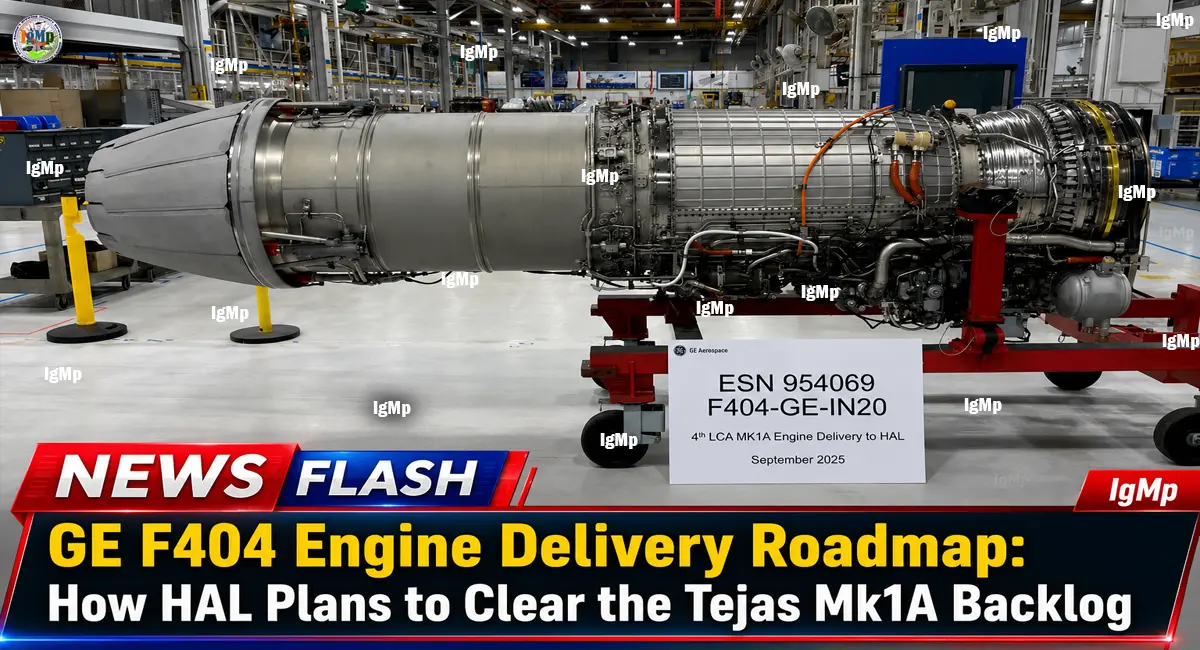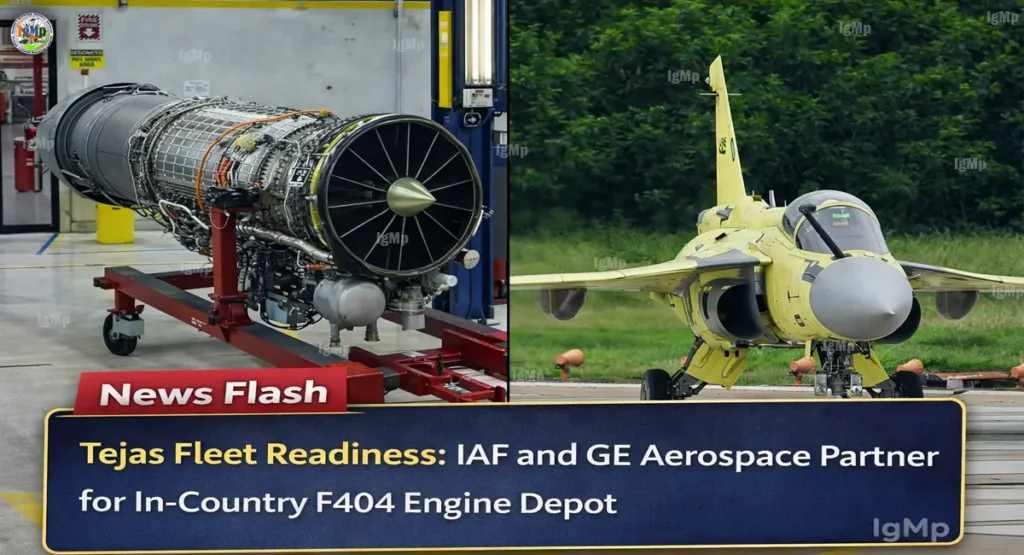
In a move aimed at fixing one of the most persistent bottlenecks in the Tejas program, GE Aerospace has signed a contract with the Indian Air Force to help establish a dedicated in-country depot for the F404-IN20 engines that power the Tejas fleet. The facility will be built and run by the IAF, while GE provides the technical backbone—ranging from training and specialist support to critical spares and equipment. Once operational, this setup will remove the need to send engines overseas for repairs, sharply reducing turnaround time and strengthening India’s push toward self-reliant defense sustainment.
For years, engine maintenance required shipping critical components abroad. That process took anywhere between six months to a year. During that time, aircraft sat idle, waiting for engines to return. The new depot changes that equation completely by bringing repair capability inside India.
Why Turnaround Time Changes Everything
A fighter squadron’s strength depends on how many aircraft remain mission-ready at any given moment. Engine availability plays a decisive role in that equation.
When repairs happen overseas, logistics becomes the biggest bottleneck. Engines must be packed, transported, inspected, repaired, and shipped back. Each stage adds delay. Even a minor fault can ground an aircraft for months.
The new in-country depot cuts this cycle dramatically. Instead of waiting for international logistics, engineers can now inspect and repair engines locally. Turnaround times drop from months to weeks.
The impact is immediate. More HAL Tejas jets remain available on the flight line. Fewer aircraft sit in hangars waiting for parts. The fleet maintains higher operational readiness during both peacetime and crisis scenarios.
Sustainment Profile
| Parameter | Details |
|---|---|
| Engine Model | GE F404-IN20 |
| Platform | Tejas Mk1 / Mk1A |
| Operator | Indian Air Force |
| Technical Partner | GE Aerospace |
| Key Benefit | No overseas repair dependency |
| Strategic Goal | Faster turnaround & self-reliance |
The F404-IN20 engine powers the current and upcoming Tejas variants. Its reliability directly influences sortie rates and mission readiness.

Ownership Matters: From Customer to Capability Holder
One detail stands out in this agreement. The depot will be owned and operated by the Indian Air Force.
That changes the entire dynamic.
Earlier, India depended heavily on external support for complex engine maintenance. Now, the IAF gains direct control over repair cycles, quality checks, and maintenance scheduling. This shift reduces dependency and builds technical confidence within the force.
GE Aerospace will provide technical expertise, training, and support systems. However, the operational control stays firmly with India. That balance creates a model where foreign collaboration supports domestic capability rather than replacing it.
This approach aligns closely with India’s broader push for self-reliance in defense sustainment.
The Bigger Picture: Building a Sustainment Ecosystem
This depot does more than support the current fleet. It lays the foundation for a long-term aerospace sustainment ecosystem.
GE’s footprint in India already spans multiple platforms, from Apache attack helicopters to naval propulsion systems. The company supports over a thousand engines operating across Indian military assets. This new facility adds depth to that presence.
More importantly, it creates a blueprint for future programs. The upcoming F414 engine production line for advanced fighters will require similar infrastructure. By building expertise now, India reduces risk for those larger, more complex projects.
The depot also contributes to local skill development. Engineers, technicians, and support staff gain hands-on experience with high-performance engine systems. Over time, that knowledge base becomes a strategic asset in its own right.
What This Means for the Tejas Program
The Tejas program has often faced criticism over delays and support challenges. Engine maintenance formed a key part of that problem.
This move directly addresses that issue.
With local repair capability, the IAF can maintain higher sortie rates. Training schedules become more predictable. Operational units gain confidence in sustained deployments.
The Tejas Mk1A, which will form a major part of the IAF’s future fleet, depends heavily on consistent engine availability. This depot ensures that the aircraft can deliver on its promise without being held back by logistics.