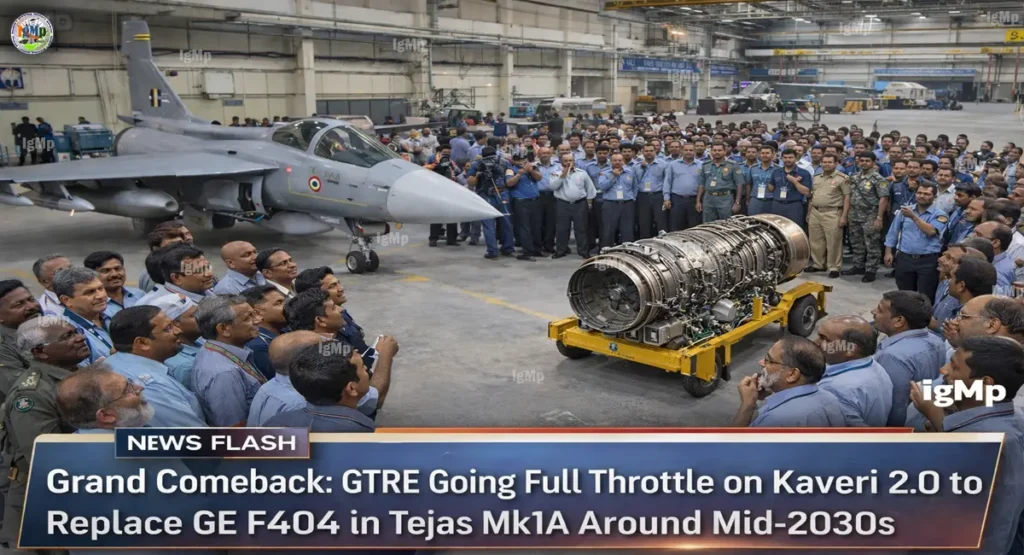
India’s long struggling journey of developing an indigenous jet engine to power its indigenous LCA Tejas fighter has always carried a deep emotional weight. Engineers at the Gas Turbine Research Establishment have faced repeated setbacks, technical roadblocks, and even the near-collapse of the Kaveri programme in the mid-2020s. Yet, much like India’s broader strategic mindset when pushed into a corner, the country has repeatedly responded by building its own capabilities—from the rise of Indian Space Research Organisation despite early technology denials to breakthroughs across strategic sectors. The Kaveri programme now appears set to follow that same trajectory, driven by persistence, engineering innovation, and a clear push for self-reliance. Today, GTRE appears ready to take on the next leap with the Kaveri 2.0 engine—an upgraded powerplant expected to finally propel the HAL Tejas Mk1A during its mid-life upgrade phase in the mid-2030s.
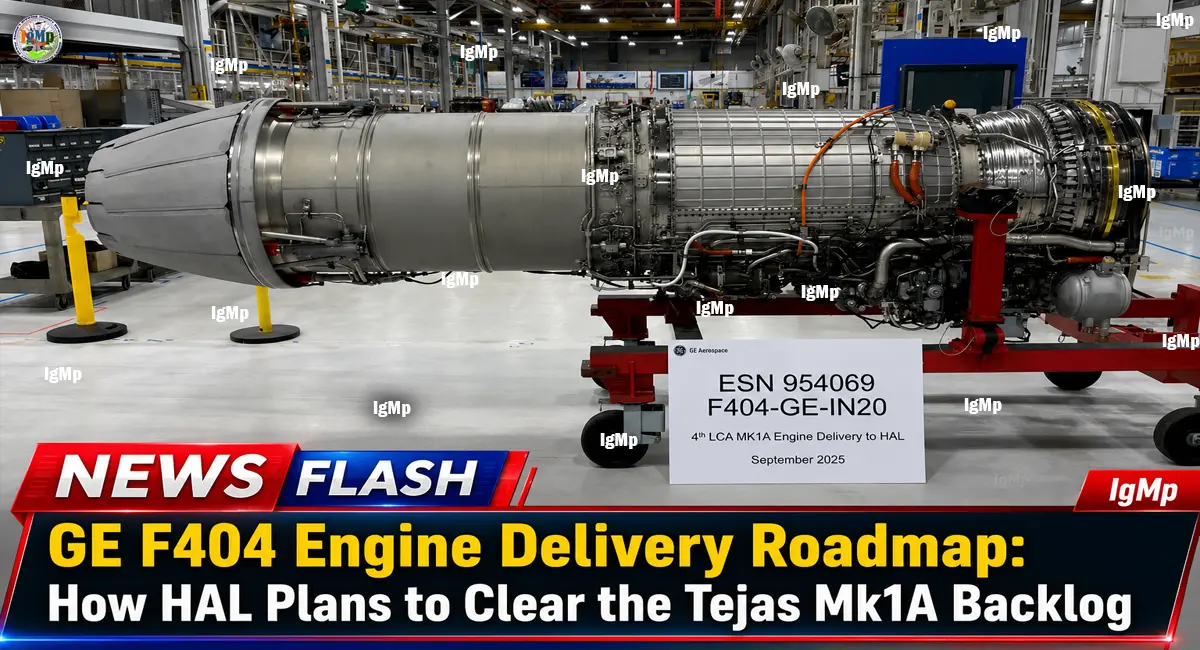
This journey is not just emotional—it is strategic. India cannot afford prolonged dependence on foreign suppliers like GE Aerospace, whose GE F404-IN20 has powered the Tejas fleet for years. Changing geopolitics, supply chain disruptions, and Prime Minister Narendra Modi’s push for Aatmanirbhar Bharat have turned indigenous jet engine development into a national imperative. After years of uncertainty, the Kaveri programme now appears to be moving steadily toward its long-awaited goal. Recent developments suggest that preparations are actively underway to launch what could become a historic turnaround in India’s aerospace journey.
Why is India Replacing the GE F404 in the 2030s?
India’s reliance on imported engines exposes a structural weakness. Even minor disruptions in global supply chains can stall squadron readiness. The recent penalty episode highlighted how external dependencies can directly impact operational timelines.
The F404 engine has delivered reliable performance. However, it was never designed for India’s long-term autonomy goals. Rising fleet sizes and future upgrades demand deeper control over maintenance, spares, and performance tuning.
Kaveri 2.0 steps in as a strategic solution. It aligns with India’s push for defence indigenisation. It also supports lifecycle cost control and rapid upgrade cycles. More importantly, it allows Indian engineers to fine-tune performance for local conditions, including high-altitude bases and extreme heat.
This shift explains why the “indigenous engine for Tejas Mk1A mid-life upgrade” has become a central talking point in defence planning circles.
Kaveri 2.0 vs. GE F404: A Technical Comparison
The Kaveri 2.0 programme has moved far beyond its earlier limitations. Engineers at the Gas Turbine Research Establishment have reworked the core architecture with modern materials and improved thermodynamic efficiency.
Here’s how the two engines compare:
| Feature | Kaveri 2.0 (Target) | GE F404-IN20 |
|---|---|---|
| Dry Thrust | 55–59 kN | ~54 kN |
| Wet Thrust | 90–92 kN | 84–85 kN |
| Material Tech | Single-crystal blades | Mature alloys |
| Climatic Tuning | Flat-rated for Indian heat | Standard performance |
| Implementation | Tejas Mk1A MLU (2030s) | Current fleet |
The “GTRE Kaveri 2.0 thrust vs GE F404” comparison shows a clear intent. India does not aim to match the F404. It aims to exceed it in key performance areas.
The higher wet thrust range of up to 92 kN gives the Tejas more flexibility in combat scenarios. It also improves payload capacity and climb performance. These gains matter in high-altitude sectors like Ladakh.

Overcoming the “Screeching” Issue: February 2026 Trial Updates
The earlier Kaveri programme faced a critical hurdle. Engineers observed combustion instability, often described as a “screeching” issue. This problem affected efficiency and safety margins.
The February 2026 trial updates mark a turning point. GTRE teams have used advanced simulation tools to stabilise combustion dynamics. Digital twin technology now allows real-time modelling of airflow and pressure variations.
Engineers have redesigned the combustor geometry. They have also improved fuel injection precision. These changes reduce oscillations inside the engine core.
The progress answers a key concern among analysts. It shows that India has moved from trial-and-error methods to data-driven engineering. This shift increases confidence in the “Kaveri 2.0 engine first flight date” timeline.
The Ghatak Connection: Certification Roadmap for 2026
Kaveri 2.0 will not jump directly into manned fighter integration. India plans a phased certification route. The engine will first power the Ghatak UCAV.
This approach reduces risk. Unmanned platforms allow engineers to test performance limits without pilot safety concerns. The Ghatak programme acts as a flying testbed for endurance, thermal stability, and stealth compatibility.
The certification roadmap targets key milestones in 2026. These include high-altitude trials and endurance runs. The “India high-altitude engine test facility 2026” initiative plays a crucial role here. It ensures that the engine performs reliably in thin-air conditions.
Once validated, the engine can transition to the Tejas Mk1A mid-life upgrade phase in the early 2030s.
Addressing Weight and Engineering Trade-offs
Kaveri 2.0 still faces a weight challenge. The current core weighs around 1,180 kg. The F404 stands lighter at roughly 1,036 kg. This gap affects thrust-to-weight ratio and fuel efficiency.
GTRE engineers are actively addressing this issue. They are introducing advanced titanium alloys to reduce structural mass. Additive manufacturing techniques also help optimise component geometry.
Digital twin systems allow engineers to test weight reduction strategies without physical prototypes. This speeds up iteration cycles and reduces development costs.
The goal is clear. Engineers aim to close the weight gap without compromising durability. Achieving this balance will define the engine’s long-term success.
A Strategic Shift, Not Just a Technical Upgrade
Kaveri 2.0 represents more than an engine upgrade. It signals a deeper shift in India’s defence strategy. The country no longer accepts dependency as a default option.
The penalties on GE Aerospace acted as a wake-up call. They exposed the risks of relying on external suppliers for critical systems. Kaveri 2.0 now stands as a direct response to that reality.
If development stays on track, India could field an indigenous engine across multiple platforms by the mid-2030s. This includes fighters, drones, and future stealth programmes.
The comeback story of Kaveri 2.0 is not just about fixing past failures. It is about building a foundation for the next generation of Indian air power.