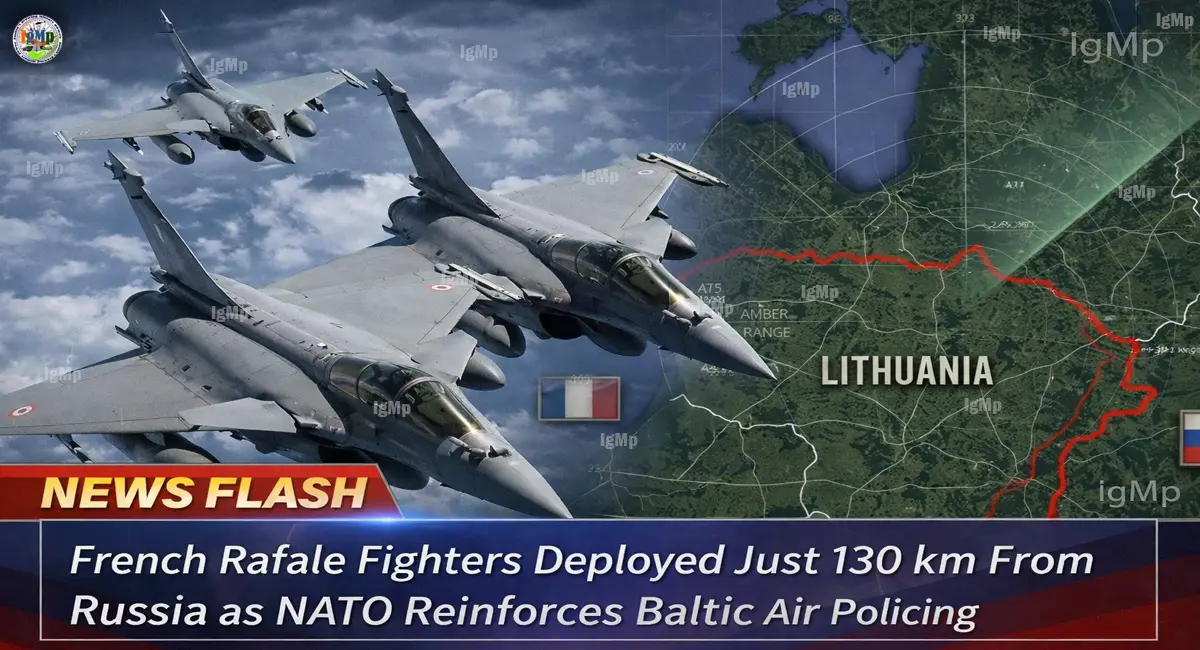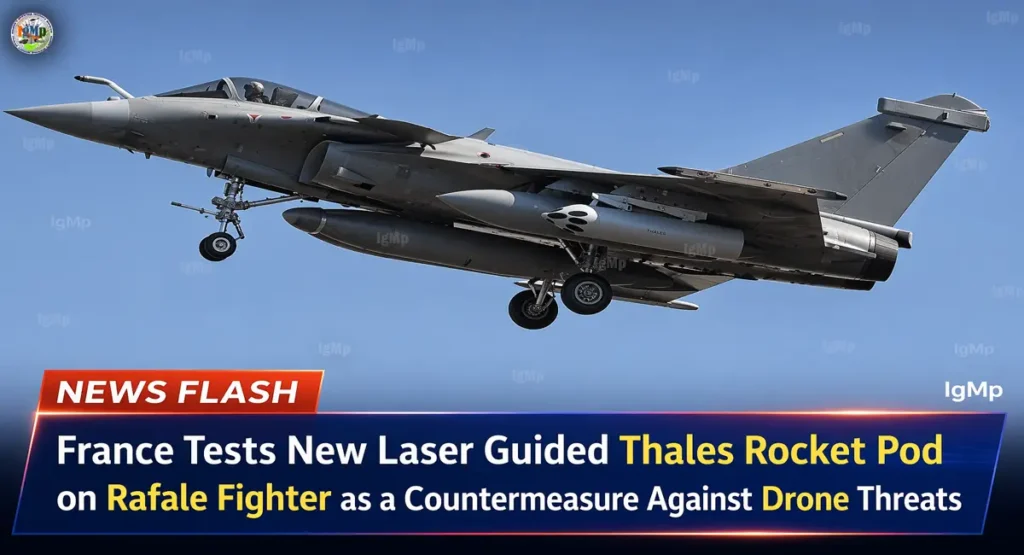
As per Russian Online Military News Analysis platform Voennoye Obozrenie, France has begun testing a new low-cost interception concept on the Dassault Rafale that could reshape air combat economics. Trials at Istres Air Base in April 2026 involved the TELSON 12 JF rocket pod firing laser-guided ACULEUS-LG rockets, offering a dramatically cheaper alternative to traditional air-to-air missiles. By enabling engagements at a fraction of the cost of systems like MBDA MICA, this configuration directly addresses the growing challenge of countering mass-produced drones in modern warfare.
What Is the Thales TELSON 12 JF Pod and How Does It Work?
At the center of this shift is the TELSON 12 JF rocket pod developed by Thales Group. Unlike traditional unguided rocket systems, this configuration uses precision-guided munitions designed specifically for high-speed aerial platforms.
The April 2026 tests integrated the TELSON pod with the TALIOS targeting pod mounted on the Rafale’s fuselage. This combination allows the aircraft to independently detect, track, and designate targets without relying on external guidance.
What makes this setup operationally significant:
- Induction-activated firing system, allowing faster and safer launch cycles during high-tempo engagements
- TALIOS pod integration, enabling precise laser designation for moving targets
- High rocket capacity, with up to 24 rockets when carrying two pods
The result is a self-contained “drone hunter” configuration, where the fighter can detect and neutralize multiple low-cost aerial threats in a single sortie.
ACULEUS-LG vs MICA: Solving the Cost-Per-Kill Crisis
The shift toward rockets is not about replacing missiles—it’s about using the right tool for the right target.
Modern battlefields have exposed a major imbalance: using million-dollar missiles to shoot down low-cost drones is not sustainable. This is where ACULEUS-LG changes the equation.
| Feature | MICA Air-to-Air Missile | ACULEUS-LG Rocket |
|---|---|---|
| Unit Cost | ~€1.2 Million | €30,000 – €40,000 |
| Guidance | Active Radar / Infrared | Semi-Active Laser |
| Target Type | Fighters / Cruise Missiles | Drones / Loitering Munitions |
| Loadout | 6–8 per Rafale | Up to 24 per Rafale |
| Role | Strategic Intercept | Tactical Mass Engagement |
The April 2026 trials make one thing clear: high-end missiles are being reserved for high-end threats, while guided rockets handle volume targets.
The logic is simple—if the threat is cheap and numerous, the interceptor must be cheaper and scalable.
Why This Matters in a Drone-Saturated Battlespace
Recent conflicts have demonstrated that drone swarms—particularly loitering munitions similar to “Shahed-style” systems—can overwhelm traditional air defenses.
What France is effectively doing is redefining how a 4.5-generation fighter remains relevant in this environment. Instead of acting purely as a high-value interceptor, the Dassault Rafale is being adapted into a multi-layered engagement platform.
Key operational advantages:
- Ability to engage multiple targets in rapid succession
- Preservation of expensive missile inventory for critical threats
- Flexibility to switch between air superiority and drone suppression roles
This transforms the Rafale from a “single-shot precision platform” into a high-speed swarm counter system.
Can the Indian Air Force Use This on Its Rafale Fleet?
For the Indian Air Force, this development is directly relevant.
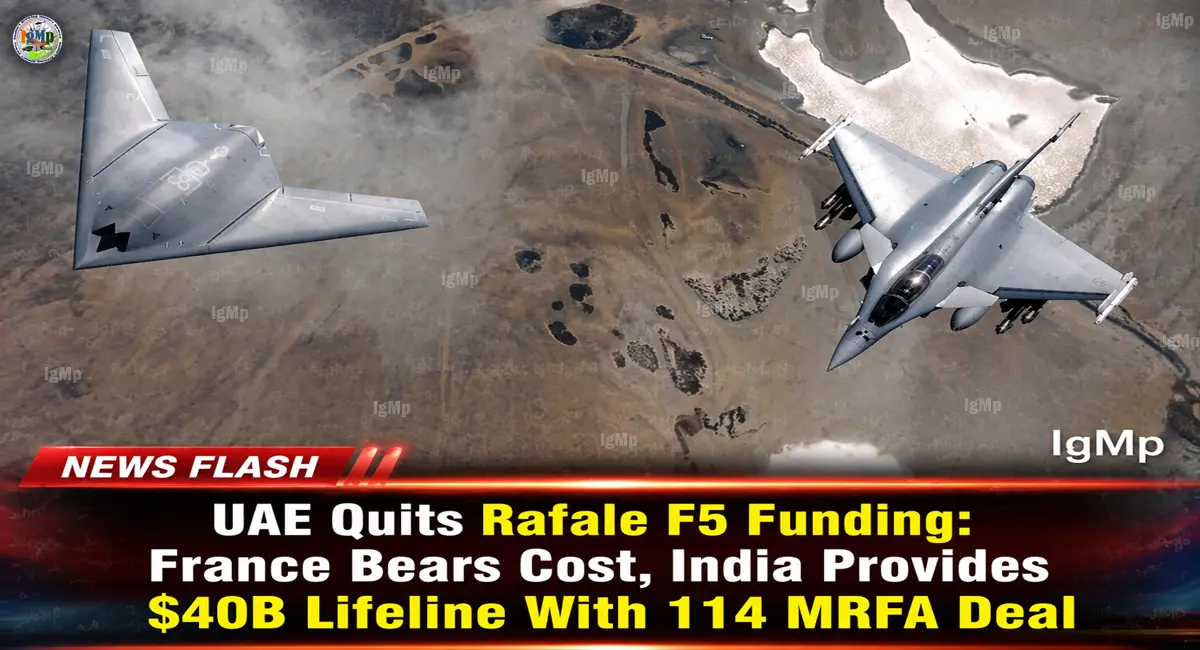
India currently operates 36 Rafales and is moving toward a much larger fleet under the MRFA (Multi-Role Fighter Aircraft) program, expected to add 114 aircraft. With increasing drone activity along the western front, the need for a cost-effective aerial interception layer is becoming urgent.
The advantage here is compatibility. Since India’s Rafales already operate advanced targeting pods similar to TALIOS, integrating a TELSON-type rocket system would not require a complete doctrinal shift—only an incremental capability upgrade.
In practical terms, this would allow the IAF to:
- Counter mass drone incursions without exhausting missile stocks
- Maintain persistent air patrols with higher engagement capacity
- Reduce operational costs in prolonged low-intensity conflicts
Operational Reach: One Jet, Multiple Engagement Layers
One of the most important aspects of this configuration is that it does not replace existing weapons—it complements them.
A Rafale equipped with TELSON pods can still carry its standard air-to-air missiles, meaning it remains fully capable against high-end threats while gaining a new role against low-cost targets.
This creates a layered engagement profile:
- Rockets for drones and swarm targets
- Missiles for fighters and cruise missiles
- Integrated sensors for real-time threat prioritization
In effect, a single aircraft becomes capable of handling both ends of the threat spectrum within the same mission.
The Strategic Takeaway
The April 2026 trials signal a deeper shift in air combat thinking. The era of relying solely on expensive, high-performance interceptors is giving way to a more balanced approach where cost, scalability, and adaptability matter just as much.
By integrating low-cost guided rockets, France is not just upgrading the Rafale—it is redefining how air forces can sustain operations in a battlespace dominated by cheap, expendable threats.
For India, which is simultaneously expanding its fighter fleet and facing evolving drone challenges, this model offers a clear path forward:
win not just by capability, but by cost efficiency and operational endurance.